Increased common corticospinal input during eyes-closed unilateral stance in people with chronic ankle instability
Xiaohan Xu, Joanna Bowtell, William R. Young, Daniel T. P. Fong, Genevieve K. R. Williams

TL;DR
People with chronic ankle instability show increased brain-to-muscle coordination in certain muscles during one-legged balance with eyes closed, which may reduce their ability to adapt to balance challenges.
Contribution
This study is the first to show increased beta-band intermuscular coherence in people with chronic ankle instability during eyes-closed stance.
Findings
CAI individuals showed higher beta-band coherence in specific muscle pairs during eyes-closed stance compared to healthy controls.
Increased beta-band coherence correlated with reduced postural adaptability, as indicated by lower COP complexity.
The findings suggest altered corticospinal inputs in CAI individuals during unilateral stance with eyes closed.
Abstract
Neuromuscular control deficits and altered spinal and corticospinal mechanisms are central to chronic ankle instability (CAI) and its persistent symptoms, but the role of ankle muscle coordination and common neural inputs during unipedal stance in CAI remains unexplored. This study aimed to compare intermuscular coherence between individuals with CAI and healthy controls during single-leg stance and investigate functionality of intermuscular coherence to postural control. Sixteen CAI and 16 healthy control (HC) participants performed single-leg balance tasks under eyes-open and eyes-closed conditions. The surface electromyograms were recorded from tibialis anterior (TA), peroneus longus (PL), gastrocnemius medial head (GM), and soleus (SOL) muscles. Coherence was analysed for PL-TA, PL-SOL, PL-GM, SOL-TA and SOL-GM muscle pairs in the delta (0.5–5 Hz) and beta (15–35 Hz) frequency…
Genes, proteins, chemicals, diseases, species, mutations and cell lines named across the full text — each resolved to its canonical identifier and authoritative record.
Click any figure to enlarge with its caption.
 Figure 1
 Figure 2
 Figure 3
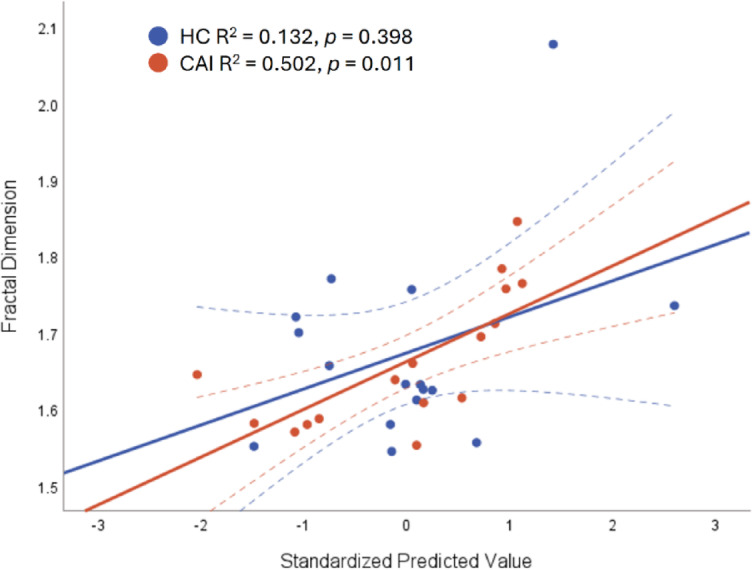 Figure 4
Peer Reviews
No public reviews on file for this paper yet. If you reviewed it on a platform where reviews are public (OpenReview, ICLR, NeurIPS, ICML), you can paste yours below so the community can read it here.
Videos
No videos yet. Explain this paper in a talk, walkthrough, or lecture? Add one.
Taxonomy
TopicsFoot and Ankle Surgery · Sports injuries and prevention · Knee injuries and reconstruction techniques