Changing Prevalence of Immunocompromising Conditions in Patients Hospitalized with Severe Acute Respiratory Infection in Europe: Insights from the COVIDRIVE Study
Wilhelmine Meeraus, Ivana Prokić, J. Gabrielle Breugelmans, Konstantina Chatzikonstantinidou, Eduardo Conde-Sousa, Irma Casas, Wendy Hartig-Merkel, Gerrit Luit ten Kate, Sandra Manzanares-Laya, Charlotte Martin, Andrea Orsi, Susana Otero Romero, Sudhir Venkatesan

TL;DR
The study found that the proportion of hospitalized patients with severe respiratory infections who are immunocompromised increased during the later stages of the COVID-19 pandemic in Europe.
Contribution
This study provides new insights into how the prevalence of immunocompromising conditions changed over time among hospitalized SARI patients during the pandemic.
Findings
Immunocompromising conditions increased from 8.3% to 22.0% among hospitalized SARI patients by mid-2022.
Among SARS-CoV-2-positive patients, immunocompromising conditions rose from 3.4% to 23.8% during the same period.
The increase in immunocompromised patients was significantly higher among SARS-CoV-2-positive cases compared to those without the virus.
Abstract
Immunocompromised individuals are at substantially increased risk of severe acute respiratory infection (SARI), often compounded by inadequate response to vaccination. We assessed the prevalence of immunocompromising conditions (ICs) among hospitalized SARI patients, overall and by severe acute respiratory syndrome coronavirus 2 (SARS-CoV-2) status, focusing on temporal trends during the coronavirus disease 2019 (COVID-19) pandemic. We hypothesized that IC prevalence among SARS-CoV-2-positive SARI patients may have increased over time due to increasing background rates of SARS-CoV-2 exposure and differential vaccination coverage and efficacy among those with IC. We conducted a secondary data analysis of 5280 adults (≥ 18 years) hospitalized with SARI, enrolled in the COVIDRIVE study from five hospitals in Belgium, Italy, and Spain (June 2021-May 2023) and tested for SARS-CoV-2 by…
Genes, proteins, chemicals, diseases, species, mutations and cell lines named across the full text — each resolved to its canonical identifier and authoritative record.
Click any figure to enlarge with its caption.
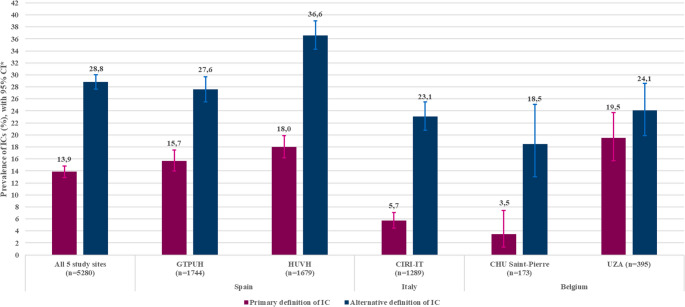 Figure 1
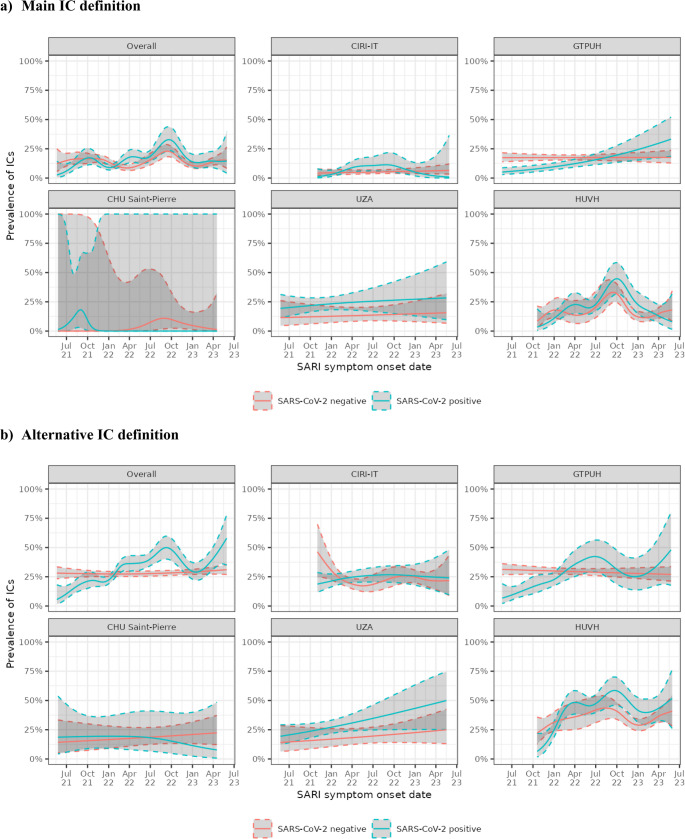 Figure 2
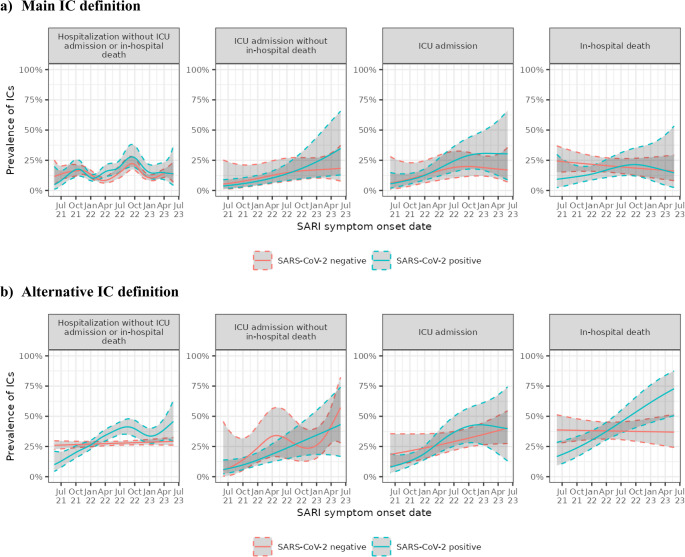 Figure 3
Peer Reviews
No public reviews on file for this paper yet. If you reviewed it on a platform where reviews are public (OpenReview, ICLR, NeurIPS, ICML), you can paste yours below so the community can read it here.
Videos
No videos yet. Explain this paper in a talk, walkthrough, or lecture? Add one.
Taxonomy
TopicsRespiratory viral infections research · SARS-CoV-2 and COVID-19 Research · Pediatric health and respiratory diseases