Hepatic embolization for Cushing syndrome from metastatic tumors: a single-center case series
Shuyao Zhang, Jorge Esteban Mosquera, Clive Musonza, Anil K Pillai, Jessica Abramowitz, Sasan Mirfakhraee, Patricio M Polanco, Salwan Al Mutar, Waddah Arafat, Oksana Hamidi

TL;DR
This study explores using liver embolization to treat Cushing syndrome caused by metastatic tumors, showing it can effectively reduce cortisol levels with minimal risks.
Contribution
The study presents a novel application of hepatic embolization as a palliative treatment for Cushing syndrome from metastatic tumors.
Findings
All four patients showed significant cortisol reduction after hepatic embolization.
Two patients normalized cortisol levels with only transient adrenal insufficiency.
Embolization was well tolerated with minimal adverse events and no procedure-related mortality.
Abstract
Cushing syndrome (CS) from metastatic adrenocortical carcinoma (ACC) or neuroendocrine tumors (NETs) presents a therapeutic challenge when surgery is not feasible. Liver-directed embolization, including bland transarterial embolization (TAE) and yttrium-90 (Y-90) radioembolization, may palliate hypercortisolism arising from hormonally active hepatic metastases. We conducted a retrospective single-center case series of 4 adult patients (≥18 years) with CS and liver-dominant metastatic ACC or NET who underwent hepatic embolization between 2015 and 2025. Inclusion criteria were: (1) confirmed CS based on standard biochemical testing, and (2) receipt of liver-directed embolization (TAE or Y-90) for hypercortisolism. Exclusion criteria were absence of pre- and postembolization hormonal data preventing biochemical assessment. The primary outcome was biochemical response within 14 days (≥50%…
Genes, proteins, chemicals, diseases, species, mutations and cell lines named across the full text — each resolved to its canonical identifier and authoritative record.
Click any figure to enlarge with its caption.
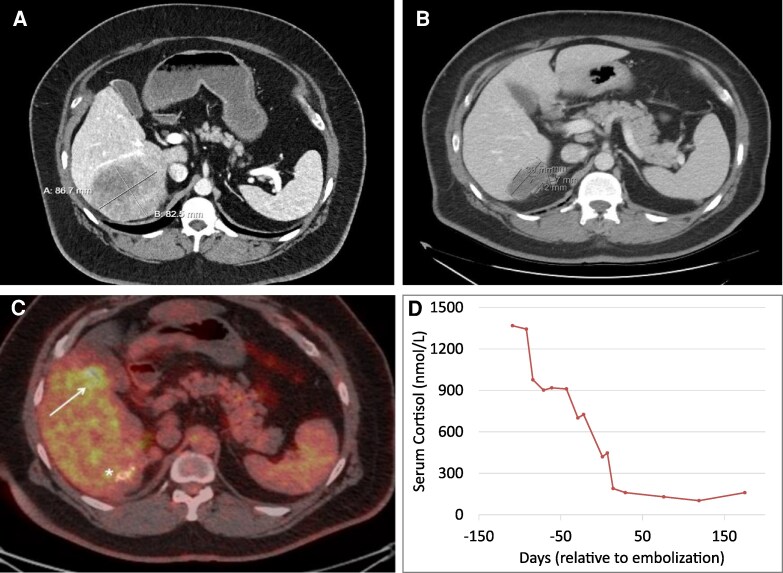 Figure 1
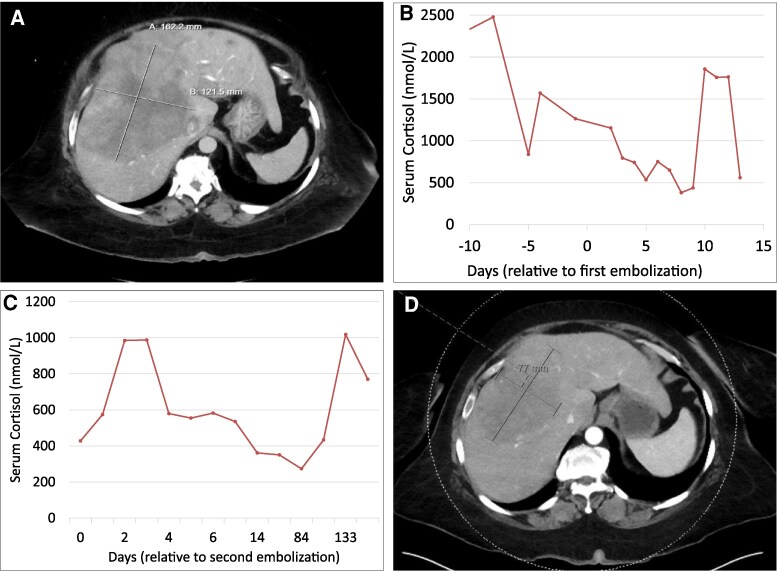 Figure 2
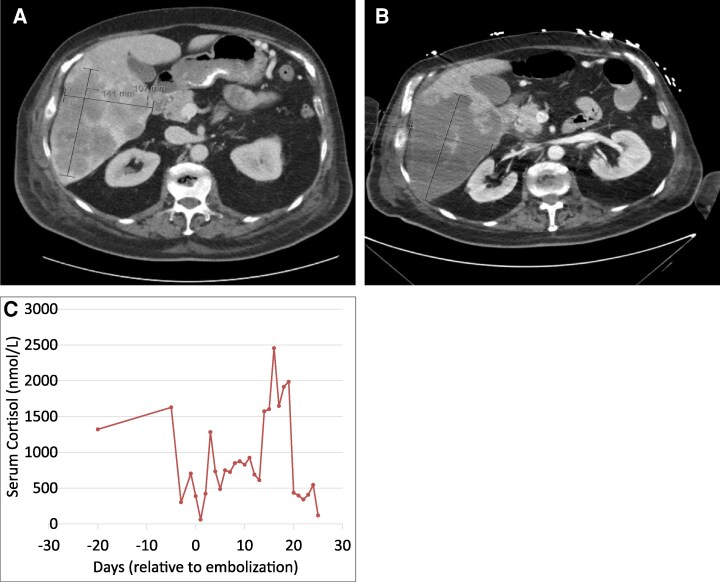 Figure 3
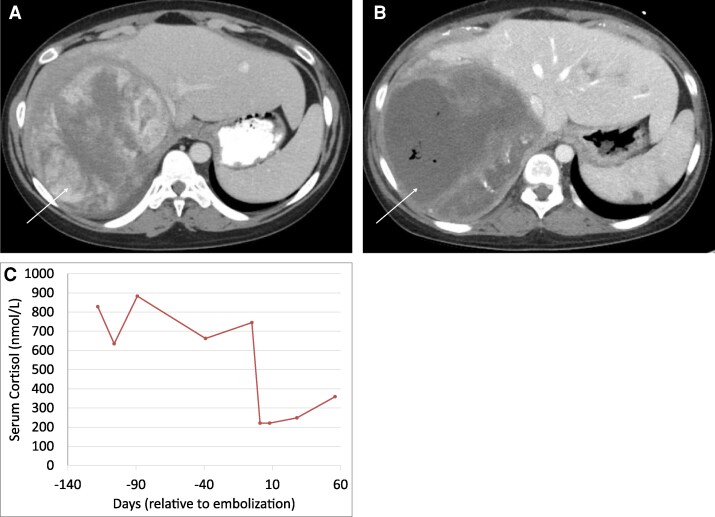 Figure 4
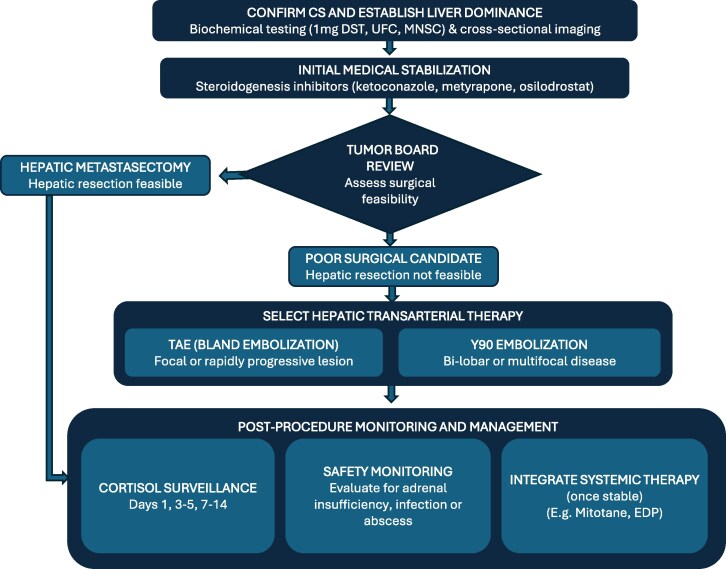 Figure 5
Peer Reviews
No public reviews on file for this paper yet. If you reviewed it on a platform where reviews are public (OpenReview, ICLR, NeurIPS, ICML), you can paste yours below so the community can read it here.
Videos
No videos yet. Explain this paper in a talk, walkthrough, or lecture? Add one.
Taxonomy
TopicsAdrenal and Paraganglionic Tumors · Pituitary Gland Disorders and Treatments · Hepatocellular Carcinoma Treatment and Prognosis