How effective are entomopathogenic nematodes for vine weevil (Coleoptera: Curculionidae) biological control? A meta‐analysis
Joe M. Roberts, Marco Corradi, Ben J. Clunie, Eugenia Fezza, W. Edwin Harris, Tom W. Pope

TL;DR
Entomopathogenic nematodes effectively control vine weevil larvae, reducing their numbers by about 63% on average, with warmer temperatures enhancing their performance.
Contribution
A meta-analysis quantifies the effectiveness of entomopathogenic nematodes for vine weevil control and identifies temperature as a key factor.
Findings
EPN applications reduced vine weevil larval survival by ≈63% compared to untreated controls.
All five EPN species tested showed similar effectiveness in controlling vine weevil larvae.
Warmer soil temperatures (18–30 °C) and protected cropping environments improved EPN performance.
Abstract
Vine weevil (Otiorhynchus sulcatus) is a globally important pest of soft fruit and ornamental crops with larvae causing significant root damage. Entomopathogenic nematodes (EPNs) have emerged as a key biological control option for larvae following restrictions on synthetic chemical insecticides, but their reported efficacy varies considerably across studies. This variability has created uncertainty about EPN effectiveness and optimal deployment strategies, limiting evidence‐based recommendations for growers. Across 162 comparisons from 23 studies, EPN applications significantly reduced vine weevil larval survival compared to untreated controls (Hedges' g = −1.60, 95% CI −1.85 to −1.36), equivalent to ≈63% fewer live larvae. All five EPN species tested (Steinernema carpocapsae, S. feltiae, S. kraussei, Heterorhabditis bacteriophora, H. megidis) were effective, with no significant…
Genes, proteins, chemicals, diseases, species, mutations and cell lines named across the full text — each resolved to its canonical identifier and authoritative record.
Click any figure to enlarge with its caption.
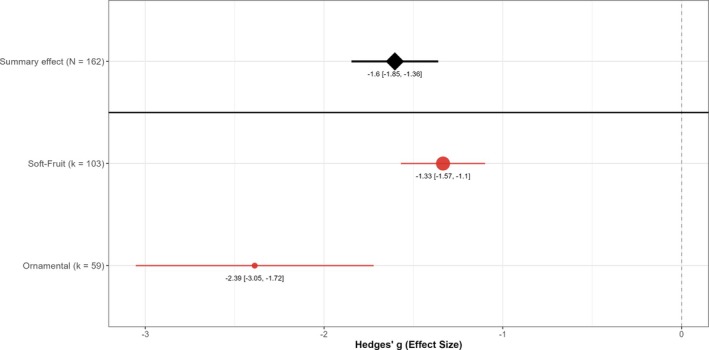 Figure 1
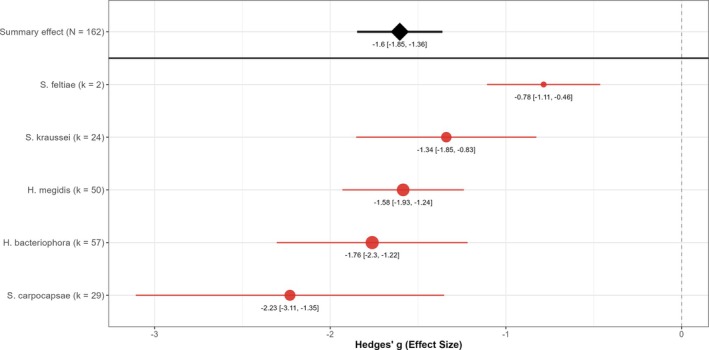 Figure 2
 Figure 3
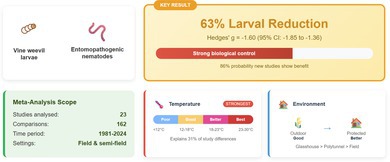 Figure 4
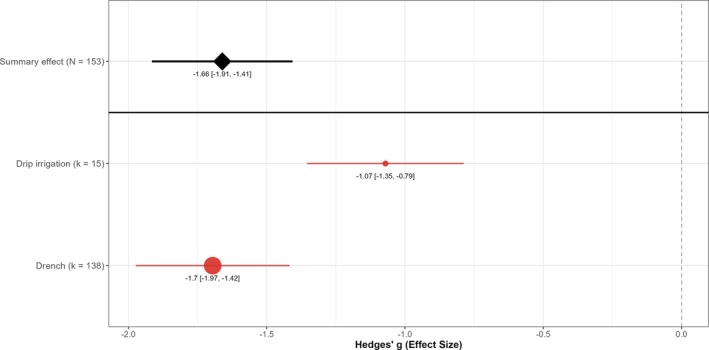 Figure 5
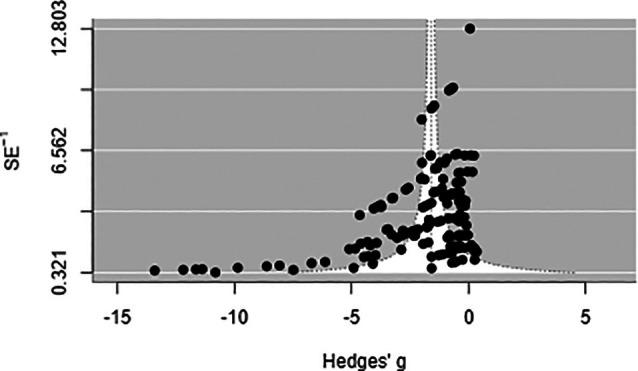 Figure 6
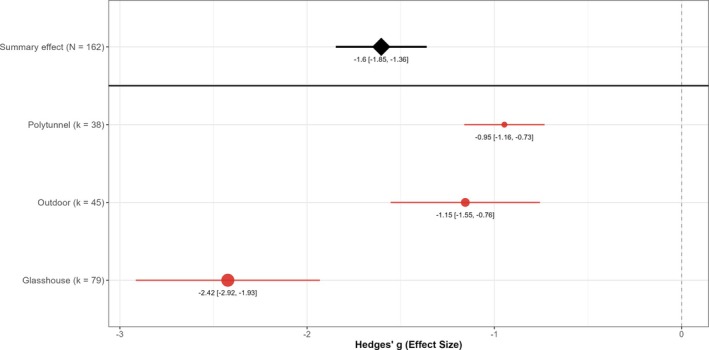 Figure 7
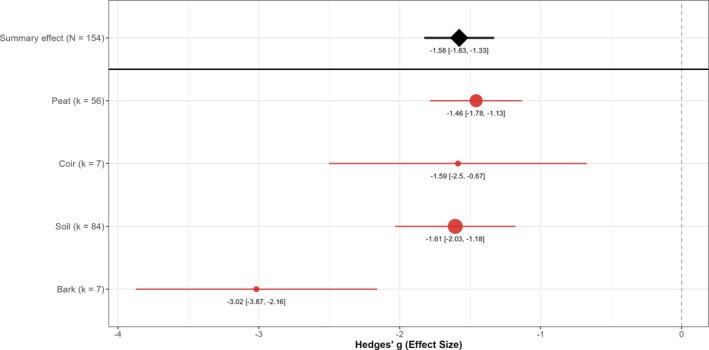 Figure 8
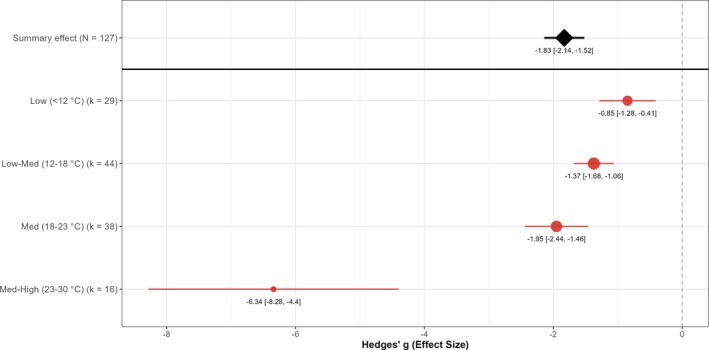 Figure 9
Peer Reviews
No public reviews on file for this paper yet. If you reviewed it on a platform where reviews are public (OpenReview, ICLR, NeurIPS, ICML), you can paste yours below so the community can read it here.
Videos
No videos yet. Explain this paper in a talk, walkthrough, or lecture? Add one.
Taxonomy
TopicsEntomopathogenic Microorganisms in Pest Control · Insect-Plant Interactions and Control · Insect Resistance and Genetics