Prescription Trends and Clinical Decision‐Making in Neuropathic Pain Pharmacological Treatment: Results From a Cross‐Sectional Survey by the Spanish Pain Society
Miguel Á. Huerta, Mónica Mayo‐Moldes, Miguel M. Garcia, Beliu García‐Parra, Mercè Matute, Yolanda López‐Tofiño, Nancy Paniagua, Mar Hernández‐Secorún, Dolors Soler, Marcos Salmerón, Julian Taylor, Enrique Verdú, José A. Valencia, Silvia Pico, Clara Díaz‐Alejo, Masahito Katsuki

TL;DR
A survey of Spanish pain specialists reveals inconsistent adherence to guidelines in treating neuropathic pain, with a strong reliance on personal experience and common use of gabapentinoids and antidepressants.
Contribution
This is the first systematic assessment of neuropathic pain management practices in Spain, highlighting variability and the need for national consensus.
Findings
Gabapentinoids and tricyclic antidepressants are the most commonly prescribed first-line treatments for neuropathic pain.
Tramadol is frequently used as a second-line treatment despite conflicting guidelines.
Half of the participants reported managing drug tolerance through dose escalation or switching drug classes.
Abstract
Neuropathic pain (NP) is a complex chronic condition with limited therapeutic effectiveness. Despite multiple drug classes and international guidelines, real‐world adherence remains inconsistent, and data on prescribing practices among pain specialists is scarce. We conducted a nationwide cross‐sectional survey among members of the Spanish Pain Society in May 2025. A structured 62‐item questionnaire assessed prescribing habits, decision‐making criteria, guideline adherence, dosage patterns, and the recognition and management of tolerance. Sociodemographic and professional data were also collected. A total of 220 pain specialists (52% female) completed the survey; 28% had over 20 years of clinical experience. Satisfaction with current pharmacological options was modest, with 52% reporting dissatisfaction or indifference. Prescribing was mainly guided by clinical experience (43%) and…
Genes, proteins, chemicals, diseases, species, mutations and cell lines named across the full text — each resolved to its canonical identifier and authoritative record.
Click any figure to enlarge with its caption.
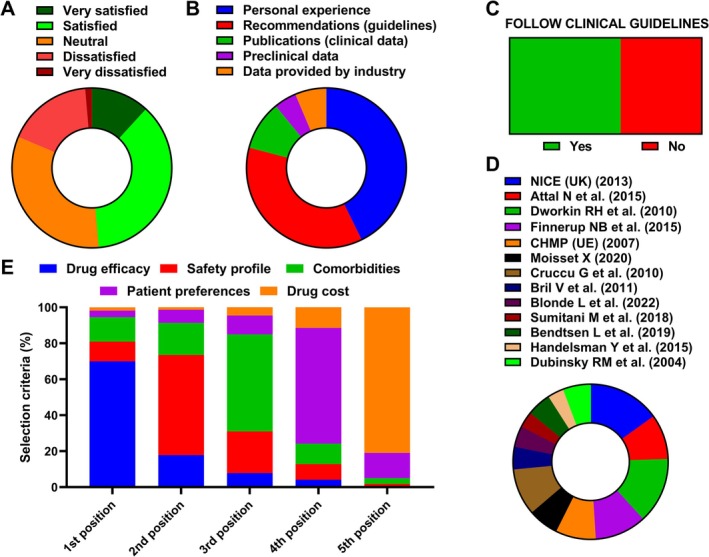 Figure 1
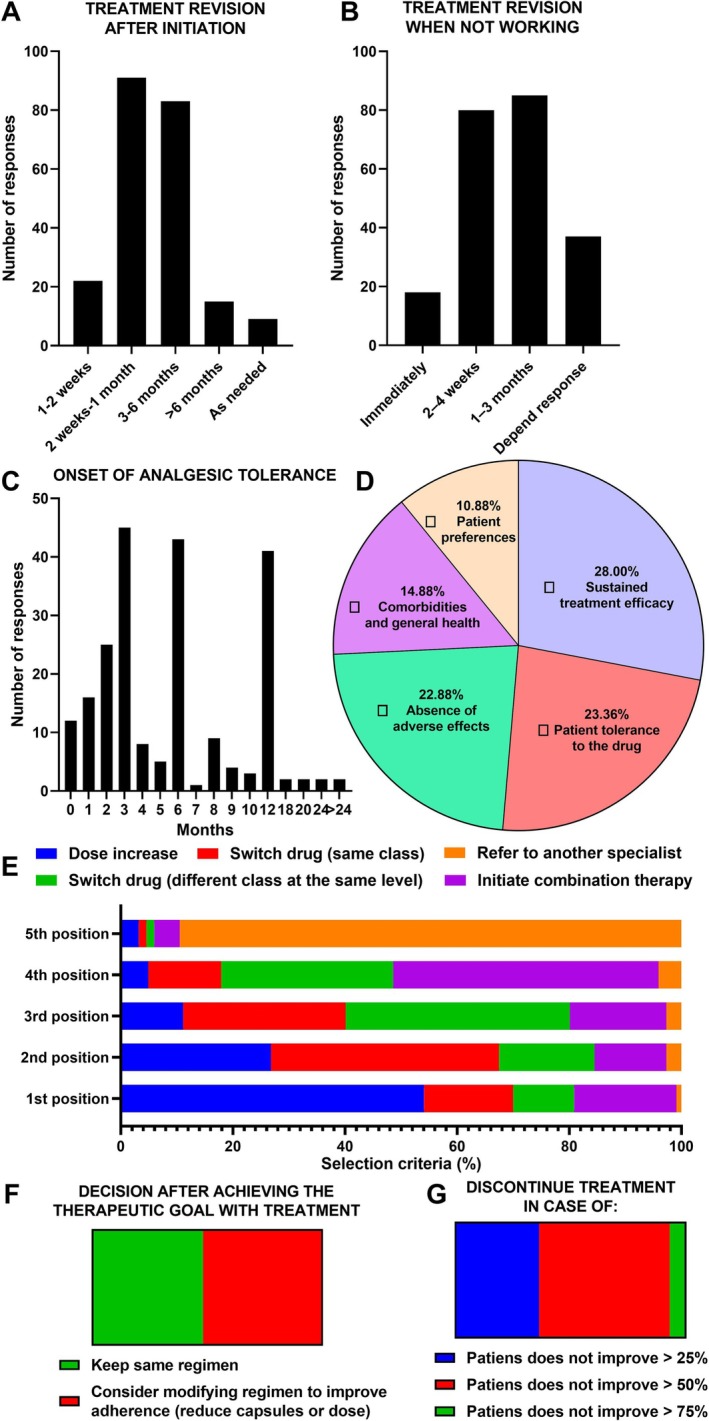 Figure 2
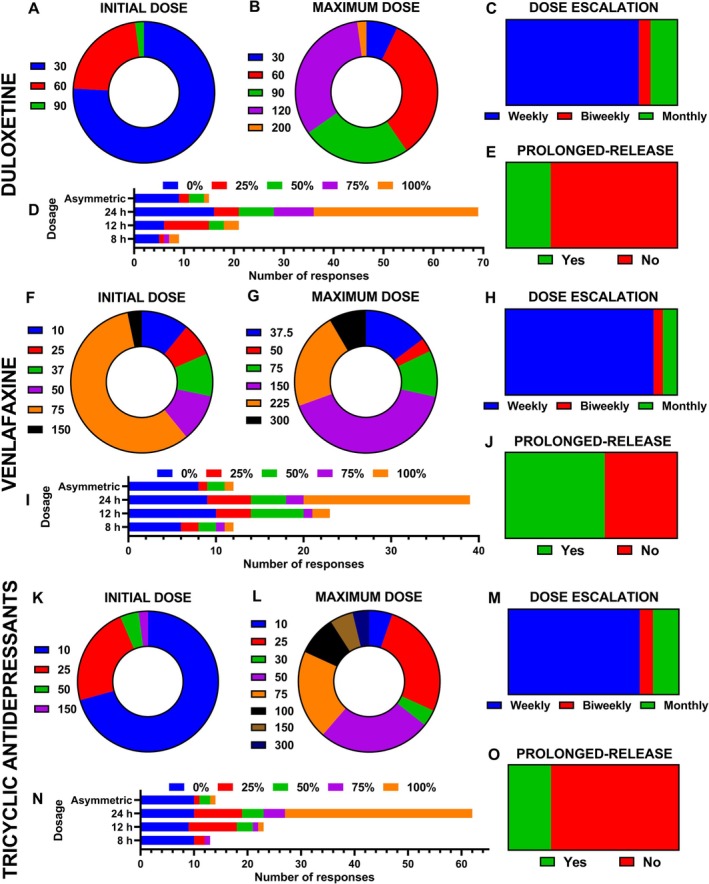 Figure 3
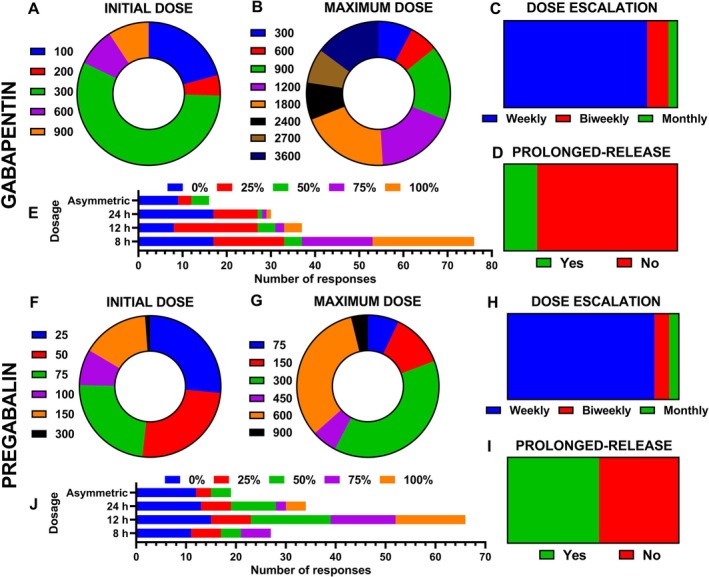 Figure 4
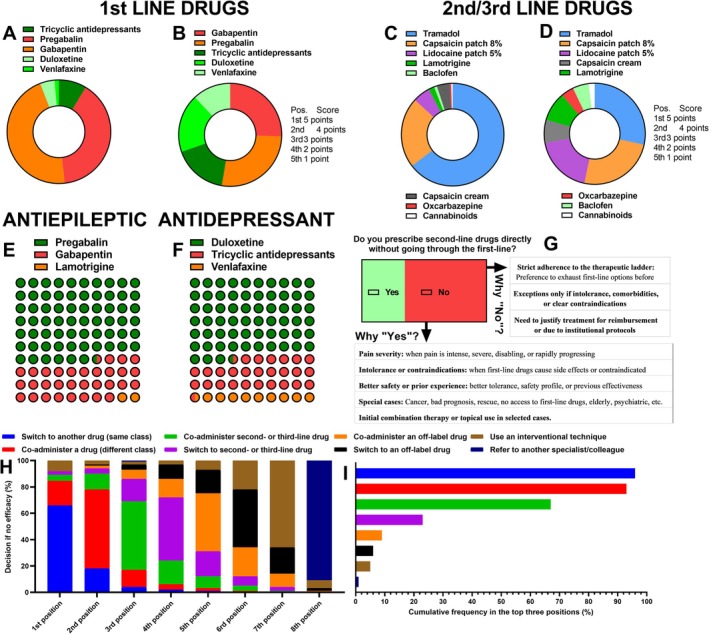 Figure 5
Peer Reviews
No public reviews on file for this paper yet. If you reviewed it on a platform where reviews are public (OpenReview, ICLR, NeurIPS, ICML), you can paste yours below so the community can read it here.
Videos
No videos yet. Explain this paper in a talk, walkthrough, or lecture? Add one.
Taxonomy
TopicsPain Mechanisms and Treatments · Pain Management and Opioid Use · Musculoskeletal pain and rehabilitation