Hammersmith Infant Neurological Examination at 3 Months in Infants at Risk for Congenital Infections: A Cohort Study
Karen Cristine Oliveira de Azambuja, Amanda de Arguelho Oliveira Arguelho, Meyene Duque Weber, Lorrainy Marques da Silva Dutra, Tathiana Ghisi de Souza, Daniele Soares‐Marangoni

TL;DR
This study shows that infants exposed to STORCH infections in the womb have neurological impairments detectable at 3 months, as measured by the HINE.
Contribution
The study introduces the use of the HINE at 3 months to detect early neurological risks in STORCH-exposed infants.
Findings
Exposed infants had lower HINE global scores and subscores compared to controls.
Exposed infants showed more asymmetries and a higher risk of cerebral palsy.
Neurological impairments were detectable in STORCH-exposed infants as early as 3 months.
Abstract
STORCH refers to a group of congenital infections (syphilis, toxoplasmosis, rubella, cytomegalovirus and herpes) that can impact the central nervous system. As clinical signs may not appear until several months or years after birth, the early detection of risk in STORCH‐exposed infants has been challenging, and the use of sensitive tools in this population is understudied. To compare STORCH‐exposed infants with non‐exposed controls using the Hammersmith Infant Neurological Examination (HINE) at 3 months of age. This is an observational cohort study. A total of 60 infants were included and equally allocated into two groups: an exposed group, whose mothers had a clinically confirmed diagnosis of a classic STORCH infection during pregnancy, and a non‐exposed control group, whose mothers did not present STORCH infections during gestation. At 3 months of age (13.83 ± 1.09 weeks post‐term),…
Genes, proteins, chemicals, diseases, species, mutations and cell lines named across the full text — each resolved to its canonical identifier and authoritative record.
Click any figure to enlarge with its caption.
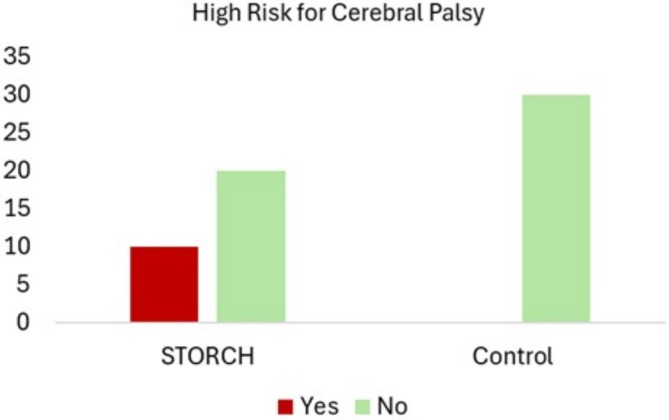 Figure 1
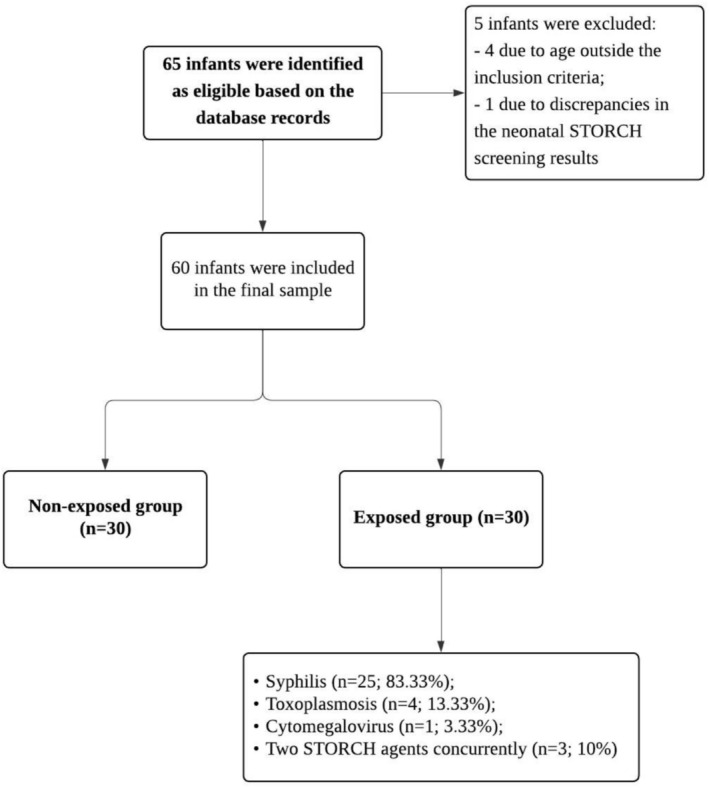 Figure 2
Peer Reviews
No public reviews on file for this paper yet. If you reviewed it on a platform where reviews are public (OpenReview, ICLR, NeurIPS, ICML), you can paste yours below so the community can read it here.
Videos
No videos yet. Explain this paper in a talk, walkthrough, or lecture? Add one.
Taxonomy
TopicsCytomegalovirus and herpesvirus research · Neonatal and fetal brain pathology · Pediatric health and respiratory diseases