Percutaneous nephrostomy guidance by a convolutional-neural-network-based optical coherence tomography endoscope
Chen Wang, Paul Calle, Feng Yan, Qinghao Zhang, Kar-Ming Fung, Zhongxin Yu, Sean G. Duguay, William B. Vanlandingham, Nathan A. Bradley, Sanjay G. Patel, Bradon Nave, Clint Hostetler, Ashley Milam, Chongle Pan, Qinggong Tang

TL;DR
A new OCT endoscope with deep learning improves kidney surgery by guiding needles and avoiding blood vessels.
Contribution
An OCT endoscope with deep learning models for tissue and blood vessel recognition during percutaneous nephrostomy.
Findings
Optical coherence tomography effectively distinguishes kidney tissues like cortex, medulla, and pelvis.
Doppler OCT detects renal blood flow, and deep learning models achieve high accuracy in tissue classification and blood vessel detection.
Abstract
Percutaneous nephrostomy is widely used in kidney access surgeries. Despite its prevalence in urological interventions, it presents two operational challenges: 1) precise needle placement into the renal pelvis; and 2) avoiding hemorrhage from blood vessel rupture. In this study, we developed an endoscopic optical coherence tomography probe for needle navigation. We conducted experiments on thirty-one human kidneys for two aspects: 1) tissue recognition, and 2) blood vessel detection. Experimental results indicated that renal tissues including cortex, medulla, calyx, sinus fat, and pelvis could be effectively distinguished through structural optical coherence tomography imaging, and renal blood flow could be detected through the Doppler function. Deep learning methods were utilized to automate recognition procedures. For tissue classification, an Inception model was used, achieving a…
Genes, proteins, chemicals, diseases, species, mutations and cell lines named across the full text — each resolved to its canonical identifier and authoritative record.
Click any figure to enlarge with its caption.
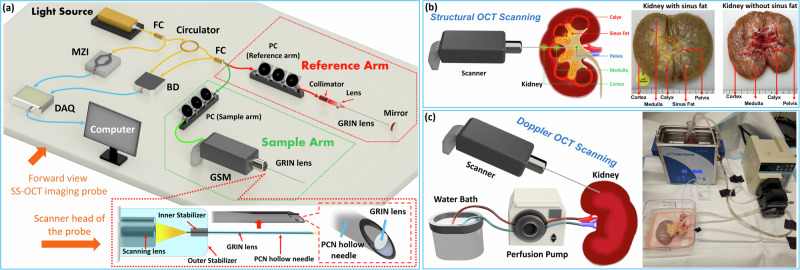 Figure 1
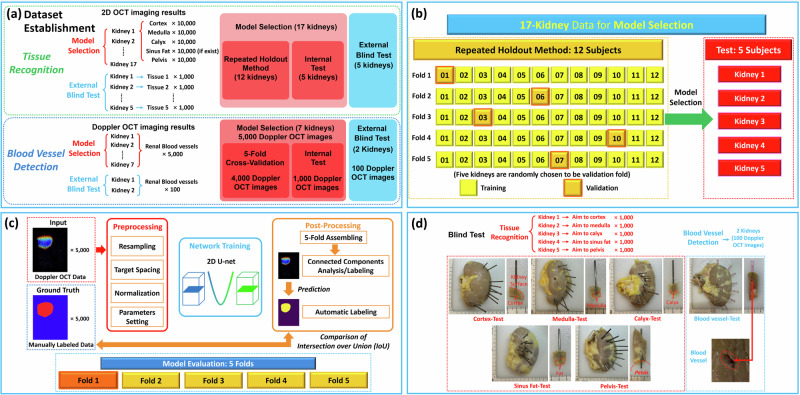 Figure 2
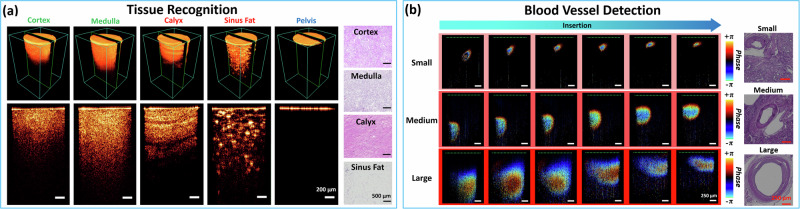 Figure 3
 Figure 4
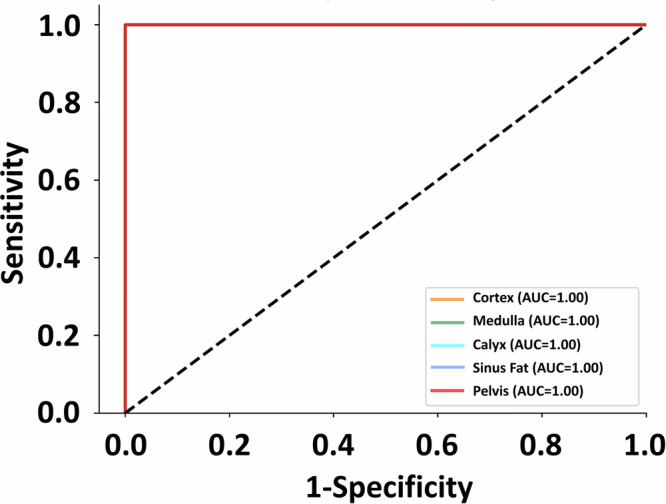 Figure 5
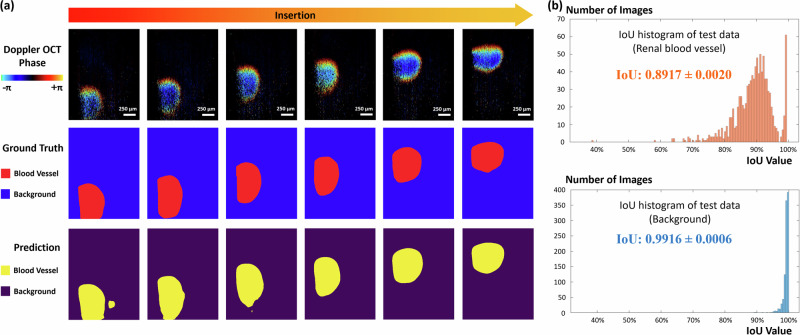 Figure 6
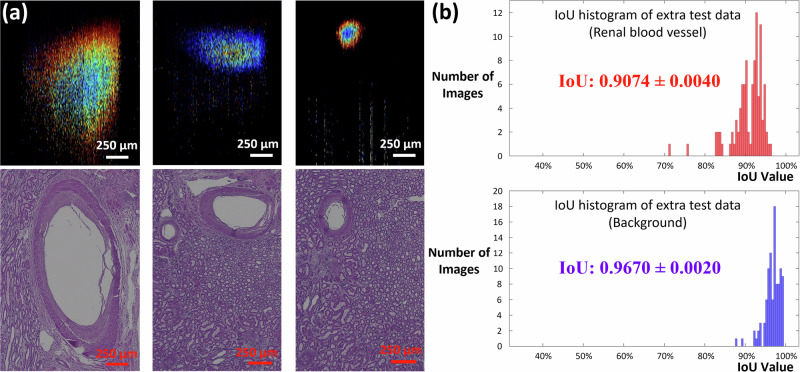 Figure 7
Peer Reviews
No public reviews on file for this paper yet. If you reviewed it on a platform where reviews are public (OpenReview, ICLR, NeurIPS, ICML), you can paste yours below so the community can read it here.
Videos
No videos yet. Explain this paper in a talk, walkthrough, or lecture? Add one.
Taxonomy
TopicsOptical Coherence Tomography Applications · Electrical and Bioimpedance Tomography · Soft Robotics and Applications