Generalisation of automatic tumour segmentation in histopathological whole-slide images across multiple cancer types
Ole-Johan Skrede, Manohar Pradhan, Maria Xepapadakis Isaksen, Tarjei Sveinsgjerd Hveem, Ljiljana Vlatkovic, Arild Nesbakken, Kristina Lindemann, Gunnar B. Kristensen, Jenneke Kasius, Alain G. Zeimet, Odd Terje Brustugun, Lill-Tove Rasmussen Busund, Elin H. Richardsen

TL;DR
A deep learning model can accurately segment tumors in histopathological images across various cancer types and patient populations.
Contribution
A general-purpose tumor segmentation model that performs well across multiple cancer types and imaging conditions.
Findings
The model achieved over 80% average Dice coefficient in validation cohorts.
Performance was consistent across cancer types and external patient populations.
The general model performed as well as specialized single-cancer models.
Abstract
Deep learning is expected to aid pathologists in tasks such as tumour segmentation. We developed a general tumour segmentation model for histopathological images and examined its performance in different cancer types. The model was developed using over 20,000 whole-slide images from over 4000 patients with colorectal, endometrial, lung, or prostate carcinoma. Performance was validated in pre-planned analyses on external cohorts with over 3000 patients across six cancer types. Exploratory analyses included over 1500 additional patients from The Cancer Genome Atlas. Average Dice coefficient was over 80% in all validation cohorts with en bloc resection specimens and in The Cancer Genome Atlas cohorts. No performance loss was observed when comparing the general model with single-cancer models specialised in cancer types from the development set. In conclusion, extensive and rigorous…
Genes, proteins, chemicals, diseases, species, mutations and cell lines named across the full text — each resolved to its canonical identifier and authoritative record.
Click any figure to enlarge with its caption.
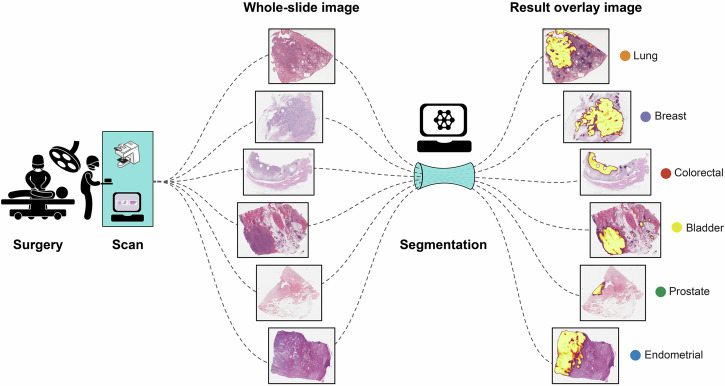 Figure 1
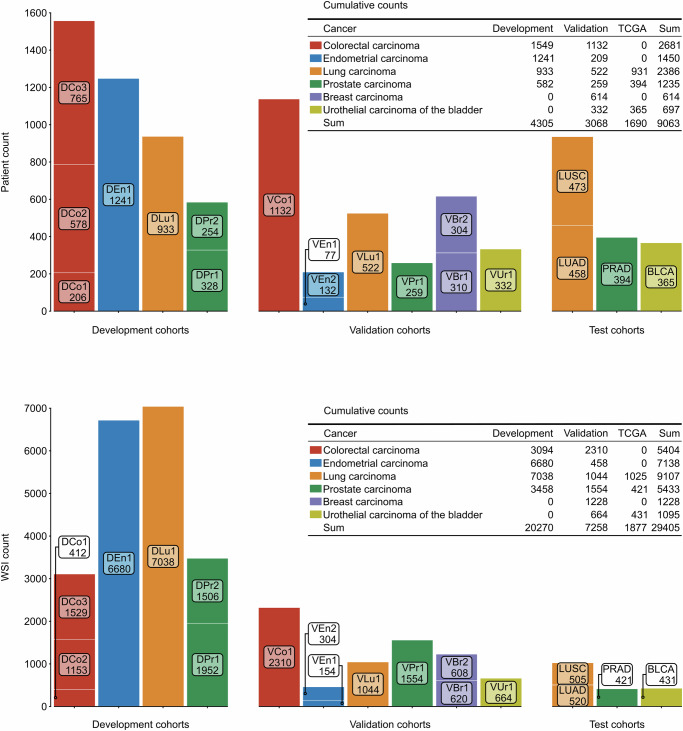 Figure 2
 Figure 3
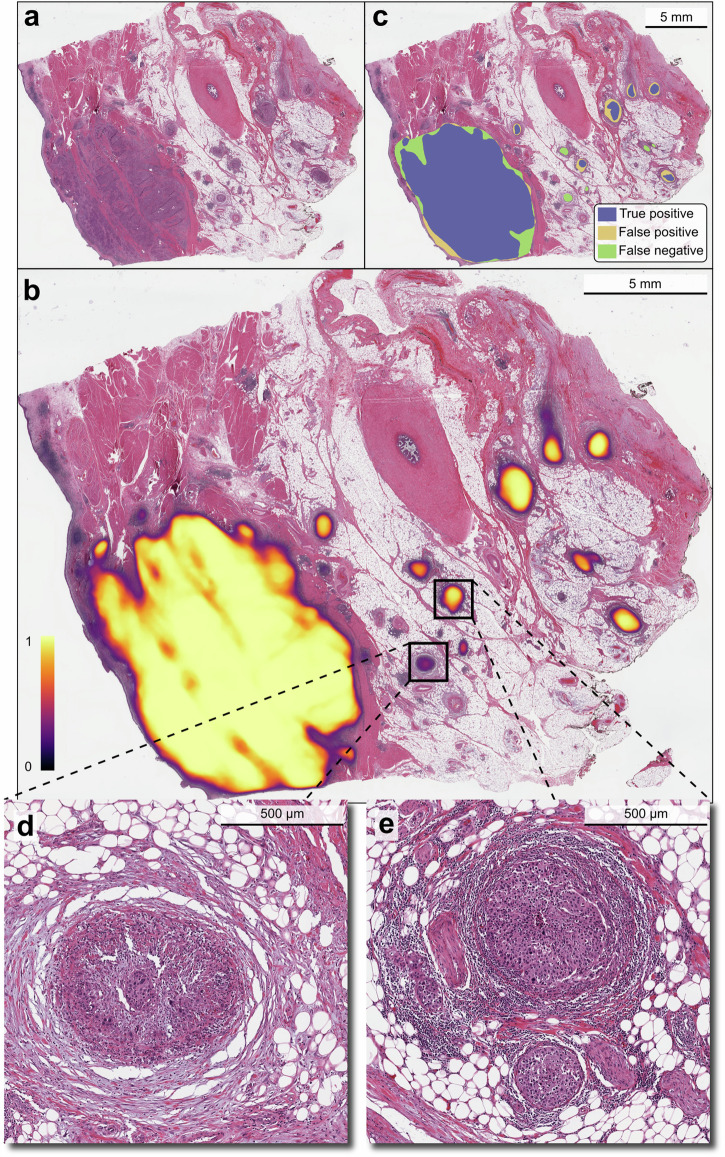 Figure 4
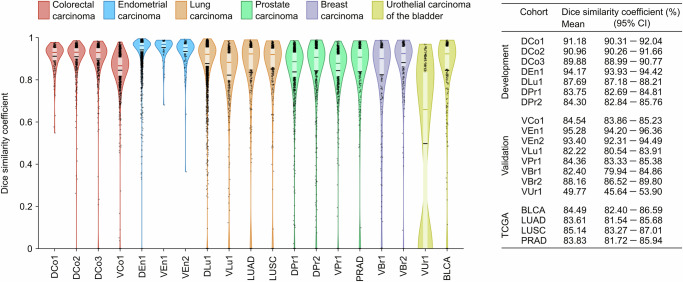 Figure 5
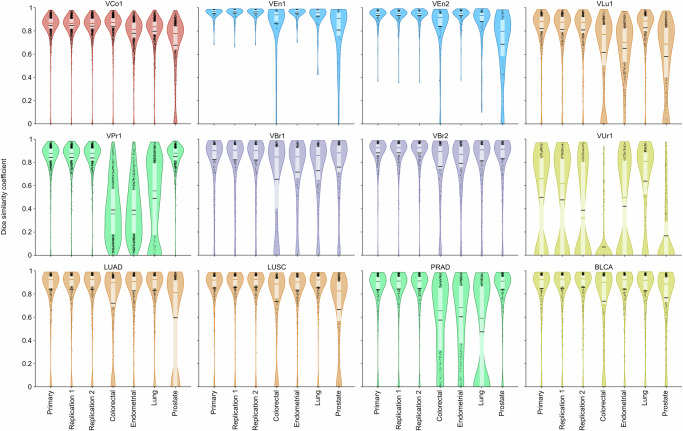 Figure 6
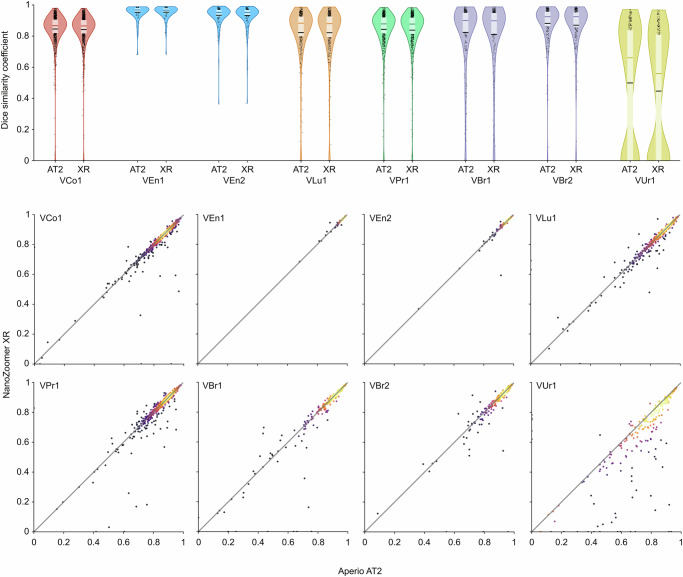 Figure 7
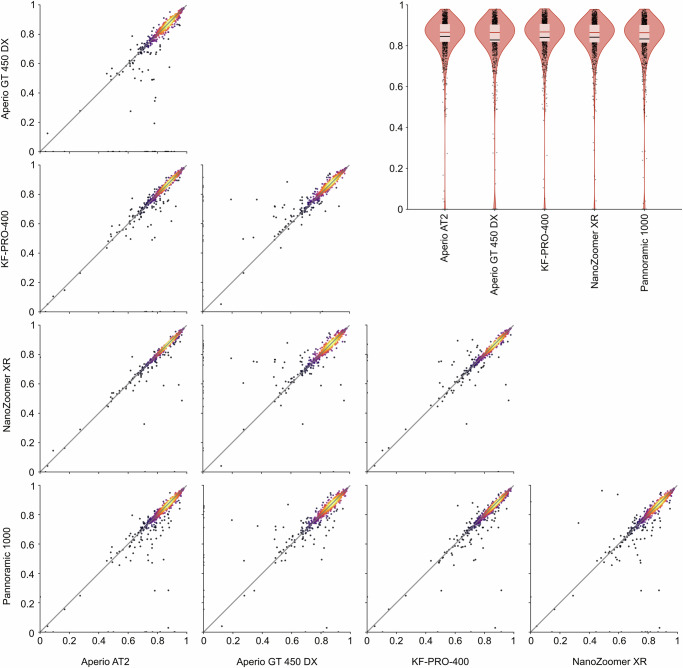 Figure 8
Peer Reviews
No public reviews on file for this paper yet. If you reviewed it on a platform where reviews are public (OpenReview, ICLR, NeurIPS, ICML), you can paste yours below so the community can read it here.
Videos
No videos yet. Explain this paper in a talk, walkthrough, or lecture? Add one.
Taxonomy
TopicsAI in cancer detection · Digital Imaging for Blood Diseases · Advanced Neural Network Applications