The value of metagenomic next-generation sequencing in lower respiratory tract infections among critically ill patients in the ICU
Ying Xu, Weiwei Wu, Danjiang Dong, Ning Liu, Jia Liu, Baocui Qi, Qin Gu

TL;DR
This study evaluates how metagenomic next-generation sequencing helps diagnose and treat lower respiratory tract infections in ICU patients.
Contribution
The study demonstrates the clinical utility of mNGS in guiding treatment adjustments and predicting patient outcomes in ICU LRTI cases.
Findings
mNGS detected pathogens with 80.1% sensitivity and 66.3% accuracy in ICU LRTI patients.
Survivors had more diverse microbial profiles, with Corynebacterium striatum dominant compared to Pseudomonas aeruginosa in non-survivors.
mNGS-guided treatment adjustments improved clinical symptoms in 58.6% of ICU patients.
Abstract
Lower respiratory tract infections (LRTIs) frequently occur as a severe complication in intensive care unit (ICU) patients, substantially raising patient mortality rates and extending hospitalization periods. In this study, a retrospective cohort study of 261 suspected LRTI patients in the ICU of Nanjing Drum Tower Hospital between April 2021 and February 2024 was conducted. The results showed that metagenomic next-generation sequencing (mNGS) had a sensitivity of 80.1%, a specificity of 35%, and an accuracy of 66.3% across all samples. For pathogen detection, mNGS outperformed conventional microbiological testing (CMT) in detecting bacteria and DNA viruses, while CMT had a slight advantage in RNA virus detection, though the difference was not statistically significant (p = 0.305). When comparing microbial profiles between survival and death groups, survivors had a more diverse pathogen…
Genes, proteins, chemicals, diseases, species, mutations and cell lines named across the full text — each resolved to its canonical identifier and authoritative record.
Click any figure to enlarge with its caption.
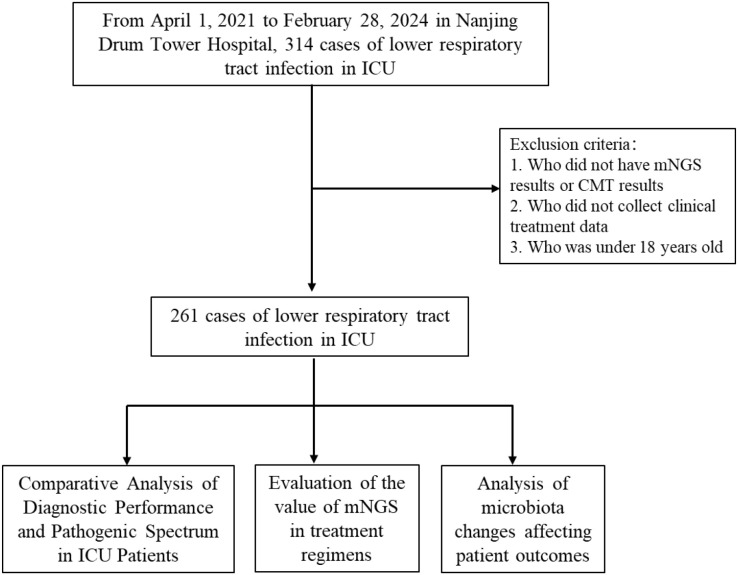 Figure 1
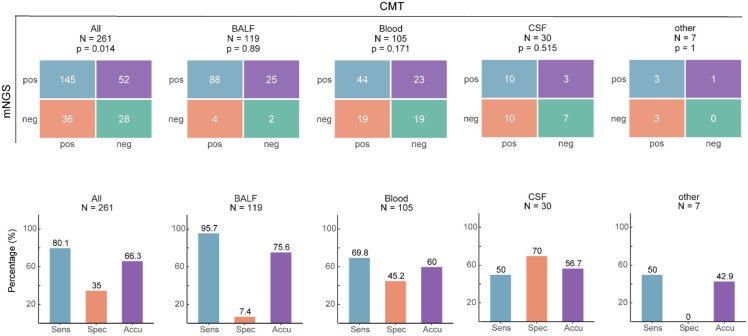 Figure 2
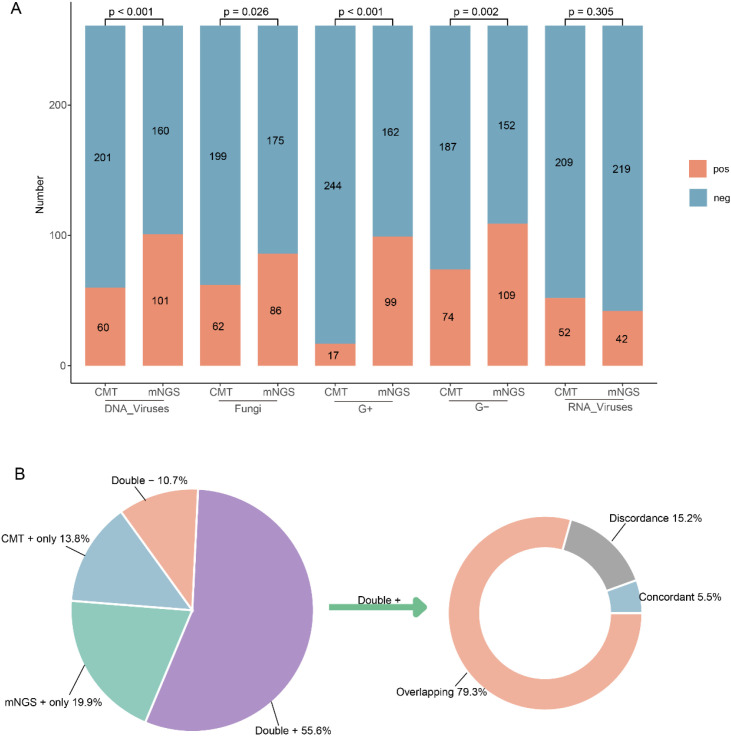 Figure 3
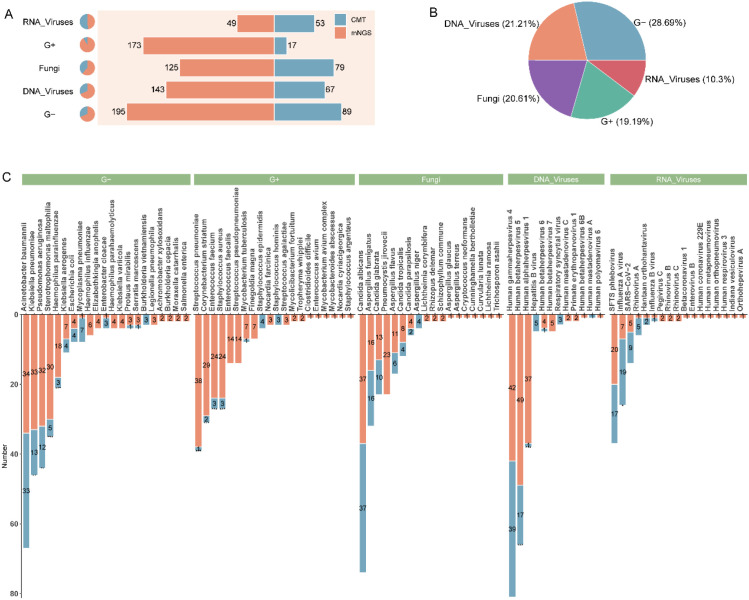 Figure 4
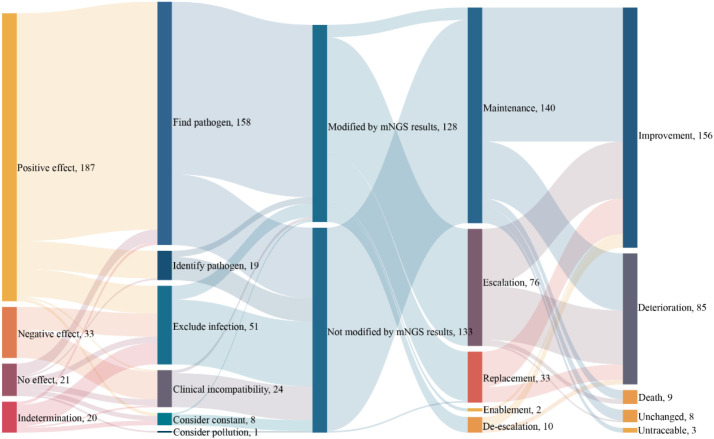 Figure 5
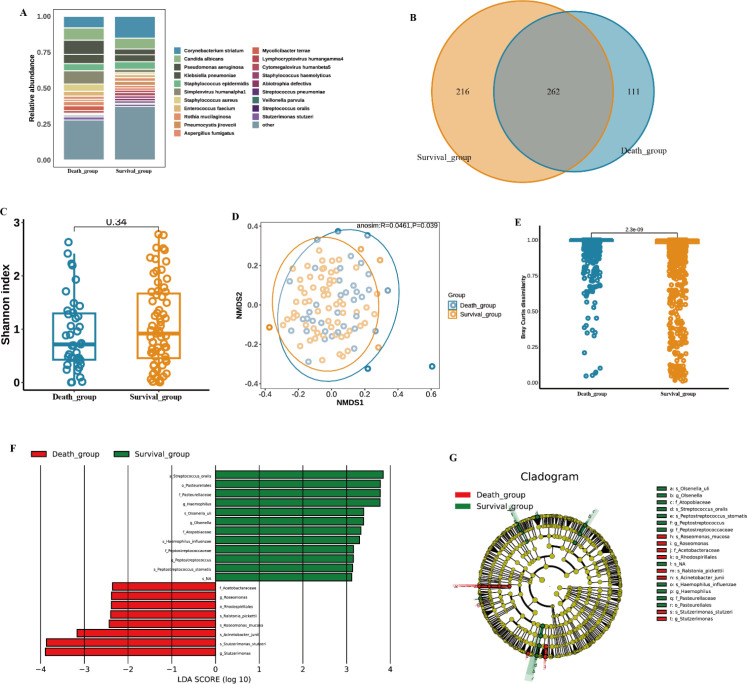 Figure 6
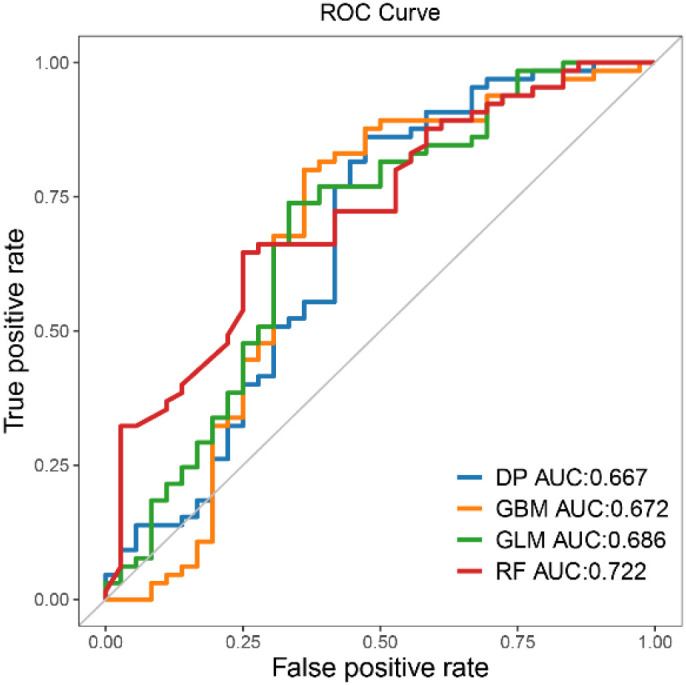 Figure 7
Peer Reviews
No public reviews on file for this paper yet. If you reviewed it on a platform where reviews are public (OpenReview, ICLR, NeurIPS, ICML), you can paste yours below so the community can read it here.
Videos
No videos yet. Explain this paper in a talk, walkthrough, or lecture? Add one.
Taxonomy
TopicsGenomics and Phylogenetic Studies · Diphtheria, Corynebacterium, and Tetanus · Respiratory viral infections research