The development and evaluation of nine non-conventional lipid parameters for metabolic dysfunction-associated fatty liver disease in Chinese medical health examination adults: a single-center retrospective study
Lian Song, Lirong Zhang, Yinhui Hang, Zijie Yang, Jing Yang, Dongqing Wang

TL;DR
This study identifies TyG-BMI as a strong predictor of MAFLD and cardiovascular risk in adults, using electronic health records from a Chinese population.
Contribution
The study introduces TyG-BMI as a novel and effective non-conventional lipid parameter for predicting MAFLD and associated cardiovascular risk.
Findings
TyG-BMI showed the strongest association with MAFLD (OR = 3.7) and highest predictive performance (AUC = 0.81).
A nonlinear relationship between TyG-BMI and MAFLD was identified with an inflection point at 222.426.
Higher TyG-BMI tertiles were linked to increased atherosclerotic cardiovascular disease risk (OR = 2.55).
Abstract
Metabolic dysfunction-associated fatty liver disease (MAFLD) represents a prevalent chronic hepatic condition globally, characterized by hepatic steatosis concurrent with at least one cardiometabolic risk factor, such as overweight/obesity, type 2 diabetes mellitus (T2DM), or metabolic dysregulation. This study aimed to evaluate the associations between nine non-conventional lipid parameters—BMI, NHHR, AIP, RC, GHR, CHG, LCI, TyG, TyG-BMI—and MAFLD, and to compare their predictive performance for MAFLD screening. This study utilized the electronic medical record at Wuhan Union Hospital between January 2020 and November 2021, and multi-model adjustment weighted logistic regression analysis was applied to investigate the association of the nine parameters with MAFLD. Receiver operating characteristic (ROC) curves were analyzed to assess the screening ability of the nine parameters.…
Genes, proteins, chemicals, diseases, species, mutations and cell lines named across the full text — each resolved to its canonical identifier and authoritative record.
Click any figure to enlarge with its caption.
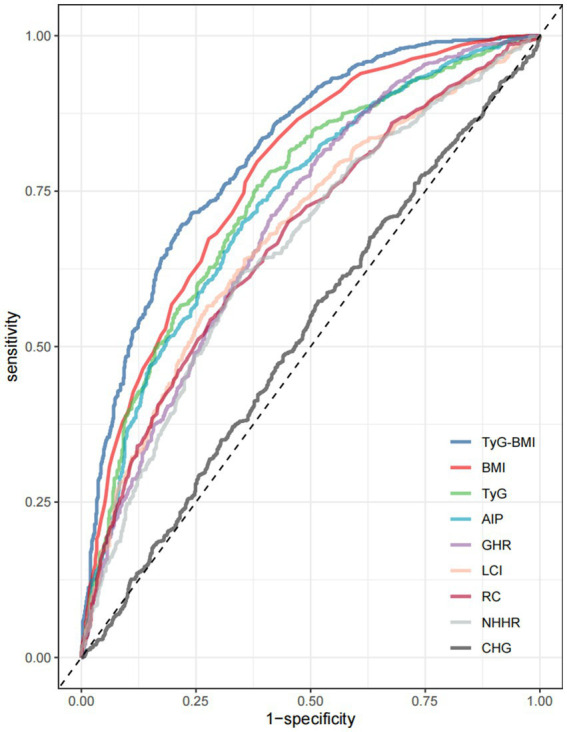 Figure 1
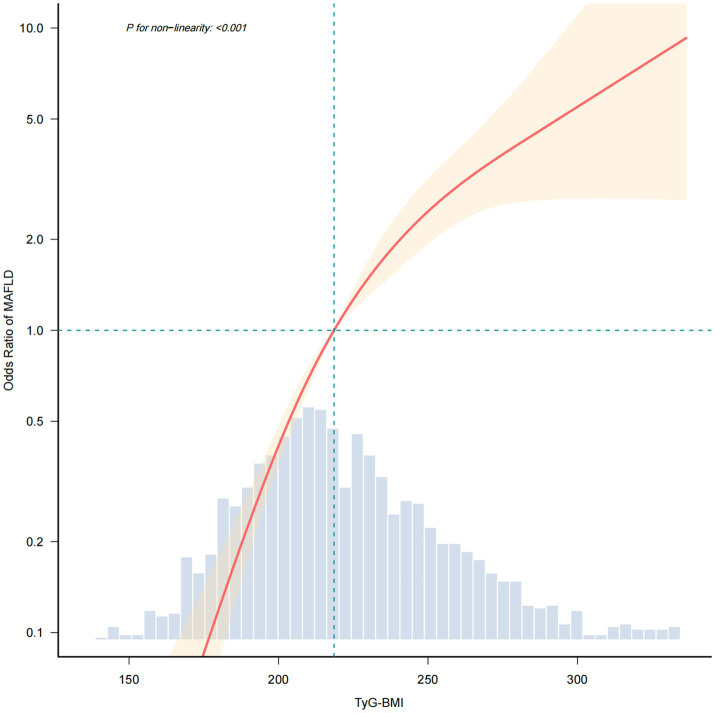 Figure 2
 Figure 3
Peer Reviews
No public reviews on file for this paper yet. If you reviewed it on a platform where reviews are public (OpenReview, ICLR, NeurIPS, ICML), you can paste yours below so the community can read it here.
Videos
No videos yet. Explain this paper in a talk, walkthrough, or lecture? Add one.
Taxonomy
TopicsLiver Disease Diagnosis and Treatment · Diabetes, Cardiovascular Risks, and Lipoproteins · Cardiovascular Disease and Adiposity