Goal-directed actions and habits in head-fixed mice
Logan M. Manusky, Lisa M. Green, Joshua A. Boquiren, Jade Baek, Marcus S. Bell, Kate M. Wassum, James M. Otis

TL;DR
This study introduces a new method to study goal-directed actions and habits in mice, showing how the brain balances these behaviors.
Contribution
A novel head-fixed paradigm enables longitudinal neural interrogation of goal-directed and habitual behaviors in mice.
Findings
Mice with limited training reduced lever-pressing when outcomes were devalued, but overtrained mice did not.
Chemogenetic inhibition of the DLS in overtrained mice restored sensitivity to outcome devaluation and contingency reversal.
The paradigm allows tracking of neuronal ensembles during habit acquisition and expression.
Abstract
Behavioral control is fundamentally governed by a dynamic balance between flexible, goal-directed actions and efficient but highly automated habits. While the transition to habitual control can be adaptive, an imbalance favoring rigid habits over flexible control is thought to contribute significantly to the core pathology of many neuropsychiatric disorders. Despite their pervasiveness, the precise neural circuits that govern this critical balance remain poorly characterized. A major barrier to progress lies in the technical challenge of tracking single neurons in relevant circuits as goal-directed behavior becomes habitual. Here, we introduce and validate a novel head-fixed instrumental learning paradigm in mice that enables the differentiation of goal-directed and habitual behavioral control. This model provides an unprecedented platform for high-resolution, longitudinal in vivo…
Genes, proteins, chemicals, diseases, species, mutations and cell lines named across the full text — each resolved to its canonical identifier and authoritative record.
Click any figure to enlarge with its caption.
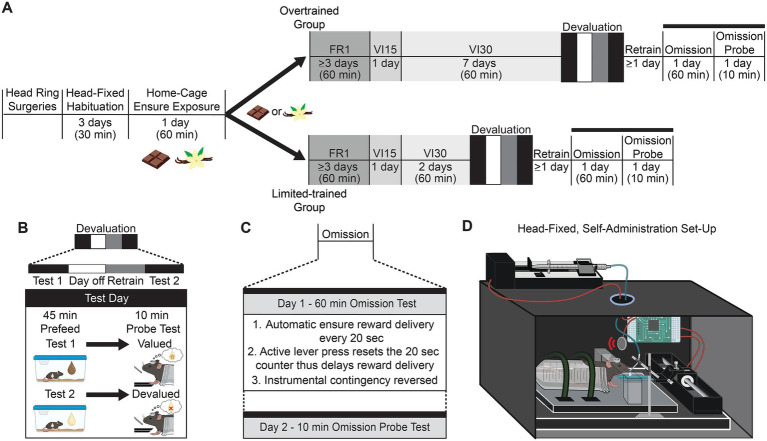 Figure 1
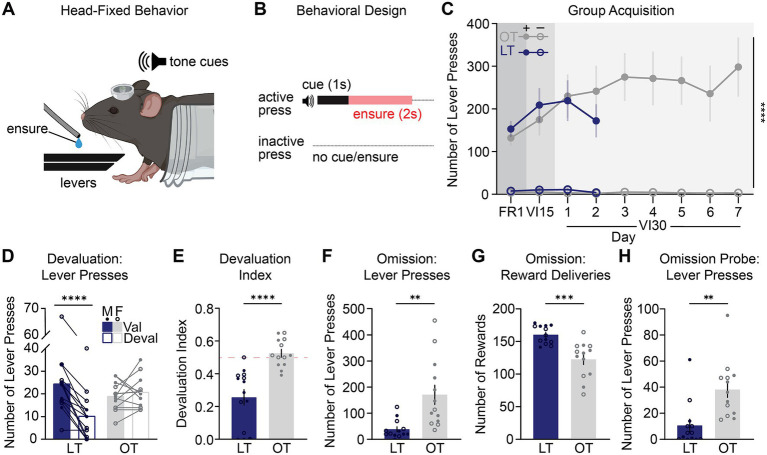 Figure 2
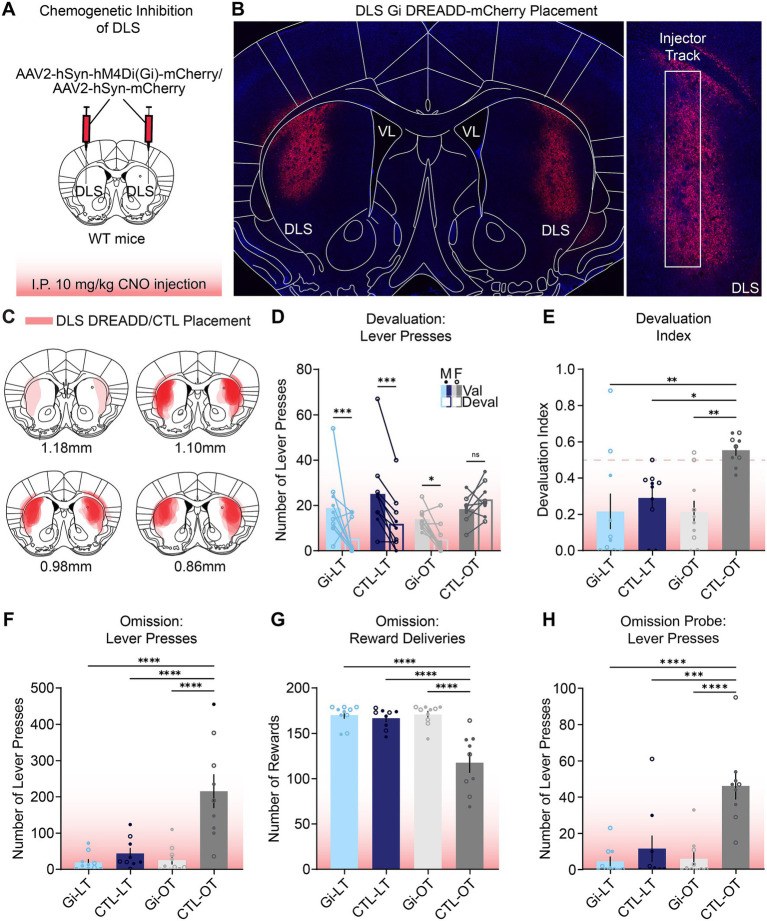 Figure 3
Peer Reviews
No public reviews on file for this paper yet. If you reviewed it on a platform where reviews are public (OpenReview, ICLR, NeurIPS, ICML), you can paste yours below so the community can read it here.
Videos
No videos yet. Explain this paper in a talk, walkthrough, or lecture? Add one.
Taxonomy
TopicsZebrafish Biomedical Research Applications · Neural dynamics and brain function · Neurotransmitter Receptor Influence on Behavior