The SIRP family: from structural diversity and signaling mechanisms to implications in immune-related disease targeted therapeutics
Yanmei Jin, Quiyang Huang, Jiaqi Song, Zain ul Abideen, Ruijiong Tan, Shaohua Xu, Ming Chen

TL;DR
This review explains how different SIRP proteins regulate immune responses and how targeting them could help treat diseases like cancer and autoimmunity.
Contribution
The paper provides a comprehensive overview of SIRP family signaling mechanisms and their therapeutic implications in immune-related diseases.
Findings
SIRPα inhibits phagocytosis via CD47 binding, making it a target for cancer immunotherapy.
SIRPβ activates cells through DAP12, linking it to inflammation and bone metabolism.
SIRPγ modulates T cell adhesion and migration without typical signaling motifs.
Abstract
Signal regulatory proteins (SIRPs) are membrane receptors on immune cells that control immune homeostasis and inflammation. Although SIRP family members share homologous extracellular domains, they differ in intracellular motifs and function: SIRPα transduces inhibitory signals, SIRPβ associates with DAP12 to trigger activation, and SIRPγ primarily modulates adhesion and T cell responses. This review compares the structure, ligand interactions, and signaling mechanisms of SIRPα, SIRPβ, and SIRPγ, summarizes their roles in cancer, autoimmunity and neurodegeneration, and surveys therapeutic strategies that target the CD47–SIRPα axis. We highlight current clinical progress, common toxicities, and open questions that must be addressed to advance SIRP-targeted therapies. The core biological characteristics and functions of the SIRP protein family. Upon binding to CD47, SIRPα transduces an…
Genes, proteins, chemicals, diseases, species, mutations and cell lines named across the full text — each resolved to its canonical identifier and authoritative record.
Click any figure to enlarge with its caption.
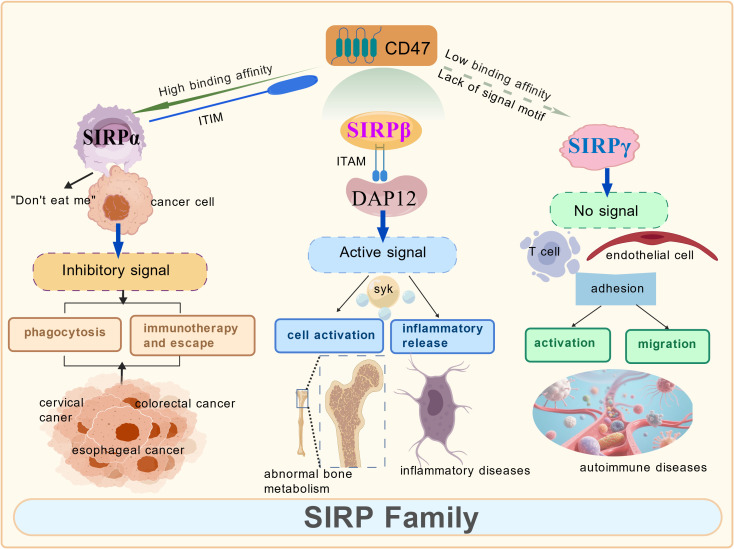 Figure 1
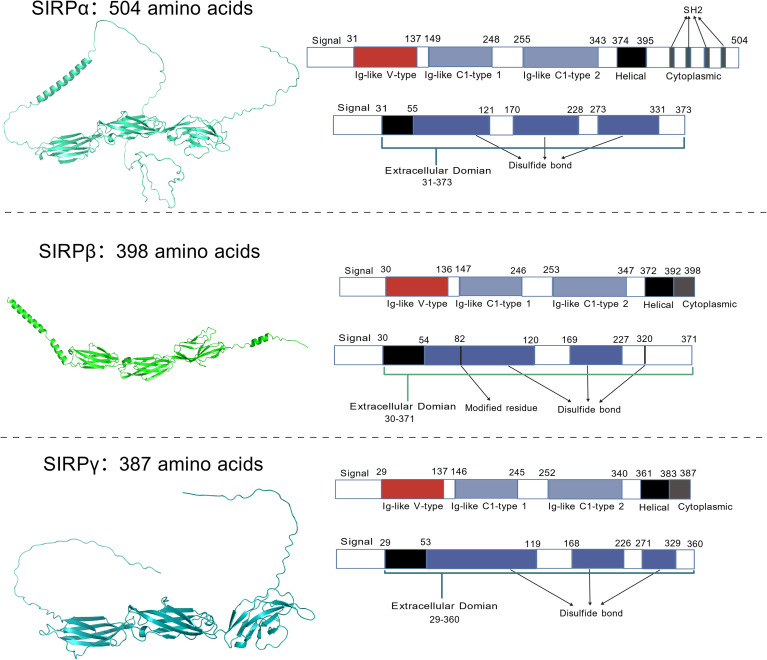 Figure 2
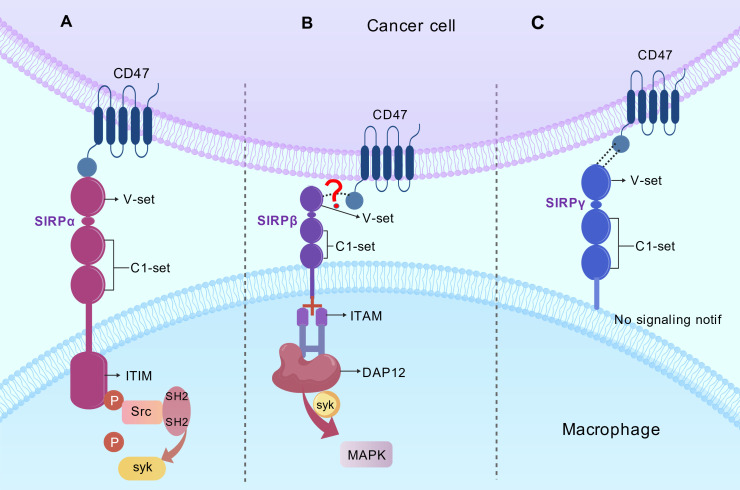 Figure 3
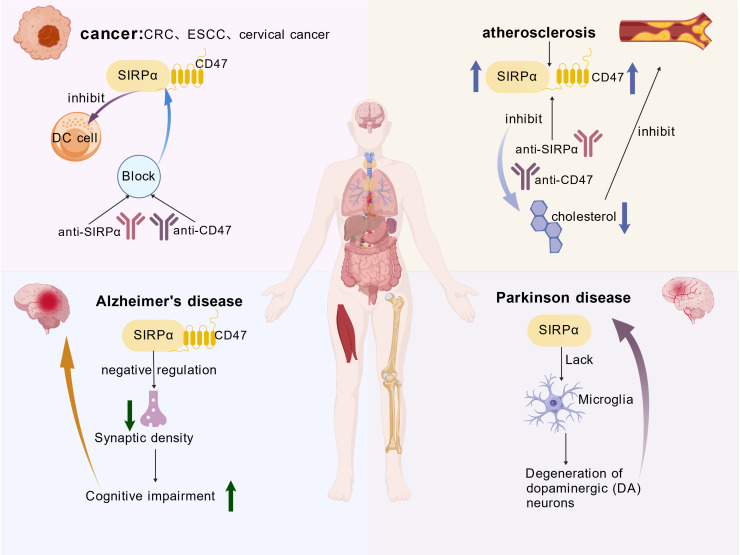 Figure 4
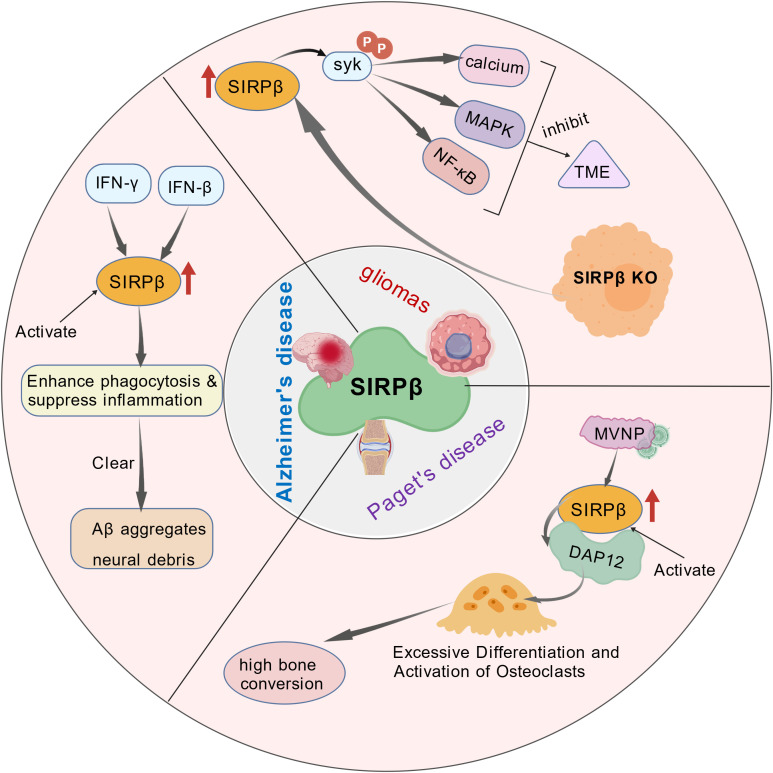 Figure 5
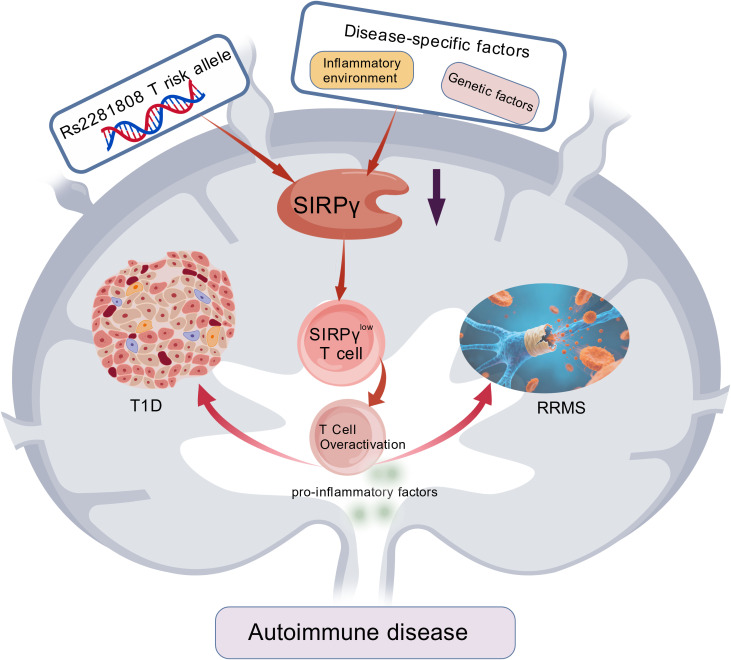 Figure 6
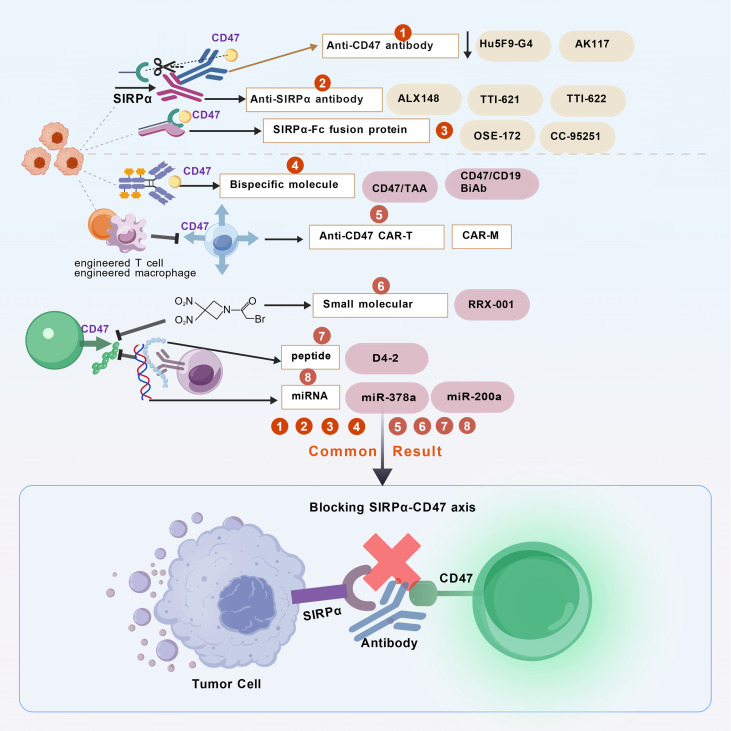 Figure 7
Peer Reviews
No public reviews on file for this paper yet. If you reviewed it on a platform where reviews are public (OpenReview, ICLR, NeurIPS, ICML), you can paste yours below so the community can read it here.
Videos
No videos yet. Explain this paper in a talk, walkthrough, or lecture? Add one.
Taxonomy
TopicsPhagocytosis and Immune Regulation · Endoplasmic Reticulum Stress and Disease · Adenosine and Purinergic Signaling