Reversing T cell dysfunction in a novel in vitro model of T cell exhaustion reveals differential roles of RASA2
Hilal Saraç, Rachael Nicholson, Rebecca N. Graham, Meera Augustus, Raha Taghavi, Dympna J. Connolly, Lindsay Lim, Sofia Lourenco

TL;DR
A new in vitro model of T cell exhaustion shows that RASA2 plays different roles in CD4+ and CD8+ T cells, and its editing can reverse T cell dysfunction.
Contribution
This is the first demonstration of CRISPR editing directly in in vitro generated human exhausted T cells to reverse dysfunction.
Findings
Chronic stimulation induces T cell exhaustion marked by elevated PD-1+Tim-3+ cells and reduced cytokine secretion.
RASA2 depletion before exhaustion enhances cytokine and granzyme secretion without altering inhibitory receptor expression.
Direct RASA2 editing in exhausted T cells restores function, with CD4+ T cells showing greater recovery than CD8+ T cells.
Abstract
T cell exhaustion driven by chronic antigen stimulation limits durable responses to cancer immunotherapy. Using repeated soluble anti-CD3/anti-CD28 stimulation, we established an in vitro system that recapitulates hallmark exhaustion features in human CD8+ and CD4+ T cells, including increased PD-1+Tim-3+ subsets and loss of IL-2, TNF-α and IFN-γ secretion. We used our platform to explore the role of RASA2 in CD4+ versus CD8+ T cell exhaustion and assess the feasibility of reversing established exhaustion in T cells. Primary human T cells underwent six rounds of chronic stimulation to generate exhausted T cells (Tex), while single-stimulated controls (Ts) were rested in IL-2 media. Exhaustion states were assessed by flow cytometry, cytokine profiling, spectral flow cytometry, and scRNA-seq with pseudotime analysis, across timepoints, resting and activation along the exhaustion…
Genes, proteins, chemicals, diseases, species, mutations and cell lines named across the full text — each resolved to its canonical identifier and authoritative record.
Click any figure to enlarge with its caption.
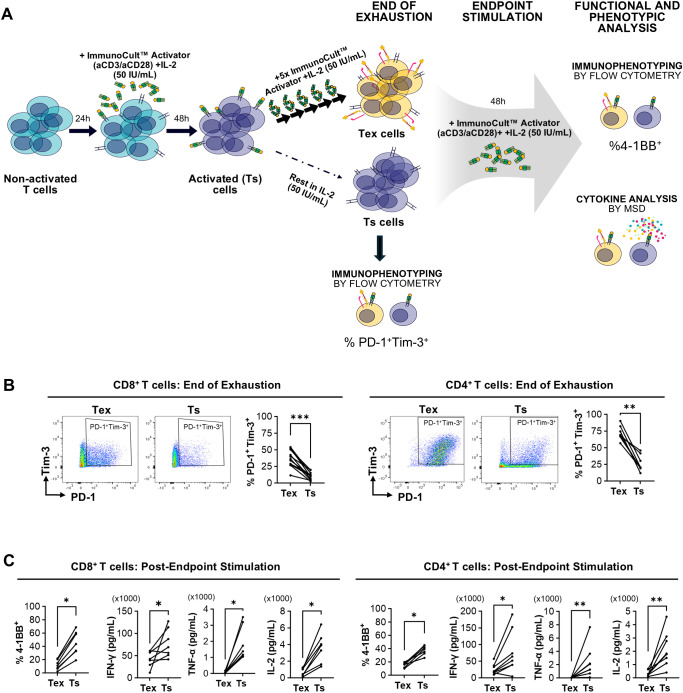 Figure 1
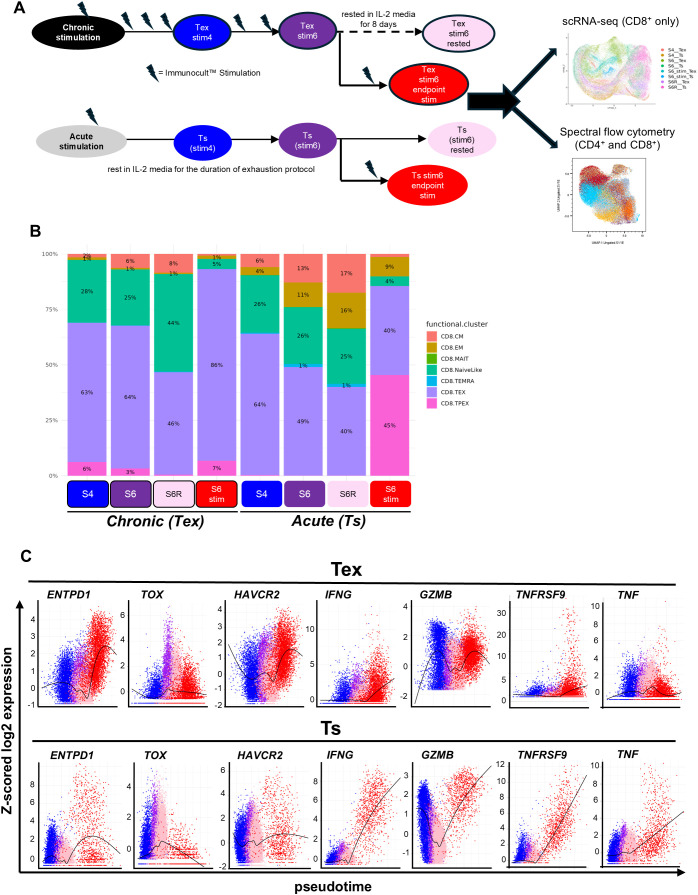 Figure 2
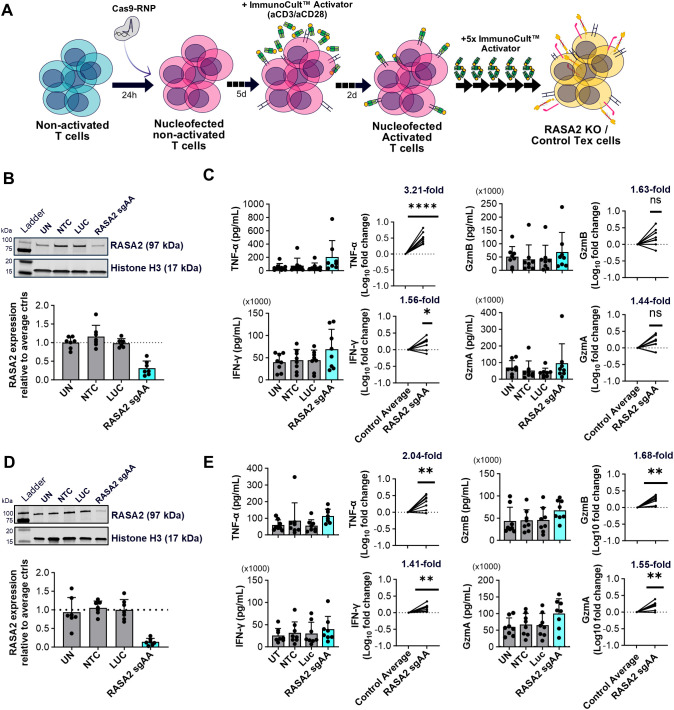 Figure 3
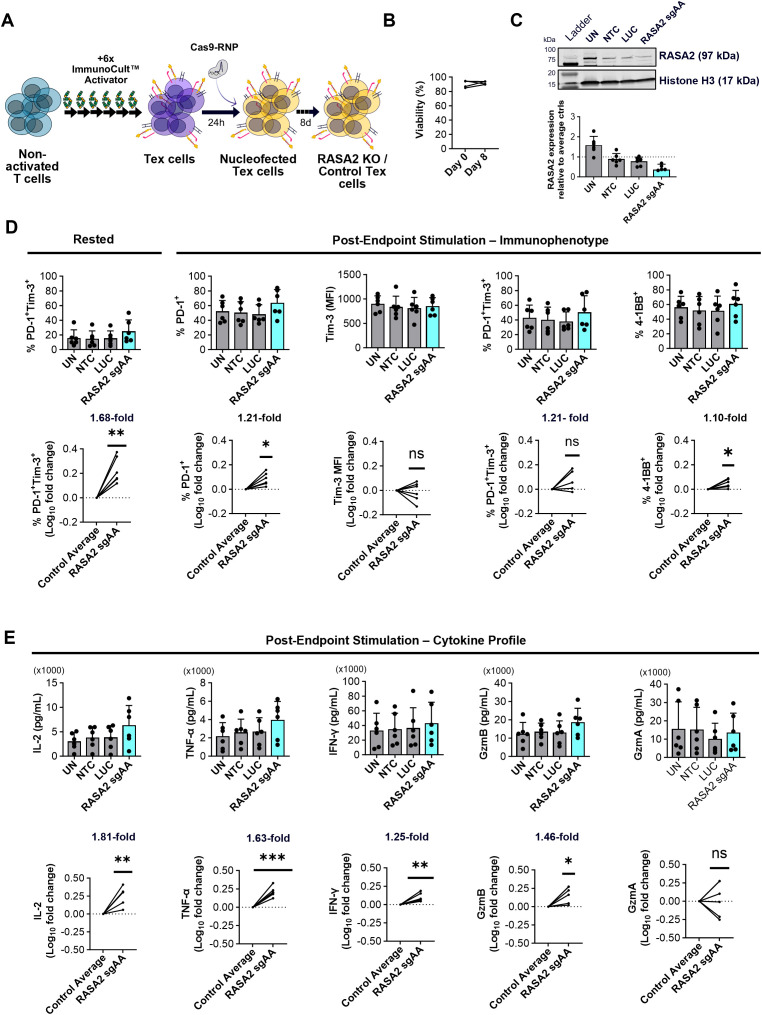 Figure 4
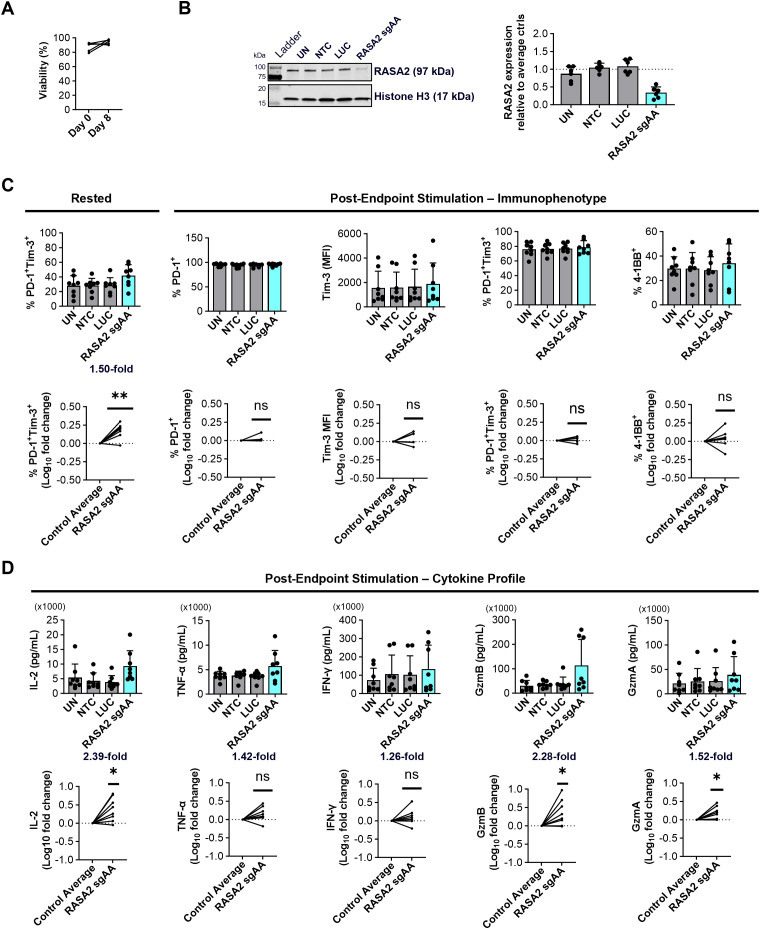 Figure 5
Peer Reviews
No public reviews on file for this paper yet. If you reviewed it on a platform where reviews are public (OpenReview, ICLR, NeurIPS, ICML), you can paste yours below so the community can read it here.
Videos
No videos yet. Explain this paper in a talk, walkthrough, or lecture? Add one.
Taxonomy
TopicsCancer Immunotherapy and Biomarkers · CAR-T cell therapy research · Exercise and Physiological Responses