Characterization of subchronic lung and brain consequences caused by mouse-adapted SARS-CoV-2 and influenza A infection of C57BL6 mice
Joshua Currey, Chenxiao Wang, Meredith G. Mayer, Yilin Chen, Ana Karina Nisperuza Vidal, Michaela J. Allen, Mst Shamima Khatun, Calder R. Ellsworth, Mohammad Islamuddin, Jefferson Evangelista, Skye M. Minor, Nadia Golden, Kevin J. Zwezdaryk, Nicholas J. Maness, Robert V. Blair

TL;DR
This study compares long-term lung and brain effects in mice infected with SARS-CoV-2 or influenza A, revealing distinct patterns of inflammation and tissue damage.
Contribution
The study provides new insights into the tissue-specific long-term consequences of SARS-CoV-2 and influenza A infections in mice.
Findings
SARS-CoV-2 caused prolonged lung inflammation and fibrosis with altered gene pathways, while influenza A triggered epithelial regeneration.
SARS-CoV-2 led to neuroinflammation and microhemorrhages in the brain, with no detectable infection, unlike influenza A.
Transcriptomic analysis showed SARS-CoV-2 uniquely disrupted the hypothalamic–pituitary axis and vascular function in the brain.
Abstract
SARS-CoV-2 and, to a lesser extent, influenza A can lead to long-term complications in the respiratory and nervous systems. However, the mechanisms driving post-viral sequelae remain poorly understood. To address this gap, we longitudinally characterized C57BL/6 mice infected with sublethal doses of mouse-adapted SARS-CoV-2 (MA30) or influenza A (PR8). Lung and brain tissues were analyzed at 14-, 21-, and 28-days post-infection (DPI) using histological analysis and bulk-RNA sequencing. In the lungs, both infections caused prolonged inflammation and fibrosis. MA30-infected lungs showed persistent upregulation of inflammation, coagulation, complement, as well as fibrotic, and extracellular matrix (ECM) remodeling pathways at 21 DPI, alongside downregulation of epithelial junction and metabolic program pathways. In contrast, PR8-infected lungs exhibited a strong acute interferon response…
Genes, proteins, chemicals, diseases, species, mutations and cell lines named across the full text — each resolved to its canonical identifier and authoritative record.
Click any figure to enlarge with its caption.
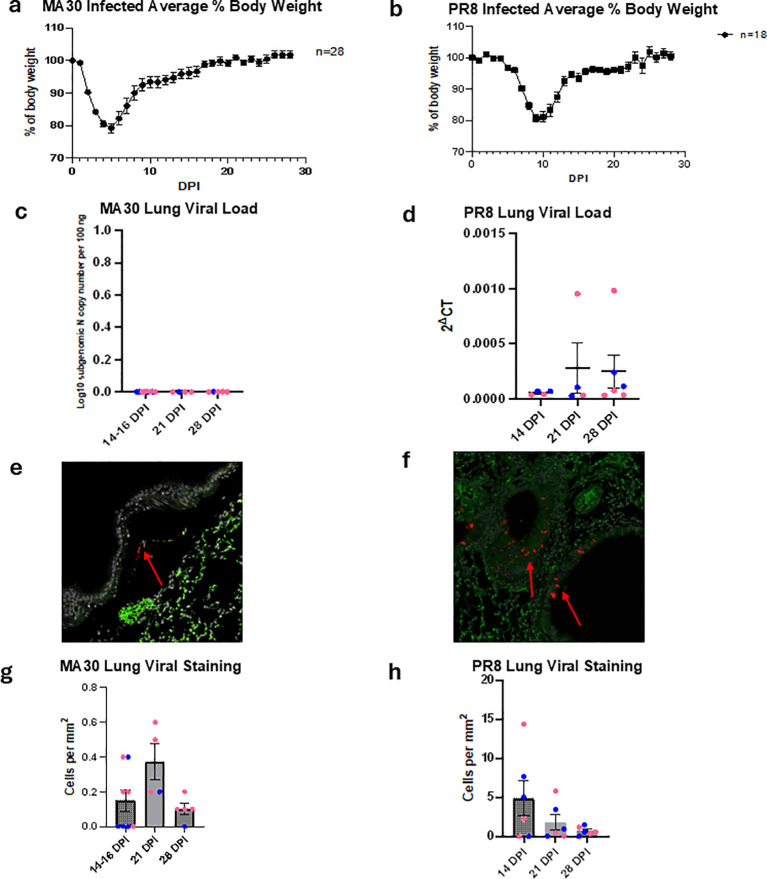 Figure 1
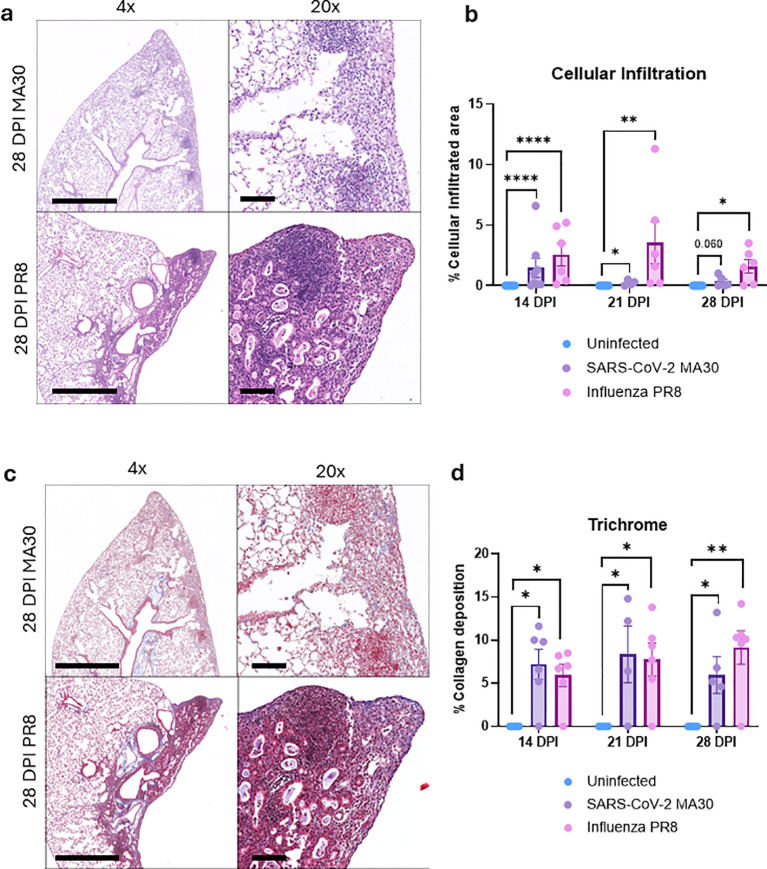 Figure 2
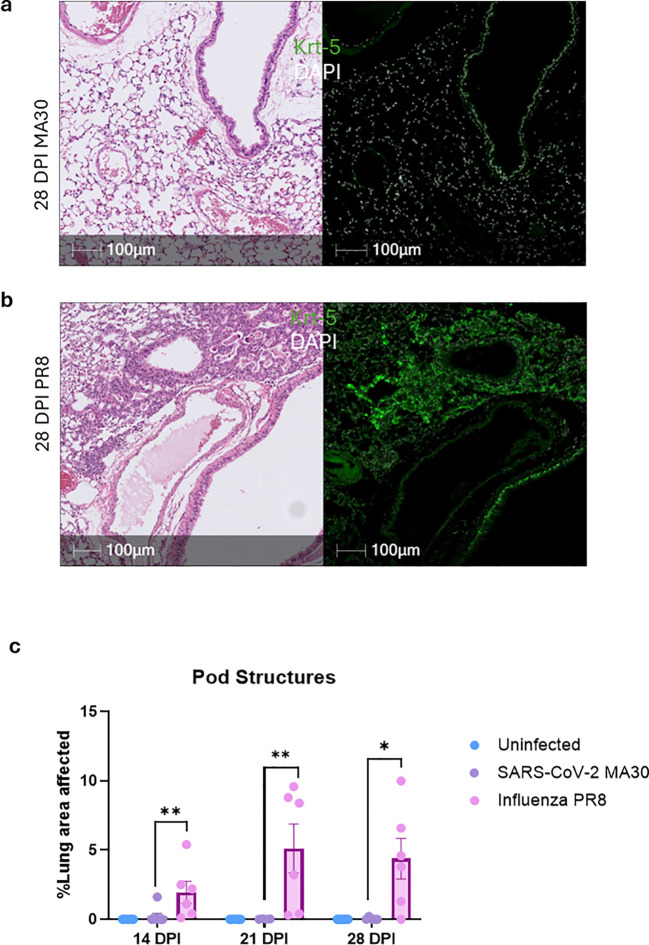 Figure 3
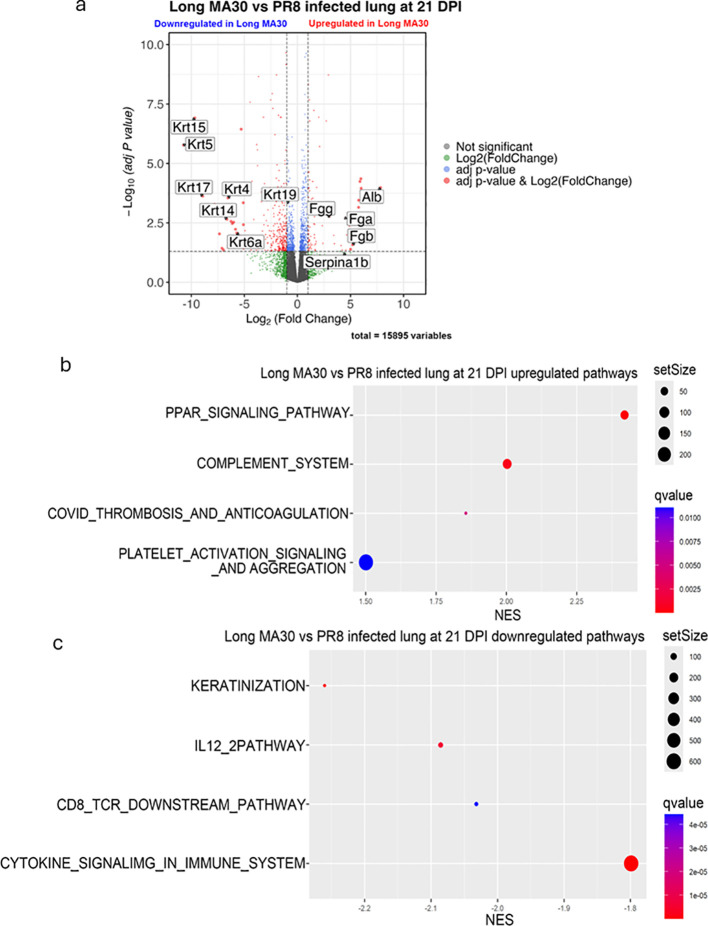 Figure 4
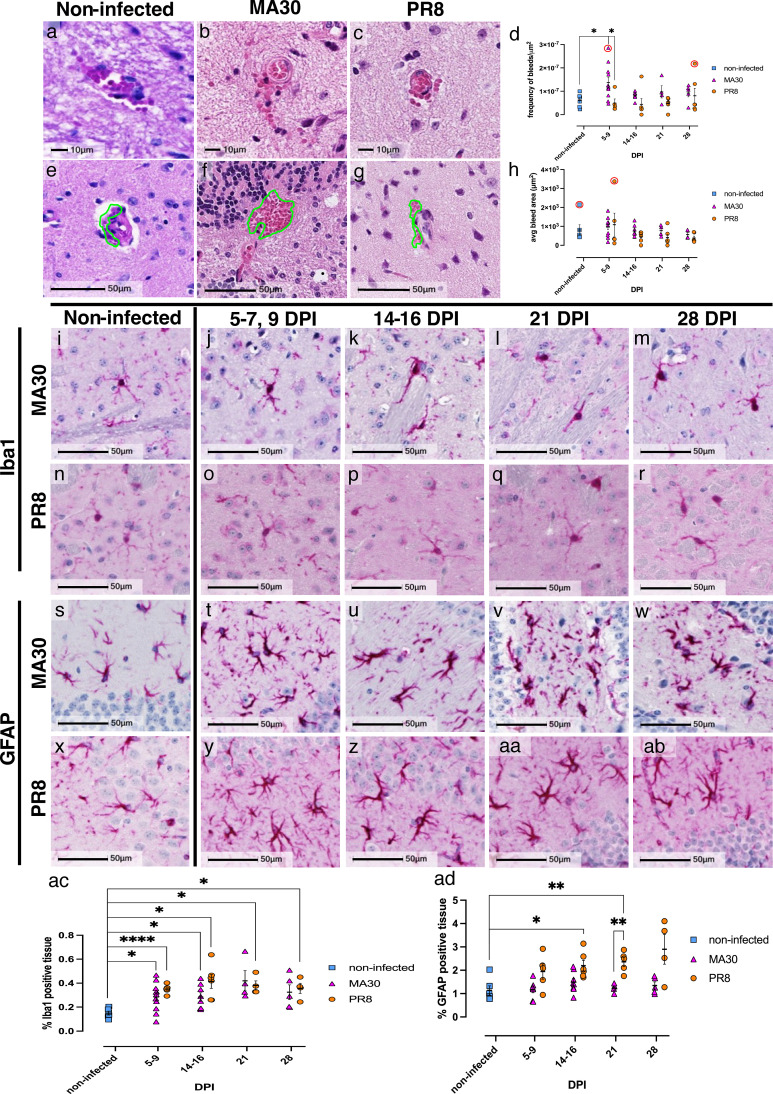 Figure 5
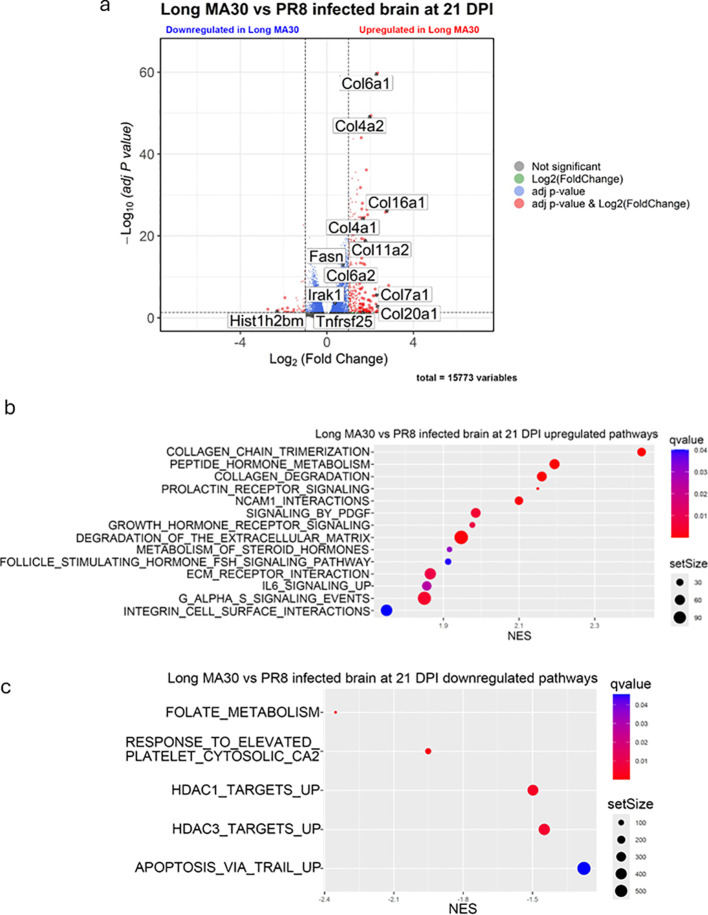 Figure 6
Peer Reviews
No public reviews on file for this paper yet. If you reviewed it on a platform where reviews are public (OpenReview, ICLR, NeurIPS, ICML), you can paste yours below so the community can read it here.
Videos
No videos yet. Explain this paper in a talk, walkthrough, or lecture? Add one.
Taxonomy
TopicsLong-Term Effects of COVID-19 · COVID-19 Clinical Research Studies · SARS-CoV-2 and COVID-19 Research