Early rise in nasal secretory IgA associated with shorter duration of SARS-CoV-2 virus shedding in an acute infection cohort
Caroline Brackett, Lu Zhang, Bich T. N. Do, Saman Baral, Leigh H. Fisher, William O. Hahn, Alexander J. Carnacchi, Sir’Tauria Hilliard, Shuying S. Li, Lakshmanane Premkumar, Alexander L. Greninger, Ollivier Hyrien, Kelly E. Seaton, Georgia D. Tomaras

TL;DR
Early increases in nasal IgA antibodies are linked to shorter SARS-CoV-2 shedding, suggesting a protective role for mucosal immunity in controlling the virus.
Contribution
Identifies nasal secretory IgA targeting the spike N-terminal domain as a key factor in reducing SARS-CoV-2 shedding duration.
Findings
Higher early serum and nasal IgA levels correlate with shorter viral shedding duration.
Nasal IgA targeting the spike N-terminal domain shows the strongest association with reduced shedding.
Antibodies to endemic coronaviruses remain stable, indicating SARS-CoV-2-specific responses drive virus control.
Abstract
Understanding the role of mucosal immune responses in preventing coronavirus replication is essential for the development of broad-spectrum therapeutics and vaccines capable of interrupting transmission. Investigating the relationship between mucosal antibodies and viral shedding may provide critical insights into protective mechanisms against SARS-CoV-2 and inform strategies for enhancing mucosal immunity. In a subset of the larger CoVPN 5001 cohort, 143 participants from the US, Mexico, and South America were characterized as either short (<7 days), intermediate (7–21 days), or prolonged (>21 days) virus shedders based on RT-qPCR measurements over the first month of acute SARS-CoV-2 infection. We measured systemic circulating serum IgA and secretory IgA (SIgA) in serially collected nasal lavage fluids to 15 SARS-CoV-2 antigens, including spike variants, receptor binding domain (RBD),…
Genes, proteins, chemicals, diseases, species, mutations and cell lines named across the full text — each resolved to its canonical identifier and authoritative record.
Click any figure to enlarge with its caption.
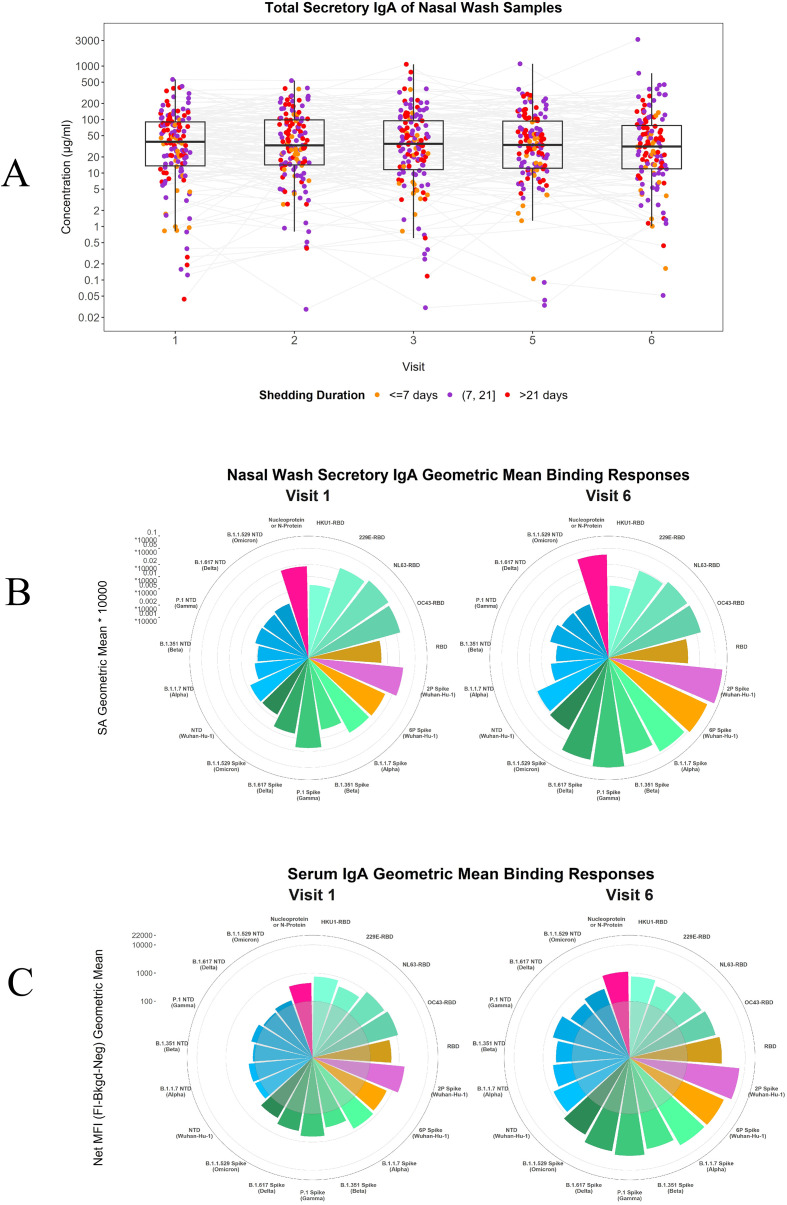 Figure 1
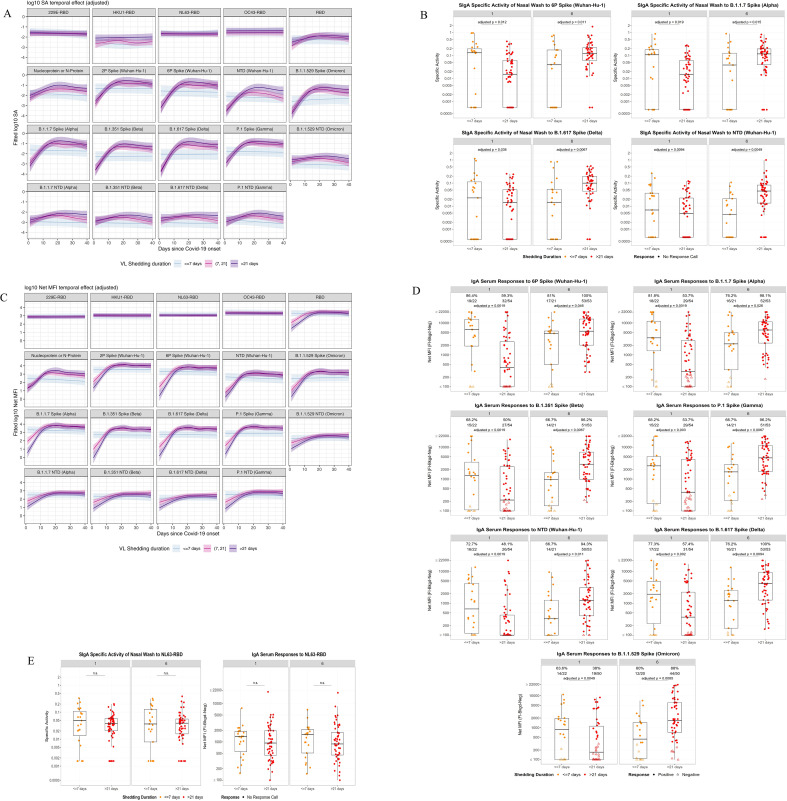 Figure 2
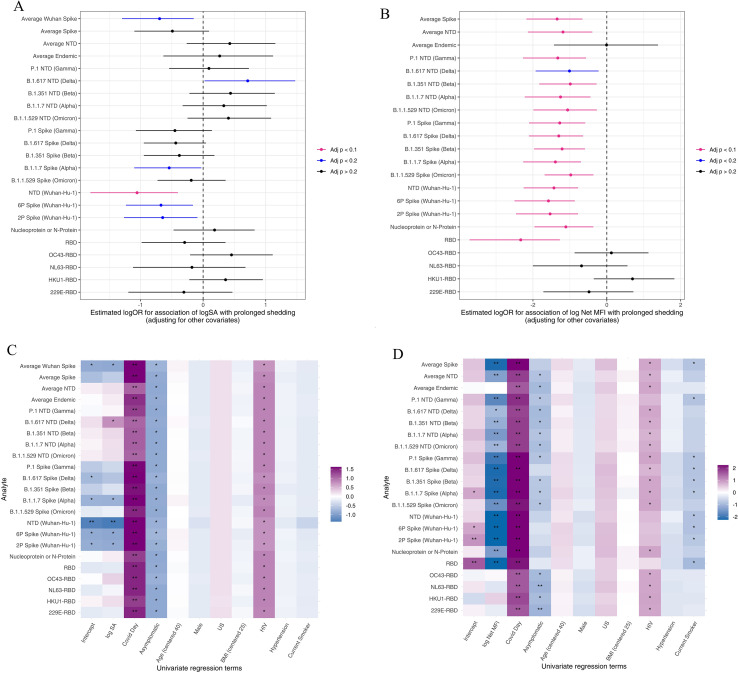 Figure 3
Peer Reviews
No public reviews on file for this paper yet. If you reviewed it on a platform where reviews are public (OpenReview, ICLR, NeurIPS, ICML), you can paste yours below so the community can read it here.
Videos
No videos yet. Explain this paper in a talk, walkthrough, or lecture? Add one.
Taxonomy
TopicsSARS-CoV-2 and COVID-19 Research · vaccines and immunoinformatics approaches · SARS-CoV-2 detection and testing