Predictive factors for severity and poor treatment response in children with Evans syndrome: A retrospective cohort study
Monia Ben Khaled, Marwa Ben Ayed, Zaid Zaroui, Ilhem Ben Fraj, Samia Rekaya, Najla Mekki, Yosra Chebbi, Aicha Ben Taieb, Amani Merdassi, Ikram Zaiter, Takwa Lamouchi, Ridha Kouki, Houda Kaabi, Hamida Slama, Wafa Achour, Mohamed Bejaoui, Fethi Mellouli, Imen Ben-Mustapha

TL;DR
This study identifies factors that predict severe disease and poor treatment outcomes in children with Evans syndrome, emphasizing the importance of early diagnosis and tailored therapies.
Contribution
The study provides novel insights into predictive factors for disease severity and treatment response in pediatric Evans syndrome patients.
Findings
Severe clinical presentation at diagnosis was independently associated with age < 24 months and hemoglobin level < 80g/L.
Fatal outcomes were associated with age < 24 months, family history of inborn errors of immunity, splenomegaly, and hepatomegaly.
Underlying immune dysregulation strongly influences outcomes, highlighting the need for early etiological evaluation.
Abstract
Evans syndrome (ES) is a rare disorder characterized by autoimmune cytopenias affecting multiple blood cell lineages. In children, management remains particularly challenging due to the absence of clear guidelines for acute treatment and escalation to second-line therapies. We conducted a retrospective, longitudinal study (2010-2024) including pediatric patients (<18 years) with ES to identify predictors of severe presentation, need for second-line therapy, and fatal outcome. Predictors were identified using Cox Regression. Fifty patients were included (sequential = 27, concomitant = 23), with a median age at diagnosis of 4.1 years (IQR:1.5–8.5). Secondary ES was observed in 41(82%) cases, among which 38 (76%) had IEI. Severe clinical presentation at diagnosis occurred in 50% of patients and was independently associated with age < 24months and hemoglobin level < 80g/L. Corticosteroid…
Genes, proteins, chemicals, diseases, species, mutations and cell lines named across the full text — each resolved to its canonical identifier and authoritative record.
Click any figure to enlarge with its caption.
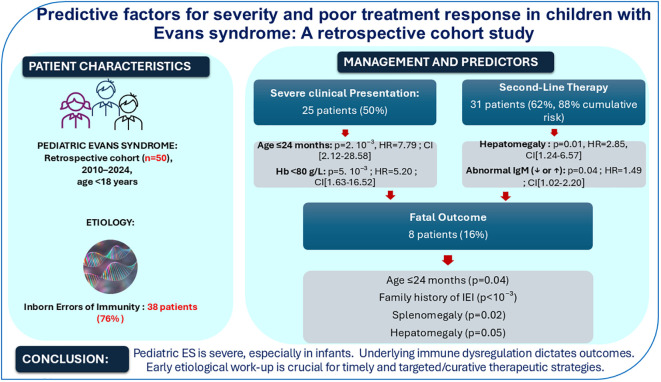 Figure 1
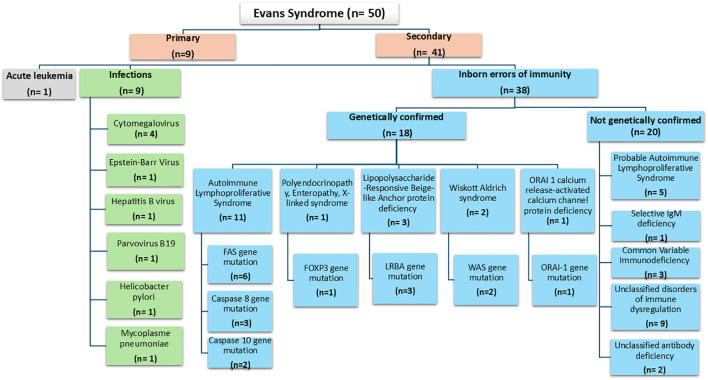 Figure 2
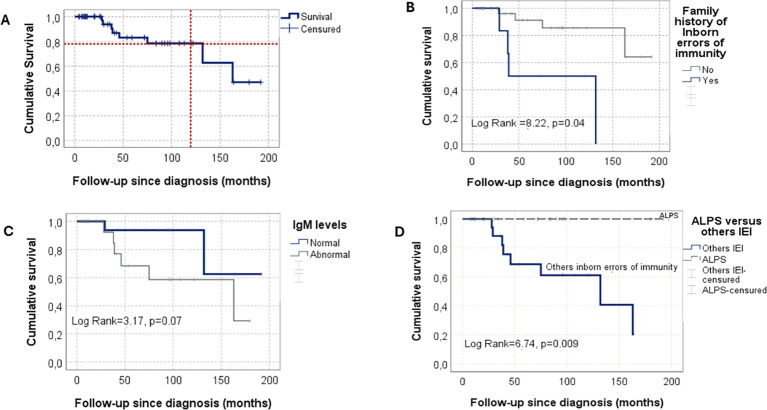 Figure 3
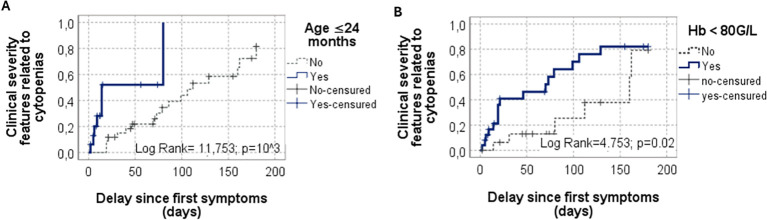 Figure 4
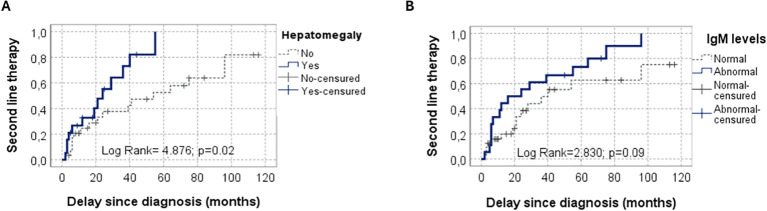 Figure 5
Peer Reviews
No public reviews on file for this paper yet. If you reviewed it on a platform where reviews are public (OpenReview, ICLR, NeurIPS, ICML), you can paste yours below so the community can read it here.
Videos
No videos yet. Explain this paper in a talk, walkthrough, or lecture? Add one.
Taxonomy
TopicsBlood groups and transfusion · Blood disorders and treatments · Platelet Disorders and Treatments