Use of sensing technologies to assess sleep quality and physical activity levels in nursing home residents with dementia taking nightly psychotropic drugs for sleep disturbance: a cross-sectional study
Lydia D. Boyle, Brice Marty, Kristoffer Haugarvoll, Ole Martin Steihaug, Bettina S. Husebo

TL;DR
This study uses sensing technologies to better understand sleep and activity patterns in dementia patients taking sleep medications, revealing differences not captured by traditional questionnaires.
Contribution
The study demonstrates that sensing technologies can detect nuanced differences in sleep and activity among dementia patients using psychotropic drugs.
Findings
Participants on psychotropic drugs had longer wake after sleep onset and poorer sleep regularity.
Those on long-half-life medications showed significantly reduced physical activity levels during day, night, and 24-hour periods.
Digital biomarkers from sensing technologies provided detailed distinctions between groups not captured by traditional assessments.
Abstract
Sleep disturbances are common in people with dementia and nightly prescribed psychotropic drugs, such as sedatives or antidepressants, can increase risks such as injury, inactivity, and behavioral symptoms. Treatment decisions currently rely on periodic, proxy-rated questionnaires that may miss important daily fluctuations in sleep and activity. We explore whether sensing technologies provide insights into distinct differences in sleep characteristics and activity levels in nursing home residents with dementia who are prescribed nightly psychotropic drugs for sleep disturbances. Forty-seven participants were recruited from four nursing homes in Bergen, Norway, and stratified according to prescribed nightly psychotropic drug use for sleep disturbance: 1) none, 2) medications with short half-lives, 3) medications with long half-lives. Garmin Vivoactive5 and Venu3, Vital Things Somnofy…
Genes, proteins, chemicals, diseases, species, mutations and cell lines named across the full text — each resolved to its canonical identifier and authoritative record.
Click any figure to enlarge with its caption.
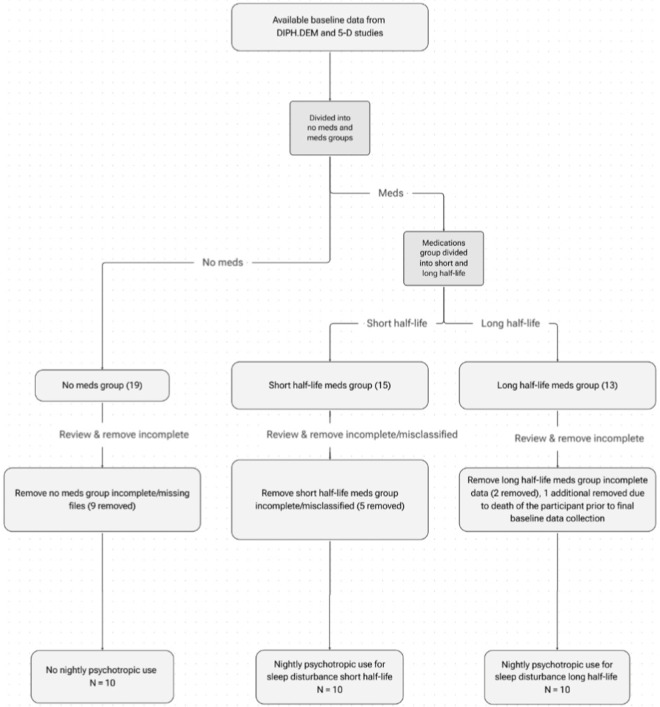 Figure 1
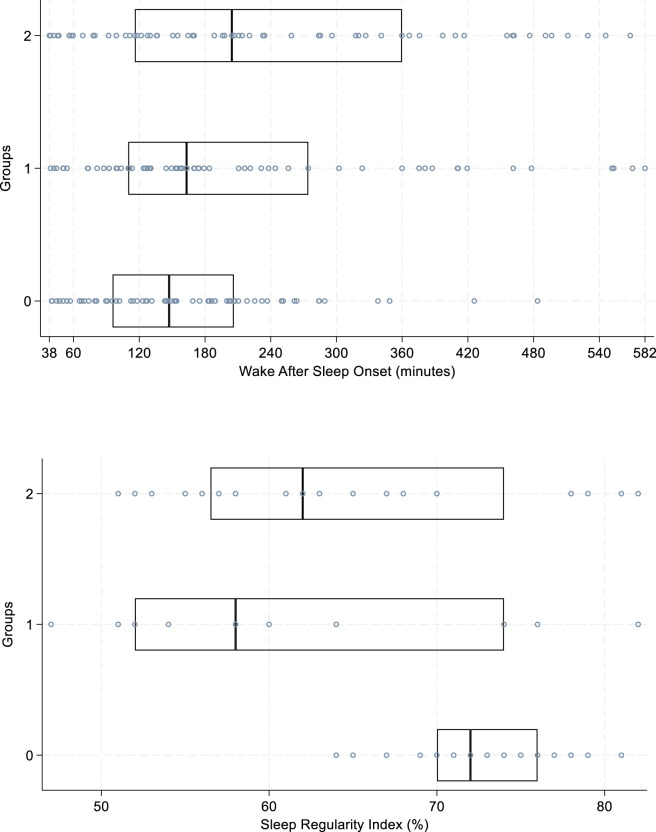 Figure 2
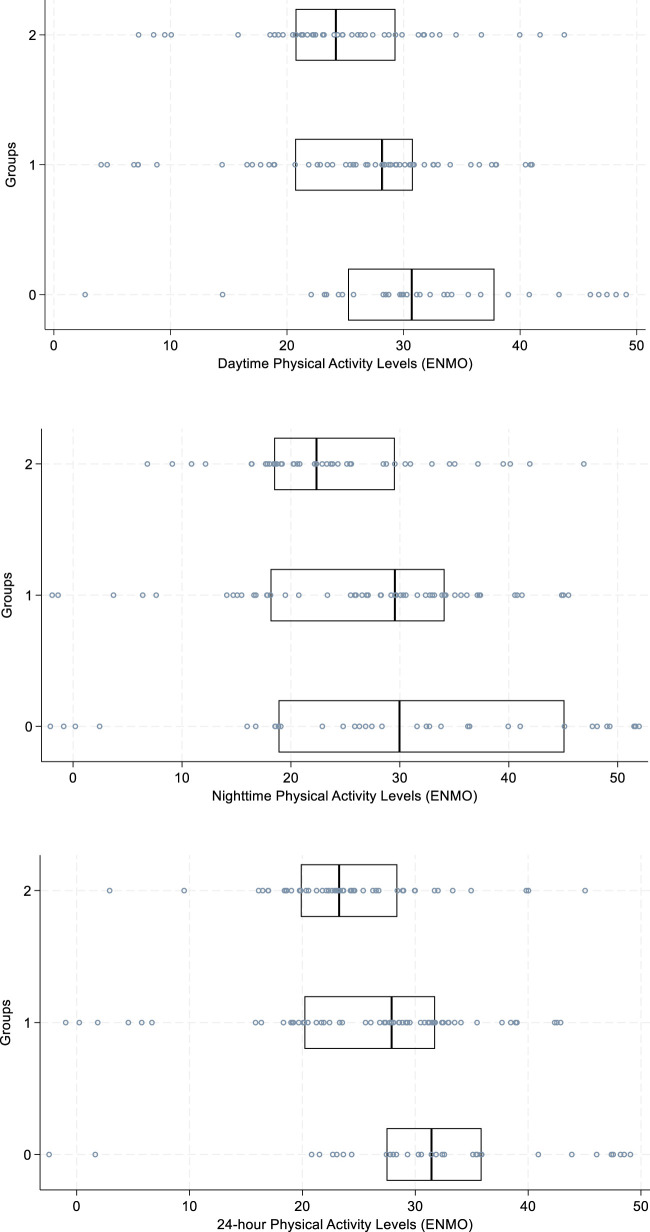 Figure 3
Peer Reviews
No public reviews on file for this paper yet. If you reviewed it on a platform where reviews are public (OpenReview, ICLR, NeurIPS, ICML), you can paste yours below so the community can read it here.
Videos
No videos yet. Explain this paper in a talk, walkthrough, or lecture? Add one.
Taxonomy
TopicsSleep and related disorders · Sleep and Work-Related Fatigue · Sleep and Wakefulness Research