Effects of in vitro fermentation of Astragalus polysaccharide on gut microbiota and neurotransmitter metabolites in patients with major depressive disorder
Chen Lin, Yu-Wei Mi, Huo-Wang Zheng, Yan-Bin Hou, Jie-Qiong Hu, Jia-Xin Mao, Ni Dai, Chao-Lang Fu, Xiao-Qiong Li, Yun-Xin Ji

TL;DR
This study explores how Astragalus polysaccharide affects gut bacteria and brain-related chemicals in people with depression, suggesting potential benefits for mental health.
Contribution
The novel contribution is the first exploration of Astragalus polysaccharide's impact on gut microbiota and neurotransmitter metabolites in MDD patients using in vitro fermentation.
Findings
MDD samples showed altered gut bacteria and higher glutamine and glutamate levels.
APS increased beneficial bacteria like Bifidobacterium and Lactobacillus while reducing harmful ones.
APS elevated key brain chemicals like GABA and dopamine, especially in healthy individuals.
Abstract
Major depressive disorder (MDD) is a common and heterogeneous mental illness with an unclear pathogenesis and often suboptimal treatment outcomes. Astragalus polysaccharide (APS) has shown potential antidepressant effects and may serve as a functional food; however, its impact on the gut microbiota and metabolome in MDD remains unexplored. Using an in vitro fermentation model coupled with 16S rRNA sequencing and targeted metabolomics, we characterized the gut microbial composition and neurotransmitter metabolites in fecal samples from 15 MDD patients and 15 healthy subjects. MDD samples exhibited elevated Fusobacteriaecae and Eggerthellaceae, reduced levels of Eubacterium hallii, Faecalibacterium, and Ruminococcus, and higher concentrations of glutamine (Gln) and glutamate (Glu). APS fermentation significantly increased Bifidobacterium and Lactobacillus while decreasing Eubacterium…
Genes, proteins, chemicals, diseases, species, mutations and cell lines named across the full text — each resolved to its canonical identifier and authoritative record.
Click any figure to enlarge with its caption.
 Figure 1
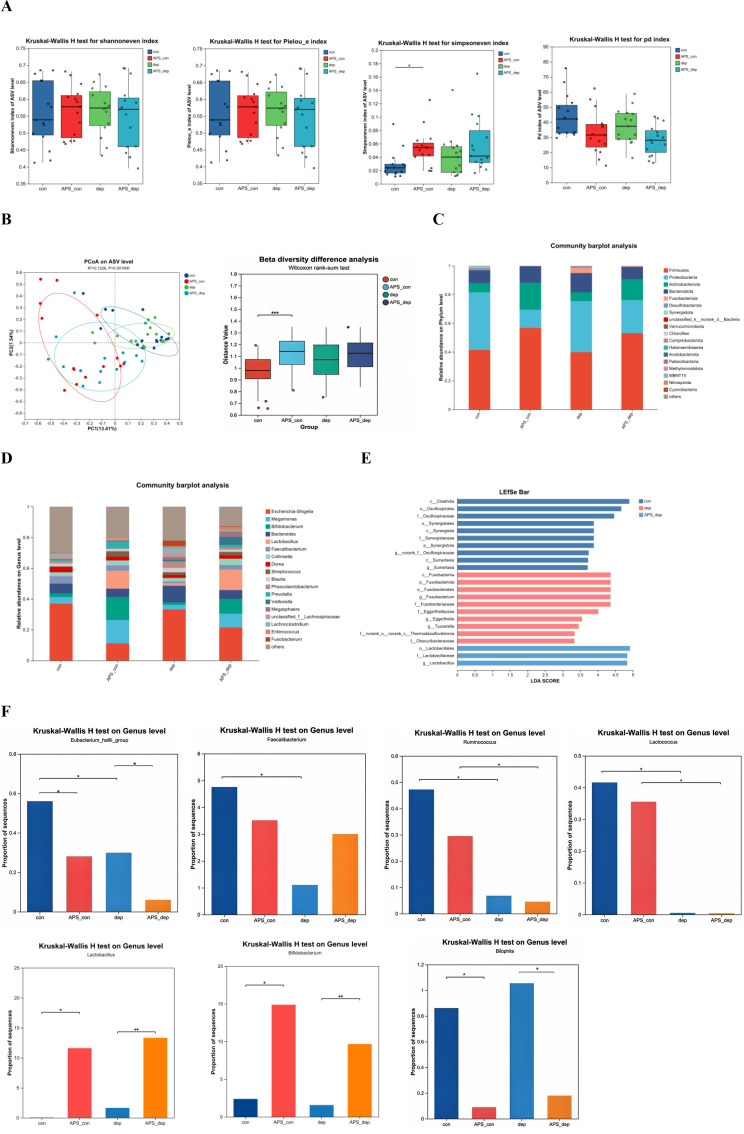 Figure 2
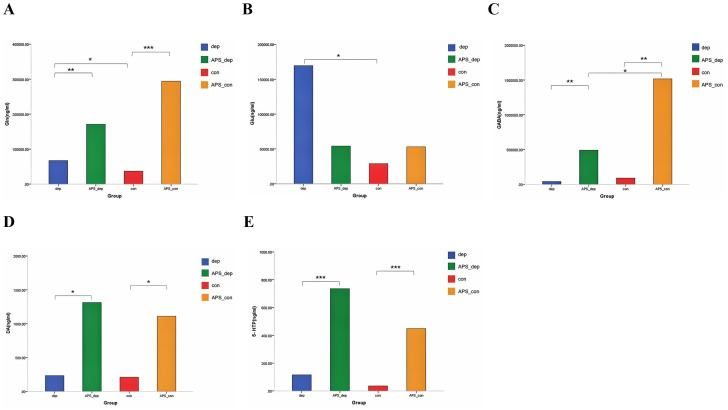 Figure 3
Peer Reviews
No public reviews on file for this paper yet. If you reviewed it on a platform where reviews are public (OpenReview, ICLR, NeurIPS, ICML), you can paste yours below so the community can read it here.
Videos
No videos yet. Explain this paper in a talk, walkthrough, or lecture? Add one.
Taxonomy
TopicsGut microbiota and health · Tryptophan and brain disorders · Metabolomics and Mass Spectrometry Studies