Clinical outcomes-dependent IgG epitope profiling in HTLV-1 reveals differential recognition of pathogen-derived antigens
Natali Espasiani Cilento, João Vitor da Silva Borges, Nicolle Rakanidis Machado, Lais Alves do Nascimento, Anna Luisa Baratelli Moreira, Lhays Ozório Passos, Aline Boveto Santamarina, Jorge Casseb, Sabri Saeed Sanabani, Jefferson Russo Victor

TL;DR
This study shows how HTLV-1 infection affects IgG responses to various pathogens differently depending on the clinical outcome, such as neurodegeneration or cancer.
Contribution
The study introduces a high-density epitope microarray to profile IgG responses in HTLV-1 patients, revealing distinct immune signatures linked to clinical outcomes.
Findings
HTLV-1–infected individuals show significant remodeling of IgG responses compared to healthy controls.
HAM/TSP patients exhibit broad and high-magnitude IgG responses, while ATLL patients show distinct epitope recognition patterns.
Enhanced IgG responses to specific pathogens like Mycobacterium tuberculosis and Toxoplasma gondii align with known co-infection risks in HTLV-1.
Abstract
Human T-lymphotropic virus type 1 (HTLV-1) infection presents a wide clinical spectrum ranging from lifelong asymptomatic carriage to severe inflammatory neurodegeneration (HAM/TSP) or adult T-cell leukemia/lymphoma (ATLL). Although IgG responses contribute to viral control and immunopathology, the extent to which HTLV-1 clinical outcomes shape pathogen-derived IgG repertoires remains unclear. In this study, we applied a high-density infectious-disease epitope microarray containing 4,345 linear epitopes from viral, bacterial, parasitic, and fungal pathogens to profile IgG responses in healthy controls (HCs), asymptomatic carriers (ACs), HAM/TSP patients, and ATLL patients. Signal intensities were quantified in arbitrary units, and recognized epitopes were evaluated using similarity clustering (80% identity threshold) to assess repertoire structure. HTLV-1–infected individuals exhibited…
Genes, proteins, chemicals, diseases, species, mutations and cell lines named across the full text — each resolved to its canonical identifier and authoritative record.
Click any figure to enlarge with its caption.
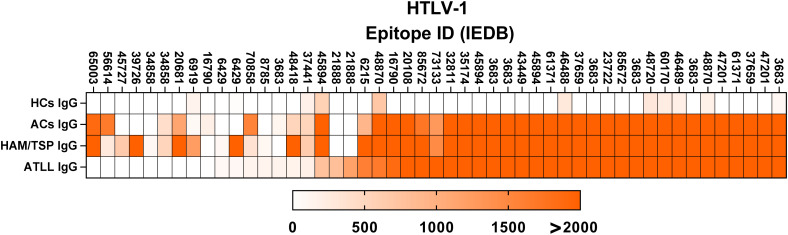 Figure 1
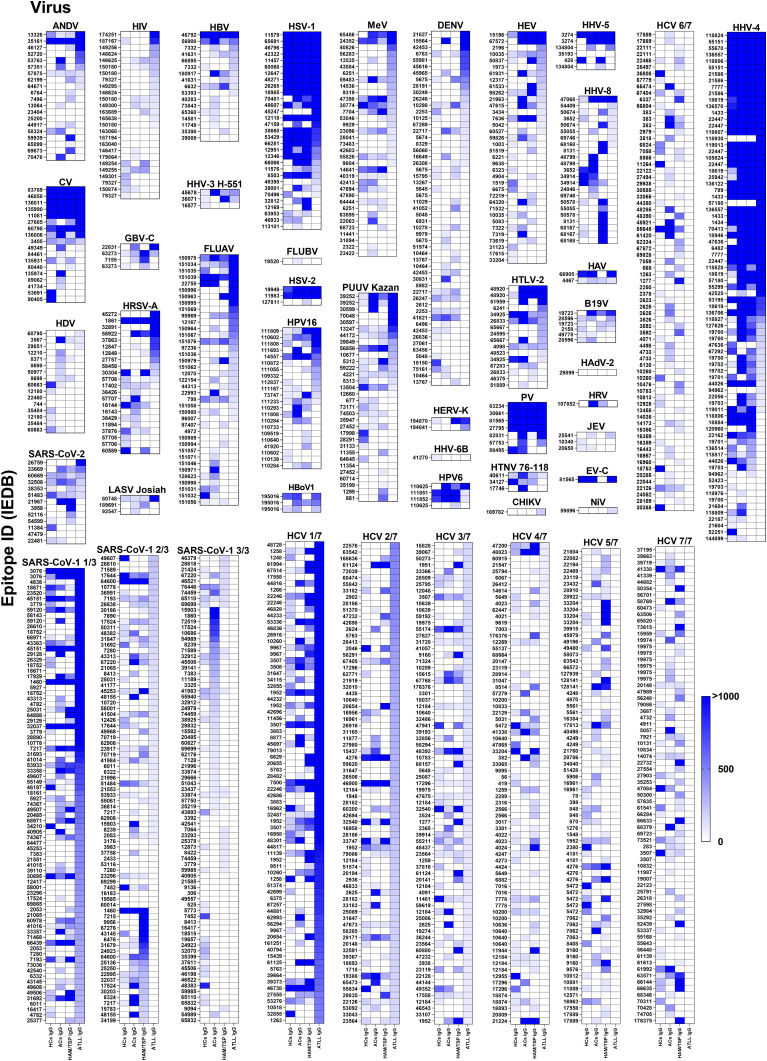 Figure 2
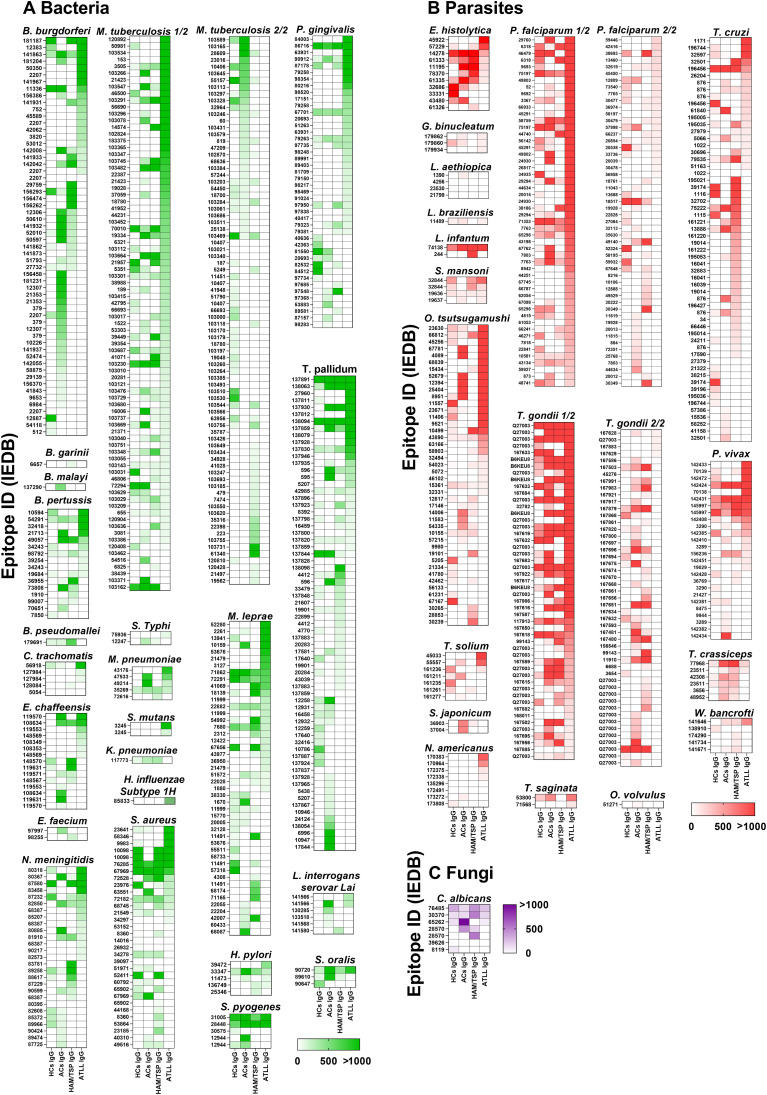 Figure 3
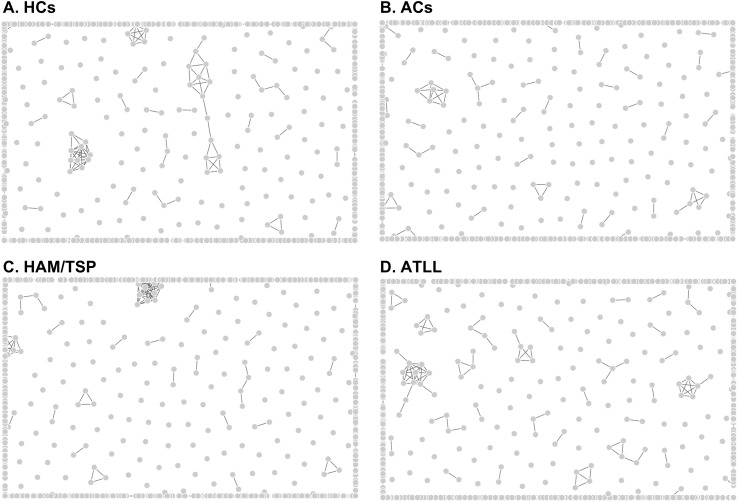 Figure 4
Peer Reviews
No public reviews on file for this paper yet. If you reviewed it on a platform where reviews are public (OpenReview, ICLR, NeurIPS, ICML), you can paste yours below so the community can read it here.
Videos
No videos yet. Explain this paper in a talk, walkthrough, or lecture? Add one.
Taxonomy
TopicsT-cell and Retrovirus Studies · Leptospirosis research and findings · Vector-Borne Animal Diseases