The global flexible and navigable suction ureteral access sheaths (FANS) survey on utility, practices and future needs in flexible ureteroscopy: a EAU Endourology, PEARLS and IAU collaboration
Steffi Kar Kei Yuen, Bhaskar Somani, Amelia Pietropaolo, Daniele Castellani, Wen Zhong, Wei Zhu, Arman Tsaturyan, Jia-Lun Kwok, Michael Wong, Tzevat Tefik, Yiloren Tanidir, Satyendra Persaud, Wissam Kamal, Boyke Soebhali, Deepak Ragoori, Mohamed Elshazly, Anil Shrestha

TL;DR
A global survey reveals how urologists are using flexible suction sheaths in kidney stone procedures, highlighting benefits, challenges, and areas needing improvement.
Contribution
The first global survey on FANS usage in flexible ureteroscopy, revealing adoption patterns, challenges, and future priorities.
Findings
91% of urologists use suction in flexible ureteroscopy, with 28.7% replacing all conventional sheaths with FANS.
Key challenges include pelvicalyceal system collapse and lower pole access, with many unaware of irrigation or suction settings.
Future priorities include defining irrigation/suction parameters and integrating pressure control mechanisms.
Abstract
The landscape of flexible ureteroscopy (fURS) is evolving with the use of flexible and navigable suction ureteral access sheaths (FANS) as surgeons gain experience utilizing suction. Surveys offer a unique lens through which to evaluate the adoption, efficacy, and challenges associated with new endourology technology. As FANS become widespread, we aimed to capture real-world practice patterns of FANS utilization in fURS. A collaborative effort by the European Association of Urology (EAU), Progressive Endourological Association for Research and Leading Solutions (PEARLS) and International Alliance of Urolithiasis (IAU) lead to the design and dissemination of a 41-question survey via SurveyMonkey and social media from 19 April to 29 May 2025. Participation was voluntary. Descriptive statistics were applied to demographic details and categorical responses. A total of 680 participants had…
Genes, proteins, chemicals, diseases, species, mutations and cell lines named across the full text — each resolved to its canonical identifier and authoritative record.
Click any figure to enlarge with its caption.
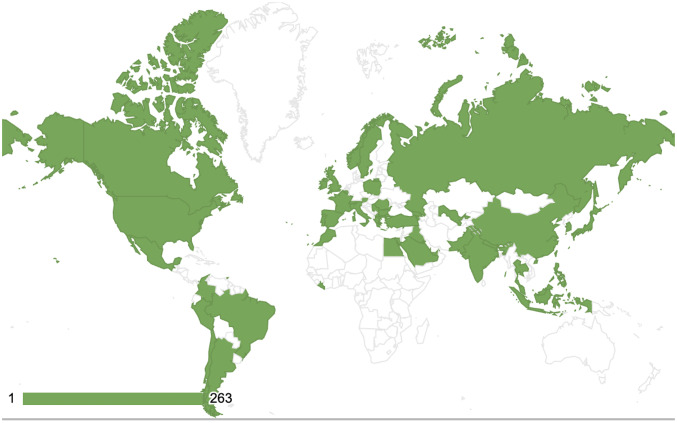 Figure 1
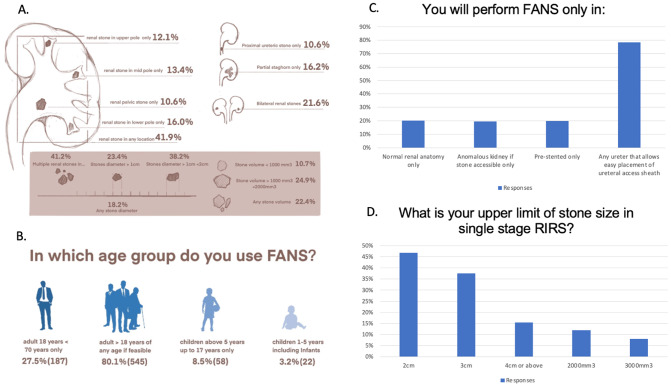 Figure 2
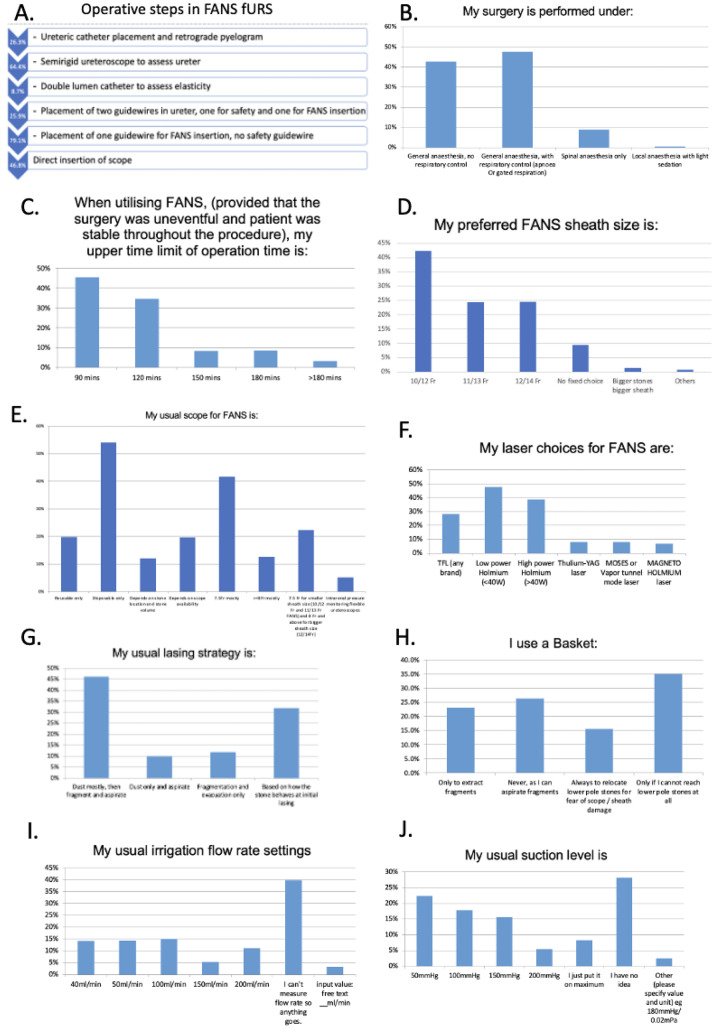 Figure 3
Peer Reviews
No public reviews on file for this paper yet. If you reviewed it on a platform where reviews are public (OpenReview, ICLR, NeurIPS, ICML), you can paste yours below so the community can read it here.
Videos
No videos yet. Explain this paper in a talk, walkthrough, or lecture? Add one.
Taxonomy
TopicsKidney Stones and Urolithiasis Treatments · Ureteral procedures and complications · Pediatric Urology and Nephrology Studies