Guangdong Biobank Cohort (GDBC) study
Yong-Qiao He, Wen-Qiong Xue, Hua Diao, Ji-Yun Zhan, Ming-Fang Ji, Da-Wei Yang, Yi Zhao, Chang-Mi Deng, Zi-Yi Wu, Ting Zhou, Ying Liao, Mei-Qi Zheng, Wen-Li Zhang, Yi-Jing Jia, Lei-Lei Yuan, Lu-Ting Luo, Dan-Hua Li, Tong-Min Wang, Xia-Ting Tong, Yan Du, Ling-Ling Tang

TL;DR
The Guangdong Biobank Cohort (GDBC) study tracks non-communicable diseases in a large population in China to better understand disease causes and prevention.
Contribution
The GDBC provides a large-scale, population-based cohort in Guangdong, China, with comprehensive data and biospecimens for studying disease determinants.
Findings
Baseline prevalence of hypertension, diabetes, and cancer was 25.3%, 8.0%, and 3.6%, respectively.
Over follow-up, 1,767 hypertension cases, 814 diabetes cases, and 558 cancers were recorded.
The cohort includes genome-wide genotyping and oral microbiome profiling for 2,530 and 2,049 participants, respectively.
Abstract
The global rise of non-communicable diseases (NCDs) presents an urgent public health challenge, particularly in regions undergoing rapid economic and demographic transitions. Guangdong Province, China’s most populous and economically advanced region, is experiencing a substantial and accelerating burden of NCDs. However, large-scale, population-based cohorts from this region remain scarce, limiting insights into region-specific disease determinants and prevention strategies. The Guangdong Biobank Cohort (GDBC) was established in 2017, enrolling 35,081 participants aged 40–84 years from urban and rural areas of Zhongshan City in the Pearl River Delta. At baseline, comprehensive data on 346 variables—including lifestyle, environmental exposures, medical histories, physical examinations, and laboratory profiles—were collected via a cloud-based member management information system (MMIS),…
Genes, proteins, chemicals, diseases, species, mutations and cell lines named across the full text — each resolved to its canonical identifier and authoritative record.
Click any figure to enlarge with its caption.
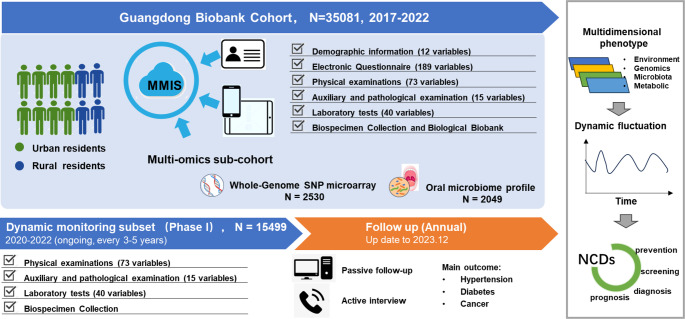 Figure 1
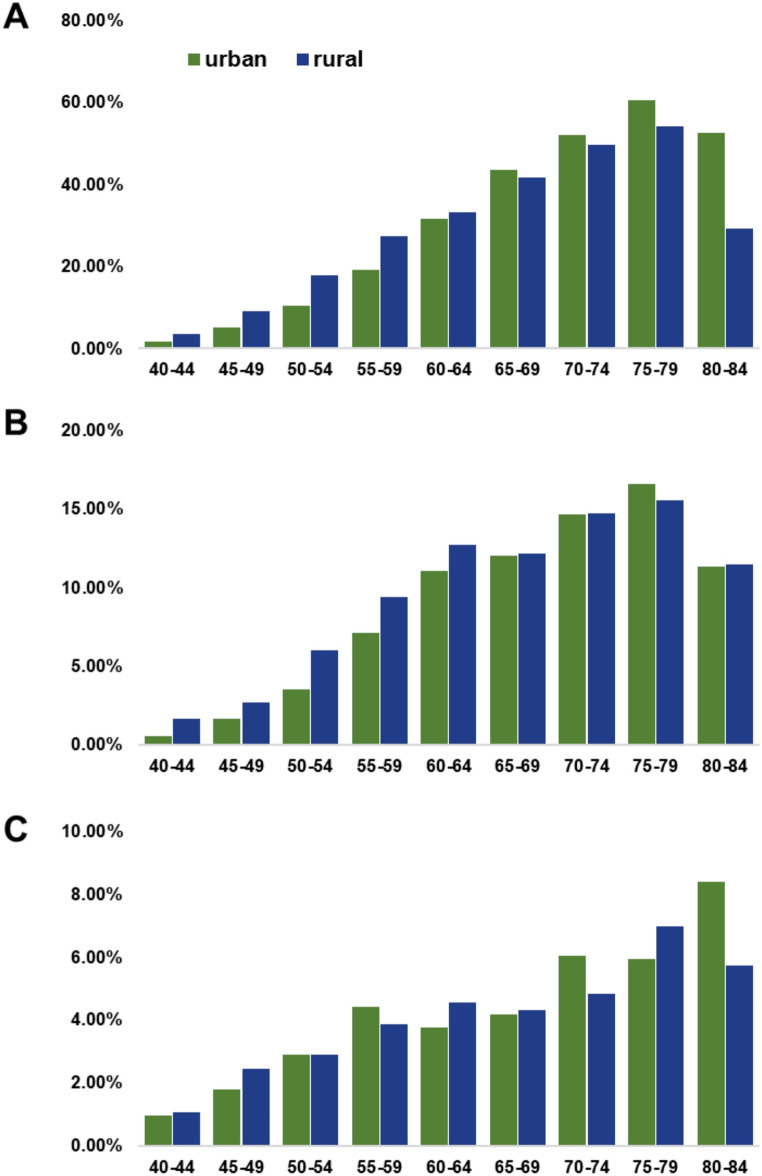 Figure 2
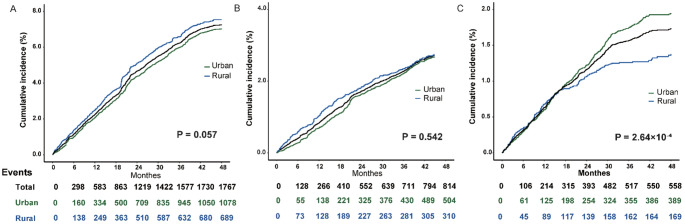 Figure 3
Peer Reviews
No public reviews on file for this paper yet. If you reviewed it on a platform where reviews are public (OpenReview, ICLR, NeurIPS, ICML), you can paste yours below so the community can read it here.
Videos
No videos yet. Explain this paper in a talk, walkthrough, or lecture? Add one.
Taxonomy
TopicsGenetic Associations and Epidemiology · Nutrition, Genetics, and Disease · Cardiovascular Health and Risk Factors