Customizing galvanic vestibular stimulation amplitude: an objective technique using sway indices to account for individual sensitivity
Hailey A. Trier, Samantha B. Douglas, Jorge M. Serrador, Scott J. Wood

TL;DR
This study introduces an objective method to determine individual sensitivity to galvanic vestibular stimulation using postural sway measurements.
Contribution
A novel objective technique for customizing GVS amplitude based on sway indices is proposed.
Findings
Sensitivity indices based on sway showed strong correlations across head and torso measurements.
Sway-based indices revealed greater intersubject variability compared to subjective measures.
The method provides a reliable and objective way to account for individual GVS sensitivity.
Abstract
Galvanic vestibular stimulation (GVS) uses transcutaneous direct current stimulation to either improve balance function at low intensities or provide a sensory disruption at higher intensities. The present study sought to establish an objective procedure for determining individual sensitivity levels for GVS using postural sway. GVS thresholds were obtained in healthy young adults over three sessions while standing with feet together and eyes closed using sinusoidal stimuli at intensity amplitudes ranging between 0.1 and 0.7 mA. Sway amplitudes from inertial motion sensors mounted on the head and torso were derived from sinusoidal fits over each 20 s trial. Individual sensitivities were determined using amplitude indices (lowest level that induced sway greater than sway without stimulation), critical indices using logistic analysis of sway amplitudes across the entire stimulus range, and…
Genes, proteins, chemicals, diseases, species, mutations and cell lines named across the full text — each resolved to its canonical identifier and authoritative record.
Click any figure to enlarge with its caption.
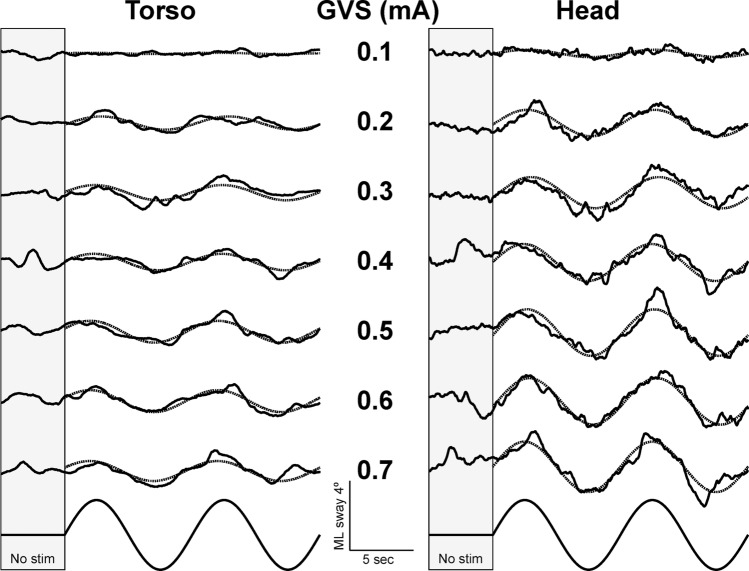 Figure 1
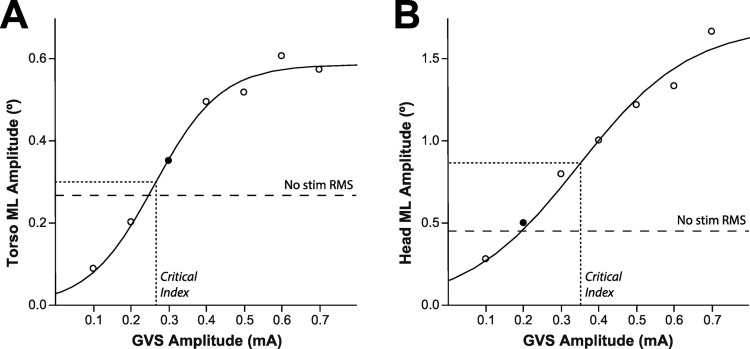 Figure 2
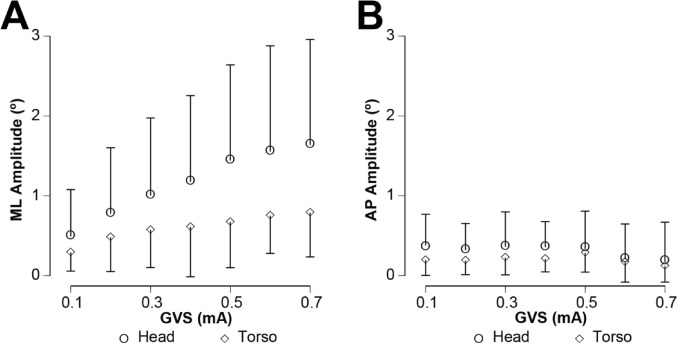 Figure 3
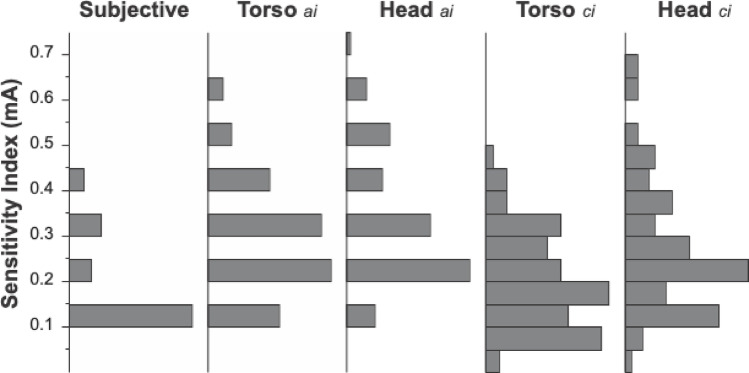 Figure 4
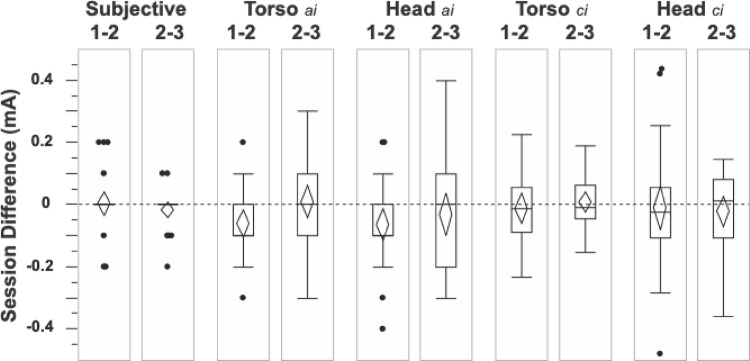 Figure 5
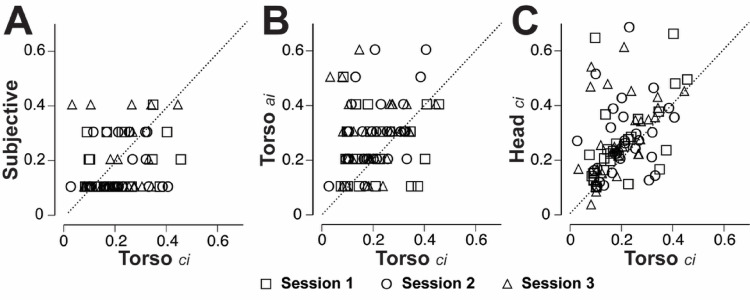 Figure 6
Peer Reviews
No public reviews on file for this paper yet. If you reviewed it on a platform where reviews are public (OpenReview, ICLR, NeurIPS, ICML), you can paste yours below so the community can read it here.
Videos
No videos yet. Explain this paper in a talk, walkthrough, or lecture? Add one.
Taxonomy
TopicsVestibular and auditory disorders · Balance, Gait, and Falls Prevention · Tactile and Sensory Interactions