The role of the FT3/FT4 ratio in predicting remission and relapse in pediatric Graves’ disease
Leyla Kara, Ulku Gul Siraz, Dilek Cicek, Emre Sarikaya, Ebru Gok, Ugur Berber, Mustafa Kendirci, Selim Kurtoğlu, Nihal Hatipoglu

TL;DR
This study finds that the FT3/FT4 ratio is not useful for predicting remission but can help identify relapse risk in children with Graves’ disease.
Contribution
The baseline FT3/FT4 ratio is shown to be a strong predictor of relapse, with a threshold of 0.54 pmol/pmol indicating high specificity.
Findings
The FT3/FT4 ratio did not predict remission but was significantly higher in patients who relapsed.
TRAb levels below 10 IU/L were significantly associated with higher remission rates.
Smaller thyroid volume correlated with increased likelihood of remission.
Abstract
Long-term antithyroid drug (ATD) therapy is often required in pediatric Graves’ disease, yet adherence can be challenging. Therefore, identifying reliable predictors of remission and relapse is crucial for optimizing disease management. This study aimed to evaluate the role of the baseline FT3/FT4 ratio in predicting remission and relapse, alongside other potential markers, including TRAb levels, thyroid volume, and body mass index (BMI). This retrospective, single-center study included pediatric patients diagnosed with Graves’ disease and treated with ATDs. Age, sex, BMI, thyroid volume, TRAb, FT3, and FT4 levels were recorded at diagnosis, and the FT3/FT4 ratio was calculated. Remission was defined as maintaining euthyroidism for at least 12 months after discontinuation of ATD therapy, whereas relapse was defined as the recurrence of hyperthyroidism following remission. A total of 55…
Genes, proteins, chemicals, diseases, species, mutations and cell lines named across the full text — each resolved to its canonical identifier and authoritative record.
Click any figure to enlarge with its caption.
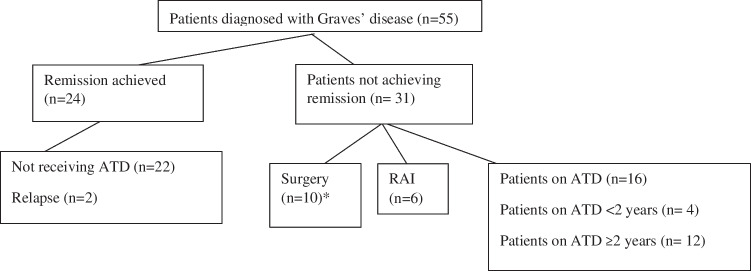 Figure 1
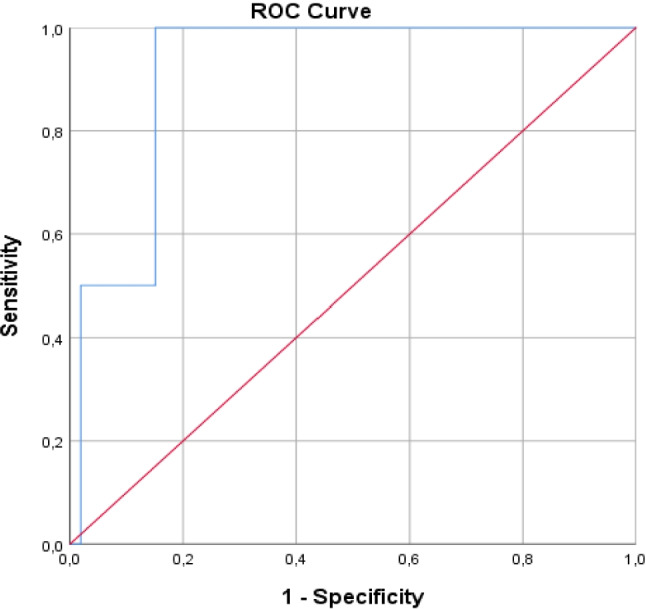 Figure 2
Peer Reviews
No public reviews on file for this paper yet. If you reviewed it on a platform where reviews are public (OpenReview, ICLR, NeurIPS, ICML), you can paste yours below so the community can read it here.
Videos
No videos yet. Explain this paper in a talk, walkthrough, or lecture? Add one.
Taxonomy
TopicsImmunodeficiency and Autoimmune Disorders · Diabetes and associated disorders · Cystic Fibrosis Research Advances