The photodynamic inactivation in the control of the seafood zoonotic parasite, Anisakis sp
P. Ramos, A. S. Joaquinito, M. M. Oliveira, M. G. P. M. S. Neves, A. Almeida, M. A. F. Faustino

TL;DR
This study shows that photodynamic inactivation using a specific chemical can effectively kill Anisakis larvae in seafood, offering a safer alternative to traditional methods.
Contribution
The study introduces photodynamic inactivation with TMPyP as a novel method for controlling Anisakis larvae in seafood.
Findings
100% mortality of Anisakis larvae was achieved using PDI with TMPyP under specific conditions.
Larvae showed severe intestinal damage after treatment, indicating effective inactivation.
PDI could be a viable alternative to freezing for ensuring seafood safety.
Abstract
Anisakis spp. L3 larvae commonly found in marine fish species are an important biological hazard when raw or inadequately thermally processed fishery products are consumed with live larvae, highlighting the need for effective control strategies. This study evaluated the efficacy and mechanism of photodynamic inactivation (PDI) of Anisakis L3 larvae, using the cationic photosensitizer (PS) 5,10,15,20-tetrakis(1-methylpyridinium-4-yl)porphyrin tetraiodide (TMPyP). Larvae were collected from Atlantic horse mackerel and grouped by size: batch A (larvae ≈ 1.5 cm) and batch B (larvae ≈ 2.0 cm). Inactivation assays were performed in microcosms at 50 µM of TMPyP under different conditions: incubation times (15 min to 21 h); incubation temperatures (0.5 and 22 °C); irradiation period (2–8 h) and light irradiance (4, 14 and 67 mW/cm2). Viability and tissue damage of the larvae were assessed at…
Genes, proteins, chemicals, diseases, species, mutations and cell lines named across the full text — each resolved to its canonical identifier and authoritative record.
Click any figure to enlarge with its caption.
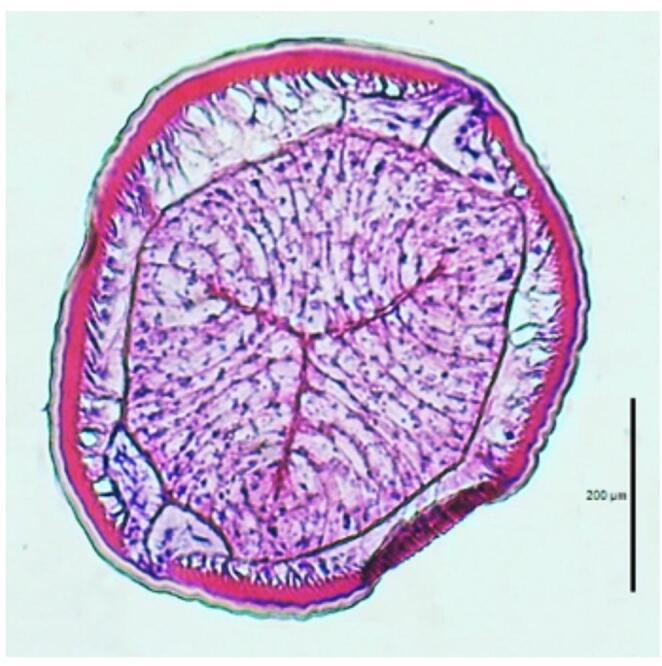 Figure 1
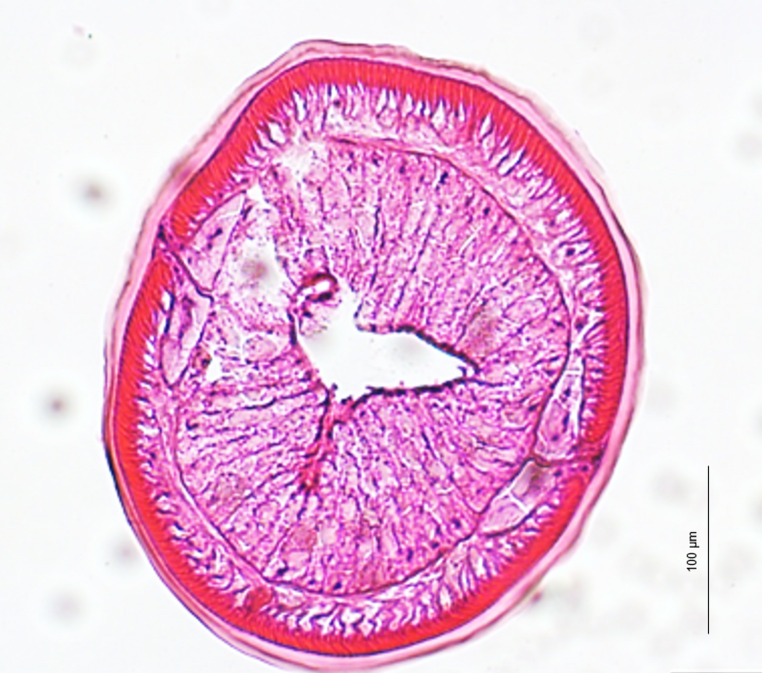 Figure 2
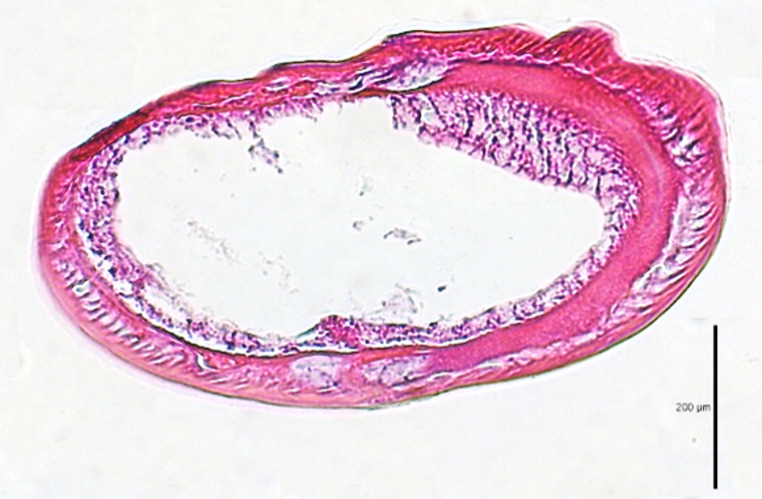 Figure 3
Peer Reviews
No public reviews on file for this paper yet. If you reviewed it on a platform where reviews are public (OpenReview, ICLR, NeurIPS, ICML), you can paste yours below so the community can read it here.
Videos
No videos yet. Explain this paper in a talk, walkthrough, or lecture? Add one.
Taxonomy
TopicsParasite Biology and Host Interactions · Marine Ecology and Invasive Species · Advanced oxidation water treatment