mTORC1 signalling and protein synthesis are elevated in response to amino acids in human myotubes obtained from young, old, and old trained men
Stephanie D. Gagnon, Jiani Qian, Vladimir Belhac, Neil R. W. Martin

TL;DR
This study found that muscle cells from older men respond to amino acids similarly to younger men in terms of growth signaling and protein synthesis.
Contribution
The study is the first to show that aging and training status do not affect amino acid-induced mTORC1 signaling and protein synthesis in cultured human myotubes.
Findings
Myotube diameter was lower in cultures from older individuals, but cell fusion was similar across groups.
mTORC1 signaling and protein synthesis increased similarly in response to amino acids in young, old, and old trained men's myotubes.
These findings suggest skeletal muscle desensitization to amino acids with aging may not occur in vitro.
Abstract
Ageing and reduced levels of physical activity are associated with desensitisation of skeletal muscle to the anabolic effects of amino acids. In vitro studies have indicated that many properties of skeletal muscle tissue are retained in human myotubes, including metabolic alterations associated with exercise and disease. However, the interaction between ageing and physical activity on amino acid sensing and growth has not been explored in human myotubes in vitro. Muscle-derived cells were isolated from biopsies taken from eight young (Y: 23.4 ± 1.9 yr), six older (O: 72.5 ± 5.0 yr), and nine older exercise trained (OT: 71.0 ± 4.1 yr, n = 9) men, and myotube cultures were generated and investigated for growth parameters and amino acid induced changes in mTORC1 signalling and protein synthesis. Our results indicated that muscle cell fusion was similar between groups, but myotube diameter…
Genes, proteins, chemicals, diseases, species, mutations and cell lines named across the full text — each resolved to its canonical identifier and authoritative record.
Click any figure to enlarge with its caption.
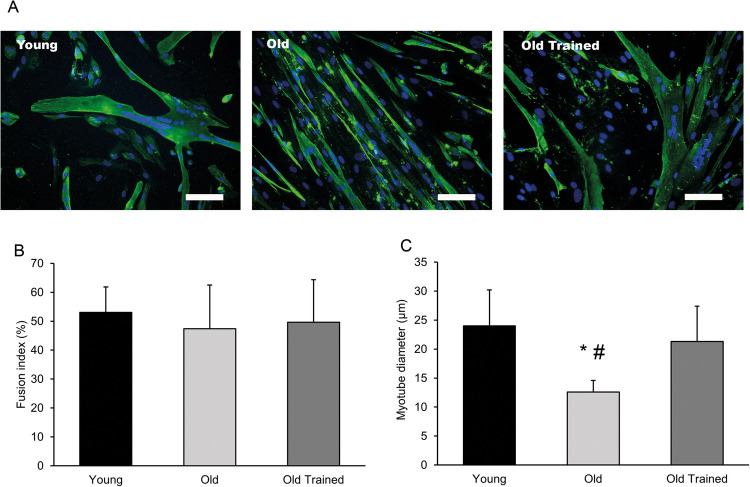 Figure 1
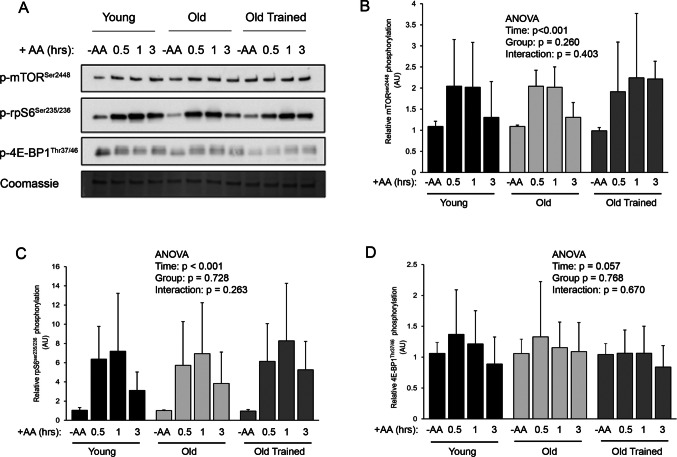 Figure 2
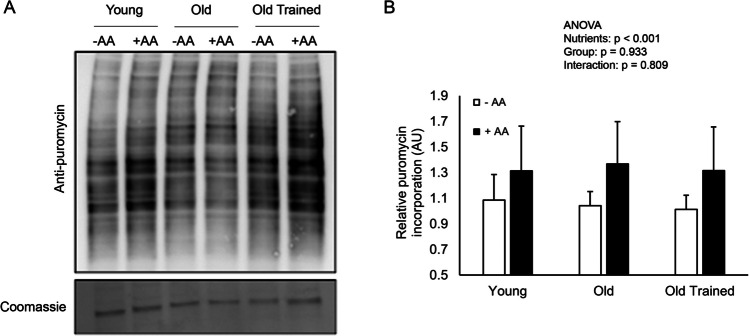 Figure 3
Peer Reviews
No public reviews on file for this paper yet. If you reviewed it on a platform where reviews are public (OpenReview, ICLR, NeurIPS, ICML), you can paste yours below so the community can read it here.
Videos
No videos yet. Explain this paper in a talk, walkthrough, or lecture? Add one.
Taxonomy
TopicsMuscle metabolism and nutrition · Muscle Physiology and Disorders · Exercise and Physiological Responses