Health-related quality of life after definitive chemoradiotherapy in patients with esophageal carcinoma: a population-based analysis
D. Wekking, F. H. Erdmann, L. M. Veen, S. C. Kuijper, M. Pape, P. S. N. van Rossum, P. M. Jeene, K. J. Neelis, M. Slingerland, O. Loosveld, T. Rozema, M. A. G. Sprangers, R. H. A. Verhoeven, H. W. M. van Laarhoven

TL;DR
This study examines how health-related quality of life changes in esophageal cancer patients undergoing chemoradiotherapy, finding that while some aspects recover, physical and role functioning remain impaired.
Contribution
A population-based analysis of HRQoL outcomes after definitive chemoradiotherapy for locally advanced esophageal cancer in a real-world setting.
Findings
Global health status remained stable from 6 months after treatment.
Physical and role functioning, fatigue, and dyspnea remained impaired for up to 2 years.
Social and cognitive functioning initially declined but recovered to baseline levels by 6 months.
Abstract
Definitive chemoradiotherapy (dCRT) can achieve durable local control and even cure in patients with locally advanced esophageal cancer. However, survival benefit may be accompanied by a decline in health-related quality of life (HRQoL) owing to experienced adverse effects. This study aims to investigate HRQoL in patients with locally advanced esophageal cancer receiving dCRT in a real-world setting. Patients with locally advanced esophageal squamous cell carcinoma or adenocarcinoma receiving dCRT (≥ 50.4 Gy/28 fractions with concomitant weekly chemotherapy) were eligible. Patient-reported outcome measures were prospectively collected using the validated questionnaires EORTC-QLQ-C30 and EORTC-QLQ-OG25 at baseline and every 3 months thereafter for 2 years. Clinical data were obtained from the Netherlands Cancer Registry. Longitudinal HRQoL outcomes were compared to baseline using mixed…
Genes, proteins, chemicals, diseases, species, mutations and cell lines named across the full text — each resolved to its canonical identifier and authoritative record.
Click any figure to enlarge with its caption.
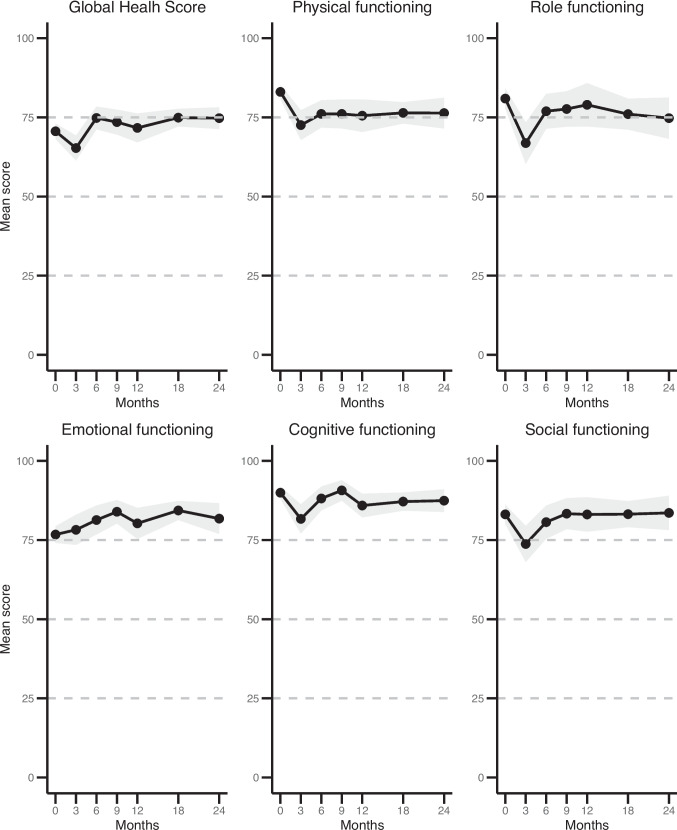 Figure 1
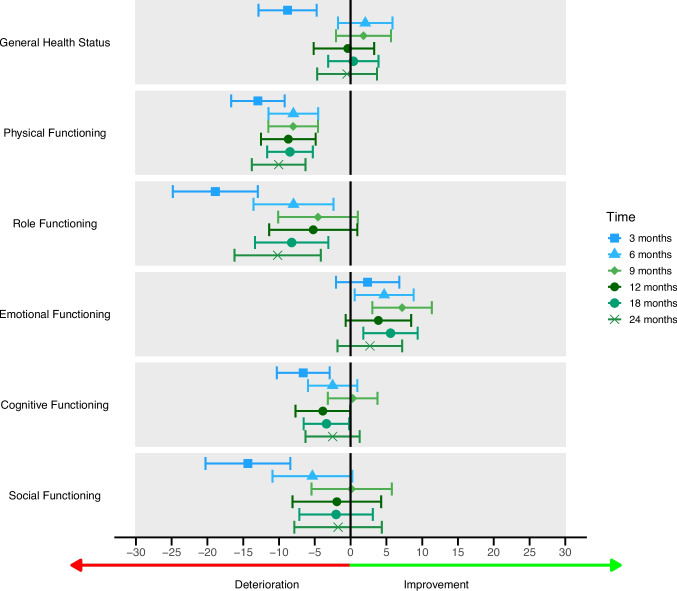 Figure 2
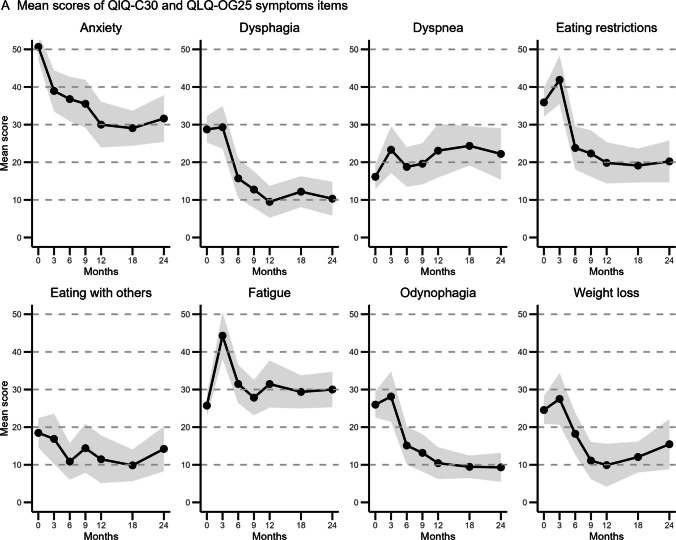 Figure 3
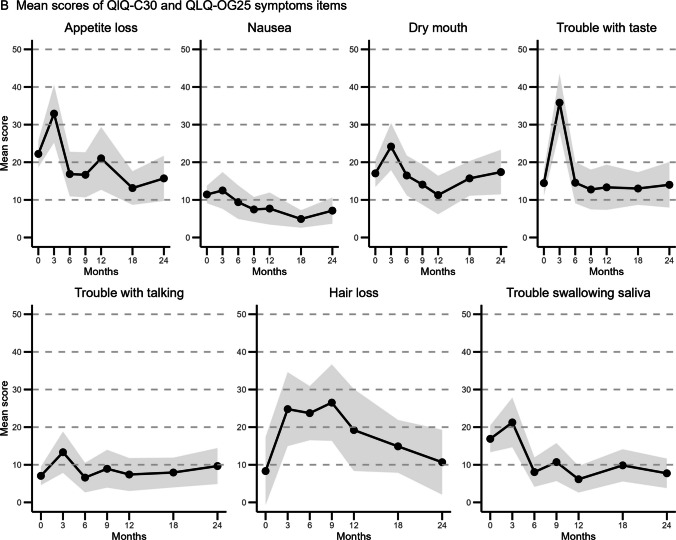 Figure 3
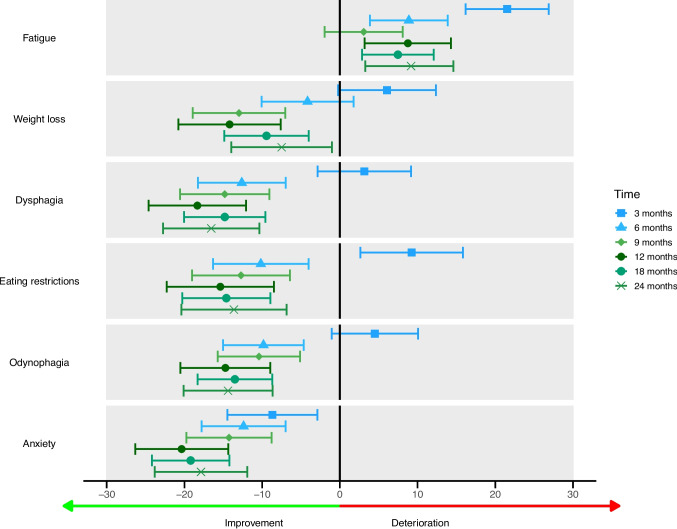 Figure 4
Peer Reviews
No public reviews on file for this paper yet. If you reviewed it on a platform where reviews are public (OpenReview, ICLR, NeurIPS, ICML), you can paste yours below so the community can read it here.
Videos
No videos yet. Explain this paper in a talk, walkthrough, or lecture? Add one.
Taxonomy
TopicsEsophageal Cancer Research and Treatment · Esophageal and GI Pathology · Gastroesophageal reflux and treatments