Machine Learning-Driven Prediction of Intensive Care Units Mortality and Length of Stay: A 11-Year Retrospective Study in Hong Kong Public Hospitals
Ying Zhao, Xincheng Shu, Chi-Sing Leung, Eric W. M. Wong, Qi Xuan, Kar-Lung Lee, Anne Leung, Lowell Ling, Hoi-Ping Shum, Wing-Lun Wan, Pauline Yeung Ng, Tsz-Kin Yim, Wai-Ming Tang, Kenny King-Chung Chan, Gavin Joynt

TL;DR
This study uses machine learning to predict ICU mortality and length of stay in Hong Kong hospitals, outperforming traditional methods.
Contribution
A novel machine learning pipeline is proposed that improves ICU mortality and LOS prediction compared to APACHE systems.
Findings
CatBoost achieved the highest AUROC of 0.9070 and lowest Brier score for mortality prediction.
The pipeline outperformed APACHE systems in predicting ICU mortality and LOS in Hong Kong hospitals.
Age, GCS, and urine output were top features for mortality prediction, while creatinine and ventilator-measured respiratory rates were key for LOS.
Abstract
This study aims to develop a machine learning (ML)-based pipeline to predict intensive care unit (ICU) mortality and length of stay (LOS). A dataset including 140,904 ICU admissions was collected from 15 public hospitals in Hong Kong over an 11-year period. The proposed pipeline deployed a suite of ML models to predict mortality and LOS. The performance of ML models was compared with the Acute Physiology and Chronic Health Evaluation (APACHE) systems on the collected dataset using five-fold cross-validation. Among all involved models, the Gradient Boosting with Categorical Features (CatBoost) achieved the highest area under the receiver operating characteristic curve (AUROC) of 0.9070 as well as the lowest Brier score of 0.0827 for mortality prediction and the lowest Mean Absolute Error (MAE) of 2.6364 for LOS prediction. The SHapley Additive exPlanations (SHAP) analysis conducted on…
Genes, proteins, chemicals, diseases, species, mutations and cell lines named across the full text — each resolved to its canonical identifier and authoritative record.
Click any figure to enlarge with its caption.
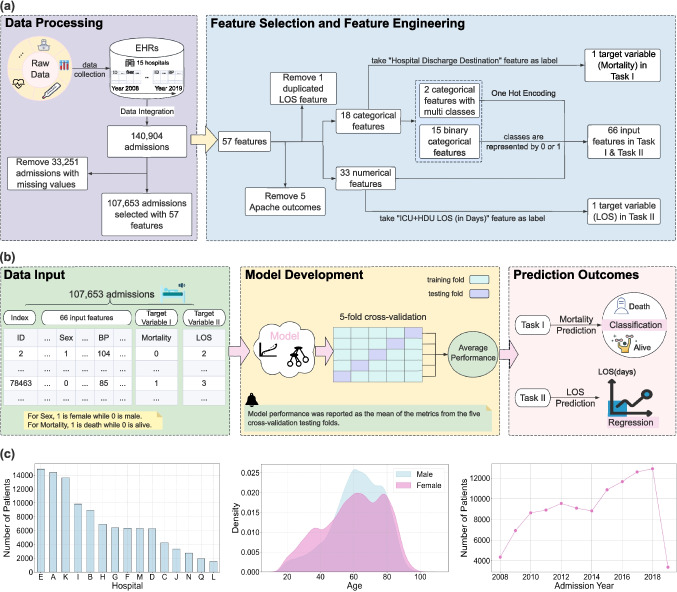 Figure 1
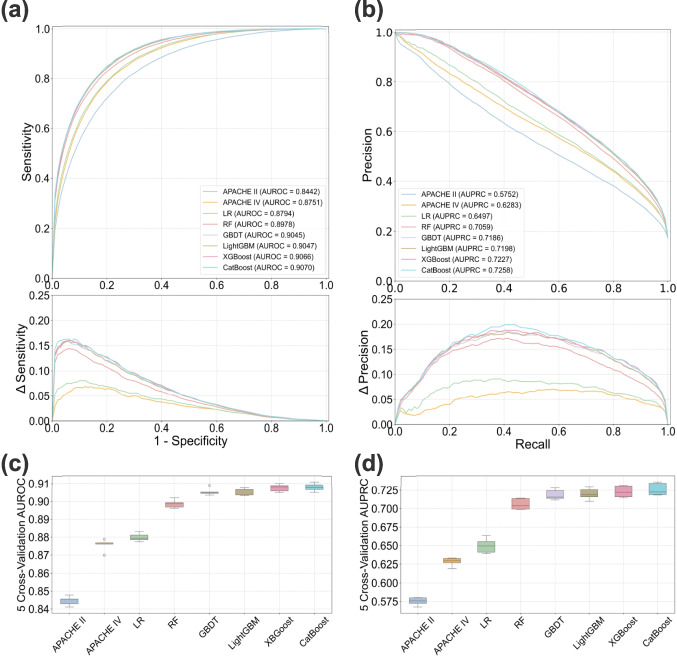 Figure 2
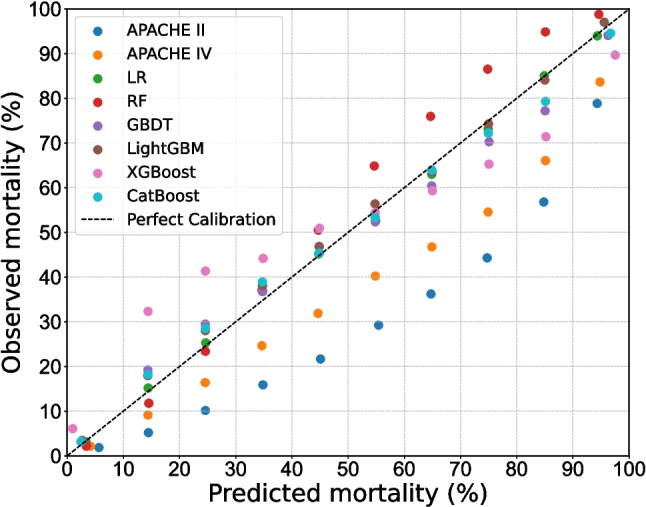 Figure 3
 Figure 4
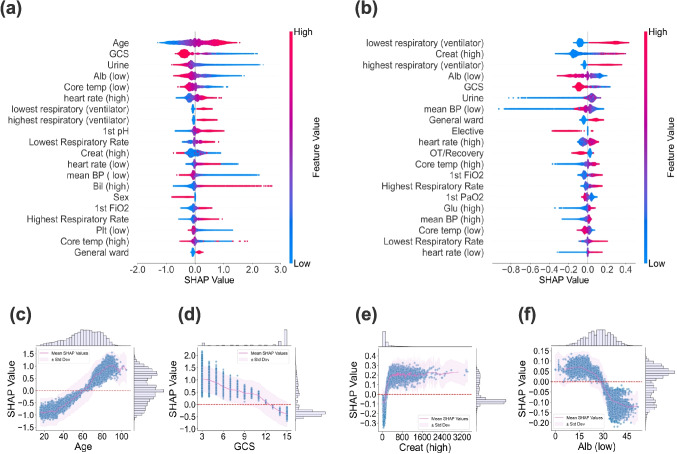 Figure 5
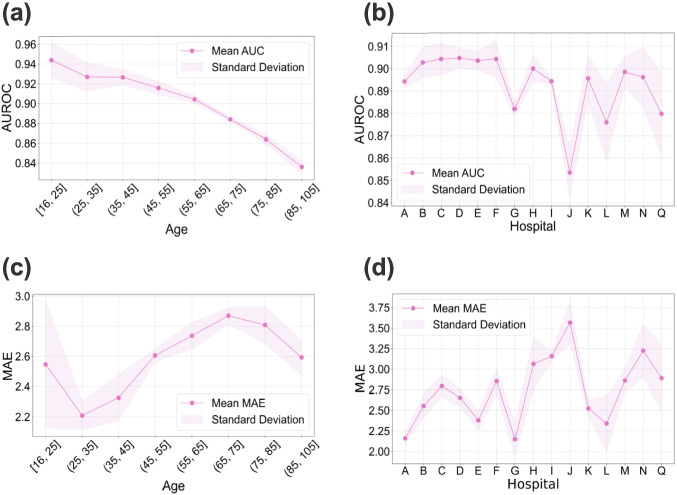 Figure 6
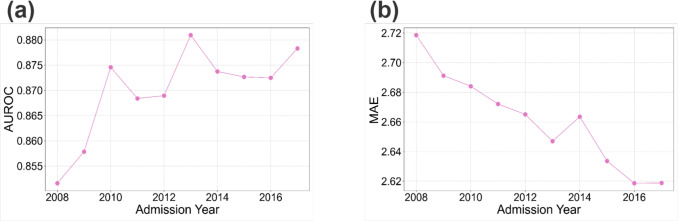 Figure 7
Peer Reviews
No public reviews on file for this paper yet. If you reviewed it on a platform where reviews are public (OpenReview, ICLR, NeurIPS, ICML), you can paste yours below so the community can read it here.
Videos
No videos yet. Explain this paper in a talk, walkthrough, or lecture? Add one.
Taxonomy
TopicsSepsis Diagnosis and Treatment · Machine Learning in Healthcare · Artificial Intelligence in Healthcare and Education