Discovery of a deep-sea coral garden of Crypthelia vascomarquesi (Hydrozoa: Hydroidolina) in the Menez Gwen marine protected area (Mid-Atlantic ridge)
Íris Sampaio, José Nuno Gomes-Pereira, Ana Colaço, André Freiwald, Fernando Tempera

TL;DR
Scientists discovered a rare coral garden of a specific lace coral species in a deep-sea marine protected area, highlighting its ecological and conservation significance.
Contribution
The first detailed description of Crypthelia vascomarquesi based on entire specimens, including females, and its classification in a conservation framework.
Findings
A coral garden of Crypthelia vascomarquesi was found in the Menez Gwen MPA at depths between 832 and 856 meters.
This species is unique for having female efferent pores on dactylostomes, adding a new category to the genus' reproductive classification.
The coral garden is proposed for inclusion in the European habitat classification system to emphasize its conservation importance.
Abstract
Crypthelia Milne-Edwards & Haime, 1849 is the most diverse genus of lace corals inhabiting the Azores. During the 2012 DEEPFUN cruise, the first coral garden structured by this genus was recorded in the Menez Gwen Marine Protected Area (MPA). Identification of the species was based on morphology of specimens collected in situ and characterized using scanning electron microscopy (SEM). Imagery acquired by the remotely operated vehicle (ROV) Victor 6000 was used to document the species density as well as seabed geomorphology. The stylasterid Crypthelia vascomarquesi Zibrowius & Cairns, 1992 is described for the first time based on entire specimens, including female representatives. To date, this is the only Crypthelia species with female efferent pores located on dactylostomes, adding a new category to the feminine ampullar formula developed for the genus. The dense coral garden formed by…
Genes, proteins, chemicals, diseases, species, mutations and cell lines named across the full text — each resolved to its canonical identifier and authoritative record.
Click any figure to enlarge with its caption.
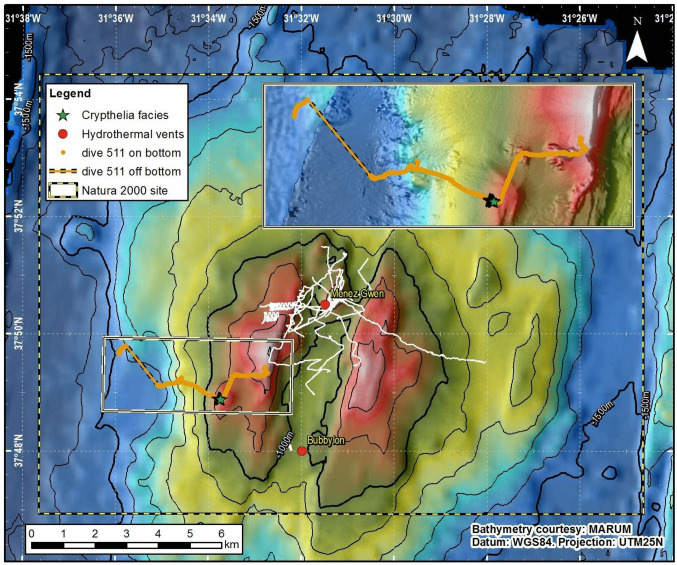 Figure 1
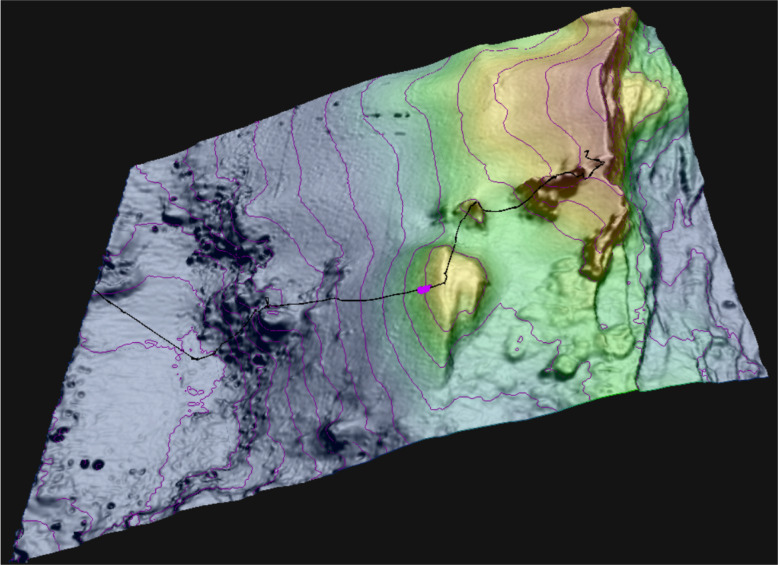 Figure 2
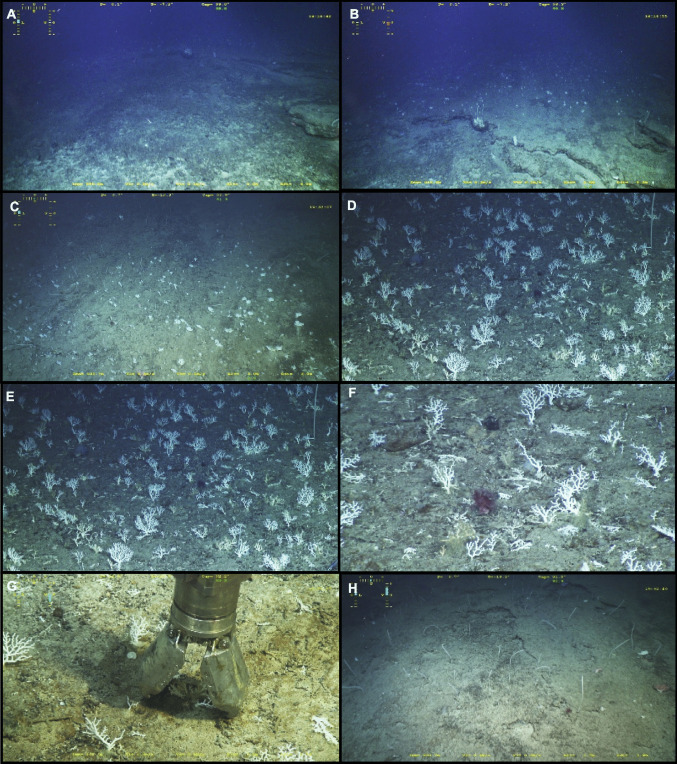 Figure 3
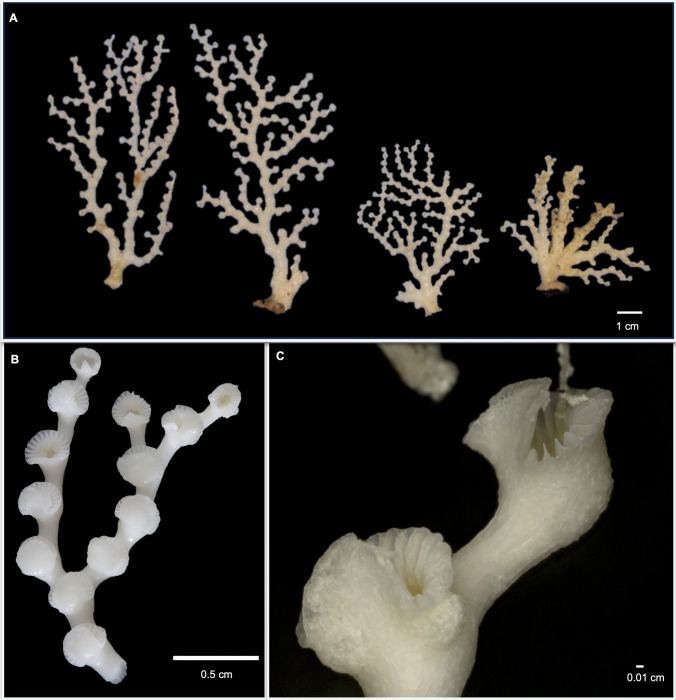 Figure 4
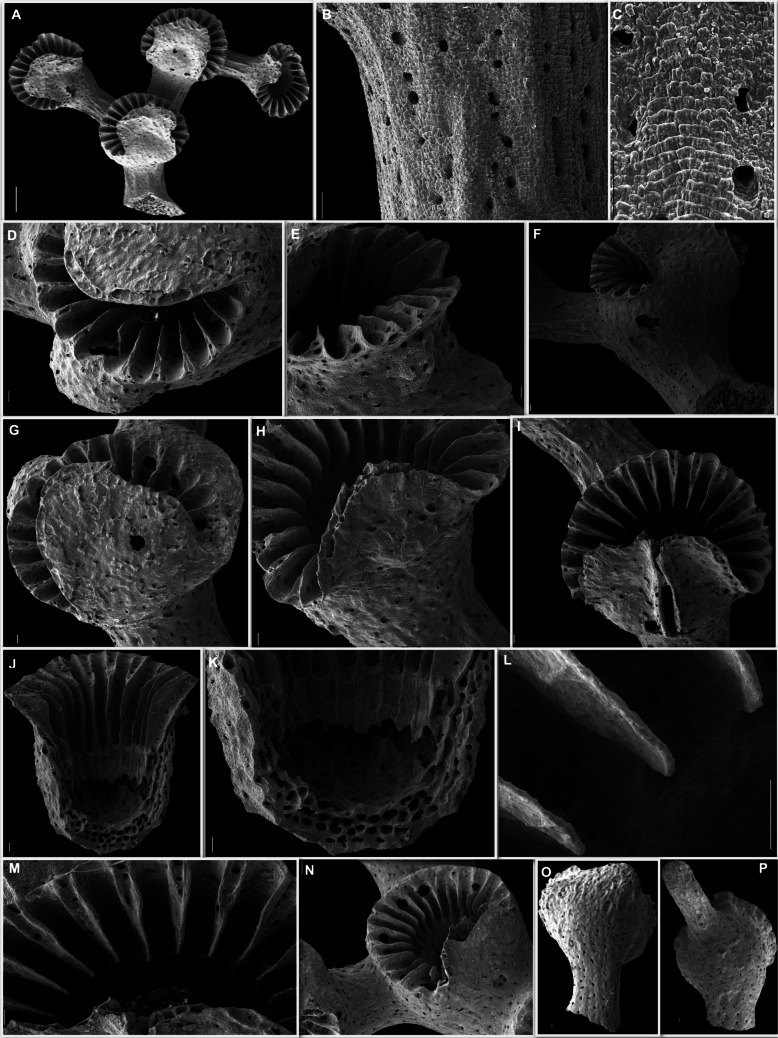 Figure 5
Peer Reviews
No public reviews on file for this paper yet. If you reviewed it on a platform where reviews are public (OpenReview, ICLR, NeurIPS, ICML), you can paste yours below so the community can read it here.
Videos
No videos yet. Explain this paper in a talk, walkthrough, or lecture? Add one.
Taxonomy
TopicsCoral and Marine Ecosystems Studies · Marine Invertebrate Physiology and Ecology · Marine Sponges and Natural Products