The association between childhood maltreatment and neural functioning during a working memory task in adults with internalizing disorders
Morgan M. Caudle, Alan N. Simmons, Raeanne C. Moore, Michael L. Thomas, Jessica Bomyea

TL;DR
Childhood maltreatment is linked to reduced brain activity in regions important for working memory in adults with internalizing disorders.
Contribution
This study identifies a novel association between childhood maltreatment severity and decreased dorsolateral prefrontal cortex activation during working memory tasks in clinical populations.
Findings
Childhood maltreatment severity is negatively associated with left dorsolateral prefrontal cortex activation during working memory tasks.
Higher maltreatment severity correlates with poorer working memory task performance in adults with internalizing disorders.
Abstract
Childhood maltreatment is pervasive – with an estimated 1 in 4 children experiencing abuse or neglect at some point in their lifetime. Exposure to childhood maltreatment has been associated with detrimental neurodevelopmental changes to brain structure and function in stress-sensitive regions and regions with extended developmental periods. Such regions include the frontoparietal regions (e.g., middle frontal gyrus and dorsolateral prefrontal cortex), which are vital for cognitive processes, including working memory; however, few studies have investigated how childhood maltreatment impacts the neural substrates implicated in supporting cognitive functioning. The present study investigated the potential influence of childhood maltreatment on neural functioning in adults (n = 111; aged 34.53 ± 9 years) diagnosed with internalizing disorders, with varied levels of childhood maltreatment…
Genes, proteins, chemicals, diseases, species, mutations and cell lines named across the full text — each resolved to its canonical identifier and authoritative record.
Click any figure to enlarge with its caption.
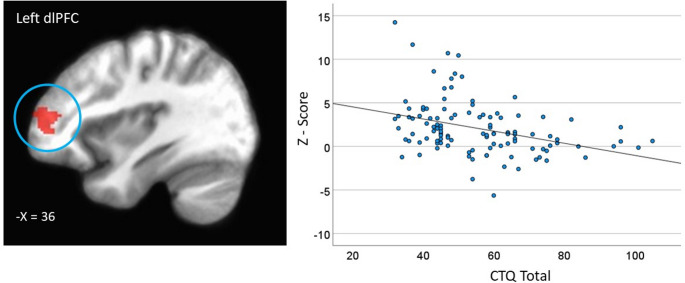 Figure 1
Peer Reviews
No public reviews on file for this paper yet. If you reviewed it on a platform where reviews are public (OpenReview, ICLR, NeurIPS, ICML), you can paste yours below so the community can read it here.
Videos
No videos yet. Explain this paper in a talk, walkthrough, or lecture? Add one.
Taxonomy
TopicsChild Abuse and Trauma · Posttraumatic Stress Disorder Research · Stress Responses and Cortisol