The Nrf2-SLPI axis in aging and its role in the pathophysiology of pulmonary Mycobacterium avium complex disease
Sosuke Matsumura, Masashi Matsuyama, Masayuki Nakajima, Chio Sakai, Kodai Ueda, Mizu Nonaka, Kengo Nishino, Zhenting Wei, Yuki Yabuuchi, Kenya Kuramoto, Kai Yazaki, Kazufumi Yoshida, Takumi Kiwamoto, Yuko Morishima, Yukio Ishii, Masafumi Muratani, Nobuyuki Hizawa

TL;DR
This study shows that aging weakens the Nrf2-SLPI defense system, leading to worse outcomes in lung infections caused by Mycobacterium avium complex.
Contribution
The study identifies the Nrf2-SLPI axis as a novel therapeutic target for pulmonary MAC disease in the elderly.
Findings
Old mice had higher bacterial loads and lower SLPI expression compared to young mice after MAC infection.
SLPI directly inhibits M. avium and is regulated by Nrf2, which is less active in aged mice.
Sulforaphane treatment improved SLPI levels and reduced bacterial burden in old mice.
Abstract
Aging is associated with a poor prognosis in pulmonary Mycobacterium avium complex (MAC) disease. This study aimed to elucidate the impact of aging on pulmonary MAC disease and its underlying mechanisms. Young and old mice were intranasally infected with Mycobacterium avium. RNA-seq analysis was performed on lung tissues to identify age-related gene expression changes. Whole blood cells from 100 untreated patients with pulmonary MAC disease were analyzed for SLPI mRNA expression and its association with age and disease severity. Old mice were more susceptible to MAC infection than young mice, with increased bacterial load and decreased expression of secretory leukocyte protease inhibitor (SLPI) in the lungs. SLPI showed direct antimicrobial activity against M. avium and was regulated by Nrf2, a transcription factor with reduced activity in infected old mice. Nrf2-deficient mice showed…
Genes, proteins, chemicals, diseases, species, mutations and cell lines named across the full text — each resolved to its canonical identifier and authoritative record.
Click any figure to enlarge with its caption.
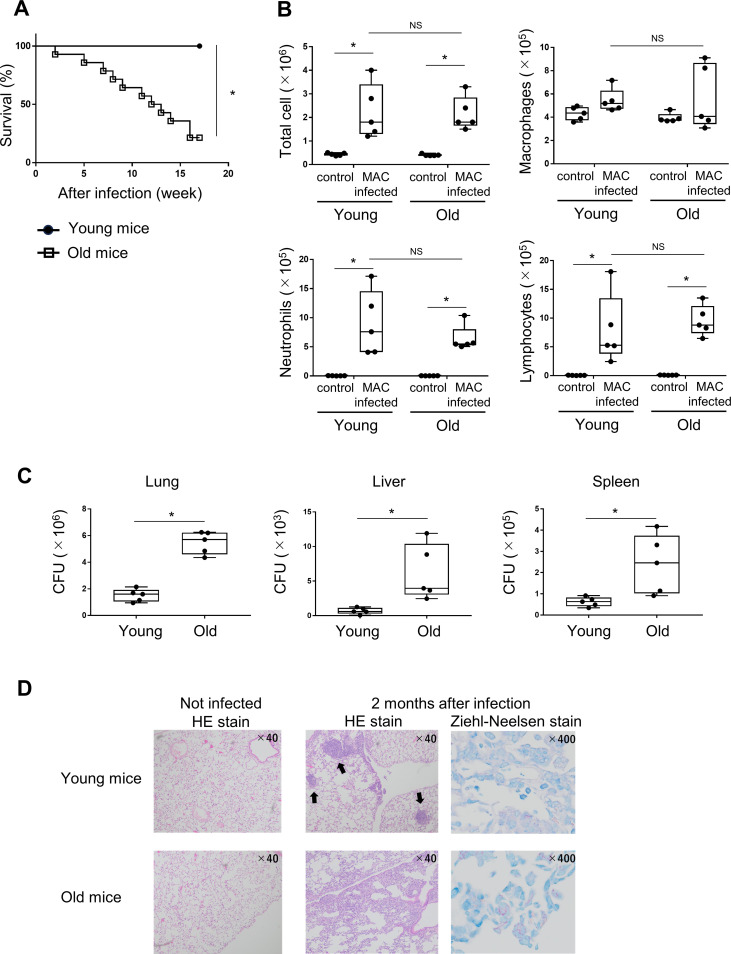 Figure 1
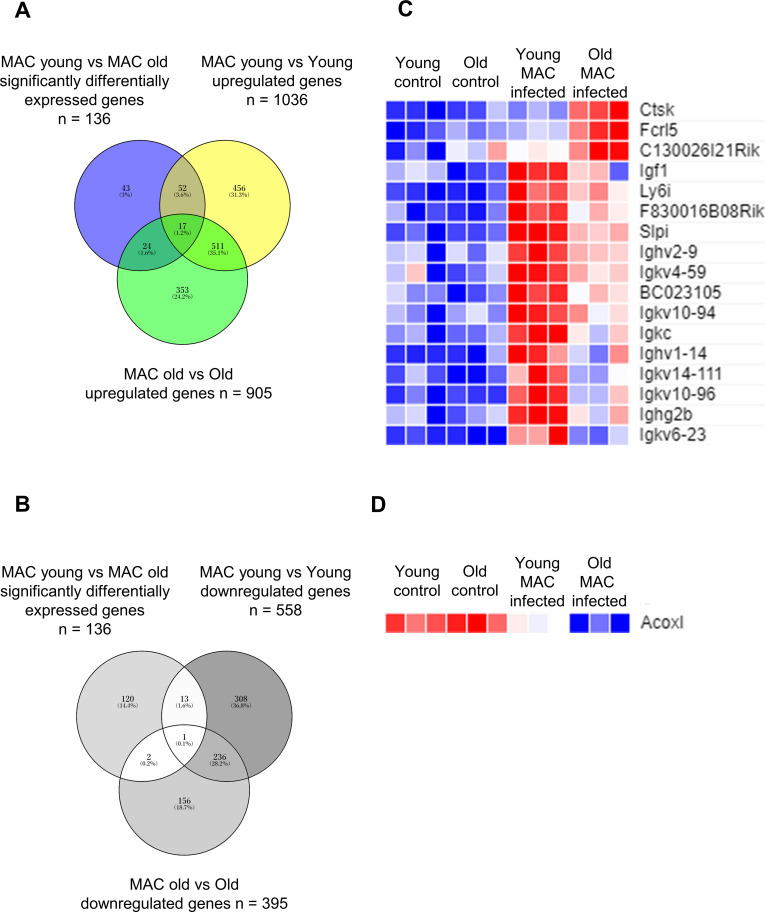 Figure 2
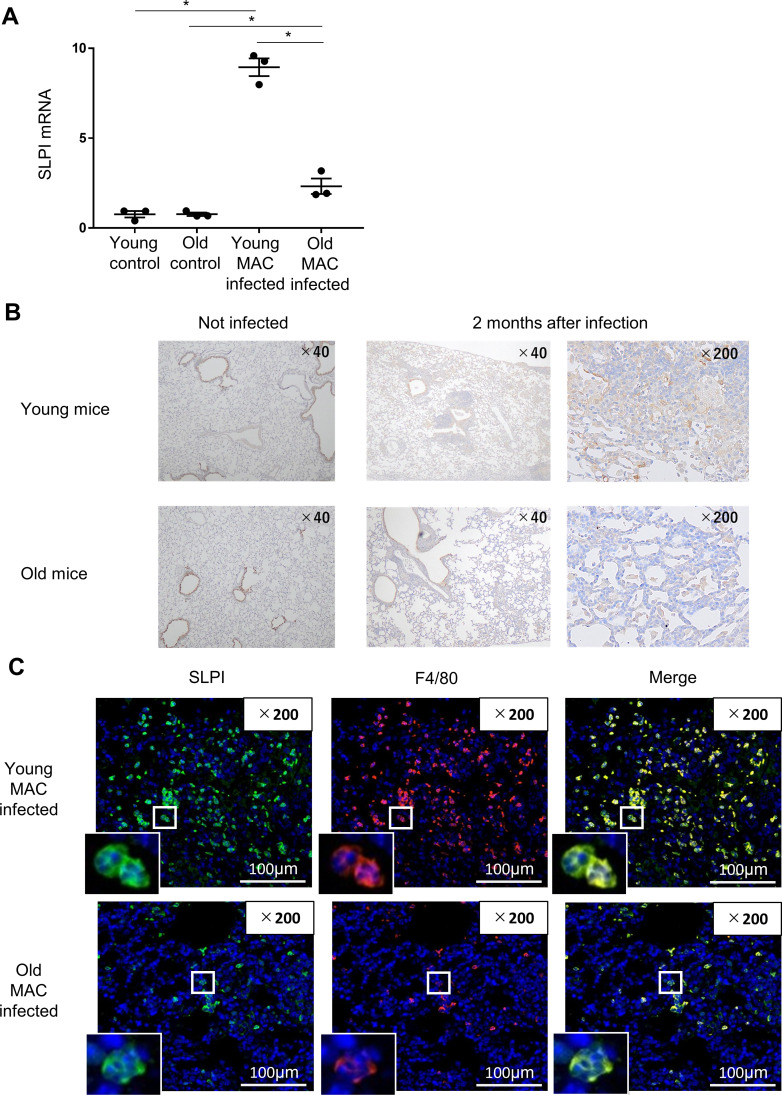 Figure 3
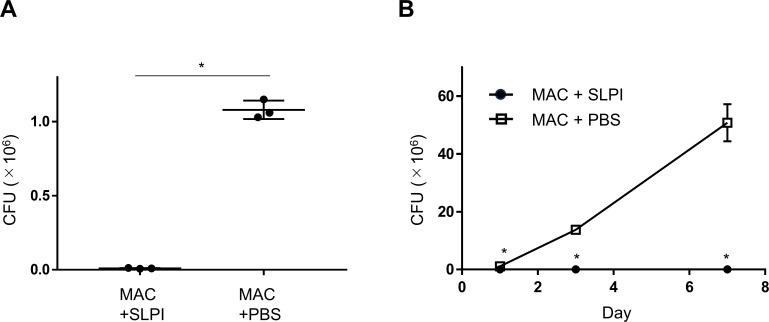 Figure 4
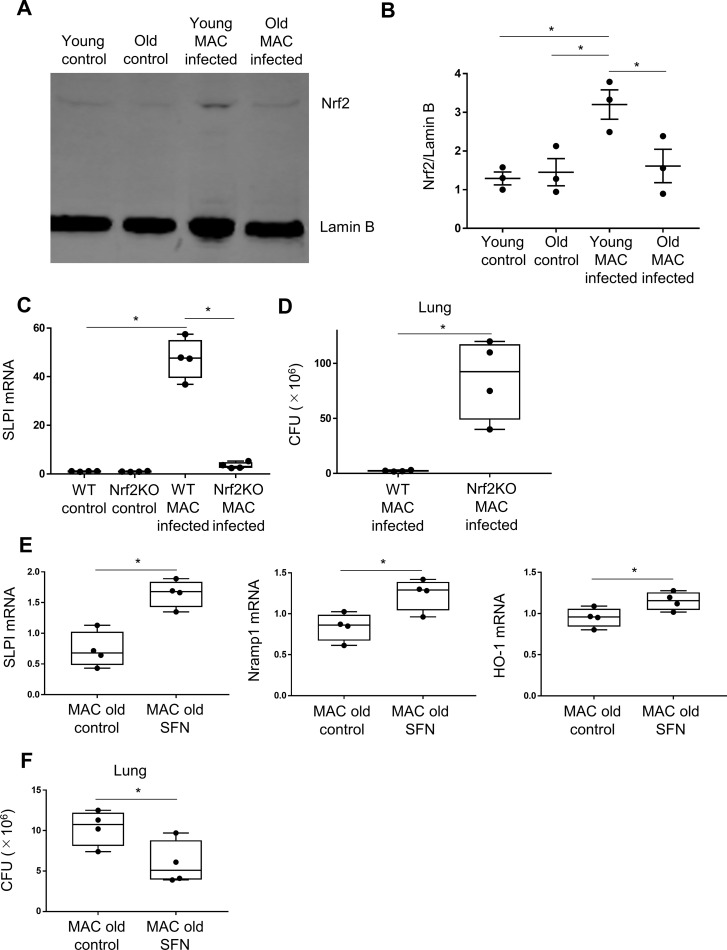 Figure 5
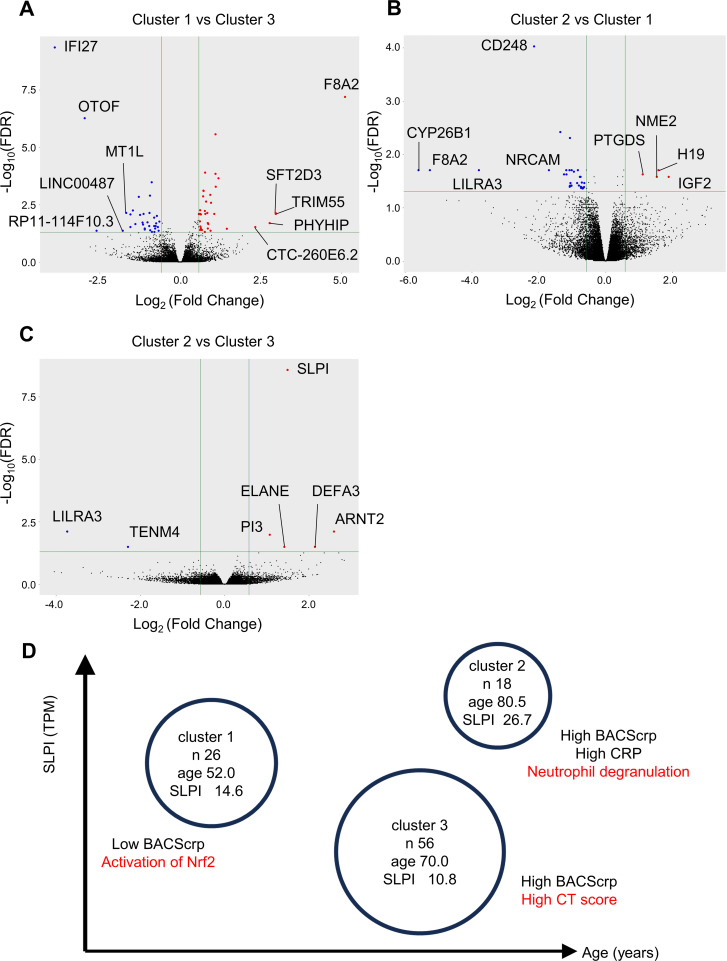 Figure 6
Peer Reviews
No public reviews on file for this paper yet. If you reviewed it on a platform where reviews are public (OpenReview, ICLR, NeurIPS, ICML), you can paste yours below so the community can read it here.
Videos
No videos yet. Explain this paper in a talk, walkthrough, or lecture? Add one.
Taxonomy
TopicsGenomics, phytochemicals, and oxidative stress · Interstitial Lung Diseases and Idiopathic Pulmonary Fibrosis · IL-33, ST2, and ILC Pathways