optTMT: optimizing any experimental design to minimize false positives caused by TMT reporter ion interference
Marc-Antoine Gerault

TL;DR
This paper introduces optTMT, a tool that helps proteomics researchers design experiments to reduce false positives caused by TMT reporter ion interference.
Contribution
The novelty is a user-friendly optimization tool for minimizing TMT interference in experimental design.
Findings
TMT reporter ion interference can lead to false positives in proteomics experiments.
optTMT provides an optimized solution to reduce such interference through careful experimental planning.
The tool is accessible via a Shiny app and R package for broad usability.
Abstract
To enable multiplexing in large-scale proteomics experiment, TMT-plex isobaric tag has been the gold standard. However, tandem mass tag (TMT) reporter ion interference, also named cross-label isotopic impurity, can occur from manufacture level impurities and experimental error. Such interference increases the risk of false positive after differential analysis, even more so on high intensity peptide further leading to wrong conclusions. However, by planning the right experimental design beforehand these interferences can be minimized by solving an optimization problem. In this work, I present a user-friendly interface to allow the proteomics community to find any optimal TMT experimental designs. The Shiny application is available as an executable file at https://zenodo.org/records/14883262 for Windows users and at https://marc-antoinegerault.shinyapps.io/TMT_optimization/. Code and…
Genes, proteins, chemicals, diseases, species, mutations and cell lines named across the full text — each resolved to its canonical identifier and authoritative record.
Click any figure to enlarge with its caption.
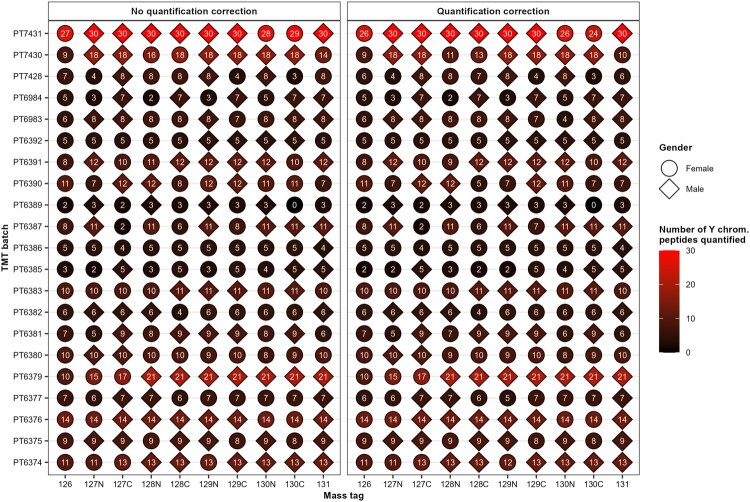 Figure 1
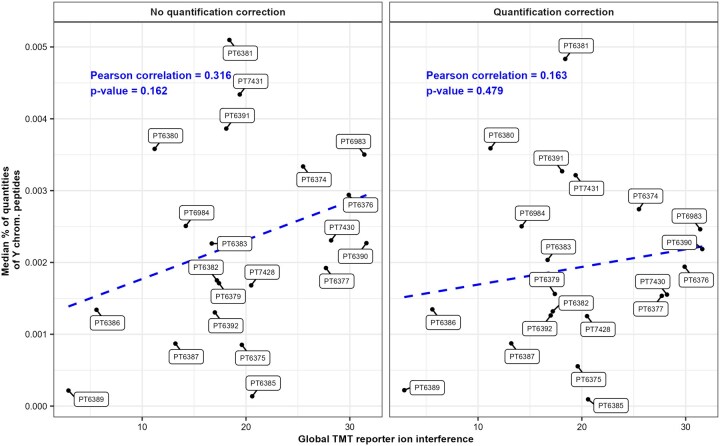 Figure 2
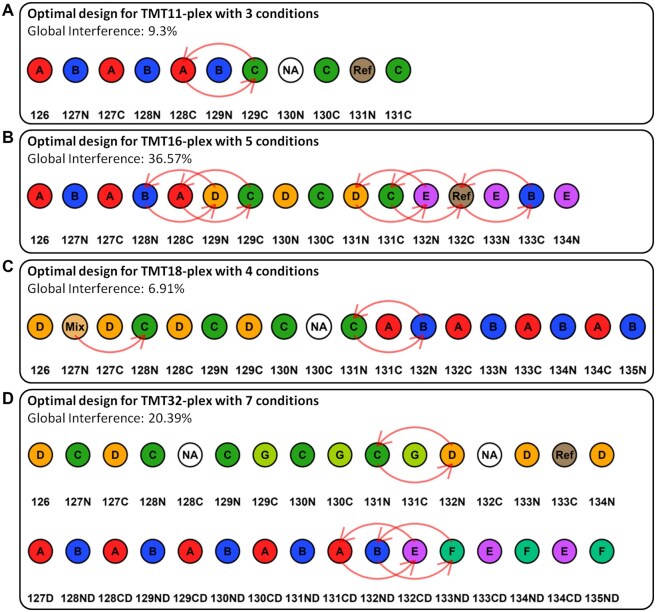 Figure 3
Peer Reviews
No public reviews on file for this paper yet. If you reviewed it on a platform where reviews are public (OpenReview, ICLR, NeurIPS, ICML), you can paste yours below so the community can read it here.
Videos
No videos yet. Explain this paper in a talk, walkthrough, or lecture? Add one.
Taxonomy
TopicsNuclear Physics and Applications