Toxin genotypes and antimicrobial resistance profiles of Clostridium perfringens isolated from healthy and diseased goats in Jiangsu Province, China
Zibei Huang, Siyuan Su, Haiyan Wang, Jinlin Huang, Wenbo Liu

TL;DR
This study analyzed toxin types and antibiotic resistance in C. perfringens from goats in China, finding significant differences between healthy and diseased animals.
Contribution
The study provides new insights into the toxin genotypes and AMR profiles of C. perfringens in goats, highlighting differences between healthy and diseased populations.
Findings
Toxinotype A was most common in healthy goats, while toxinotypes D, C, and F were more frequent in diseased or deceased animals.
High resistance to aminoglycosides and trimethoprim–sulfamethoxazole was observed, with all isolates remaining susceptible to vancomycin.
Resistance genes like qnrS, tetA(P), and tetB(P) were more prevalent in isolates from diseased goats, especially toxinotype D.
Abstract
Clostridium perfringens is a major enteric pathogen of goats, capable of producing multiple toxins and harboring diverse antimicrobial resistance (AMR) determinants. The coexistence of toxin diversity and AMR complicates disease control and poses risks to animal health and antimicrobial stewardship. This study aimed to characterize toxin genotypes, phenotypic AMR patterns, and associated resistance genes in C. perfringens isolates obtained from healthy, diseased, and deceased goats in Jiangsu Province, China. A total of 404 samples were collected from goats between April 2021 and April 2022, including feces from healthy animals, rumen contents from slaughtered goats, and intestinal contents and visceral tissues from diseased or deceased goats. Isolation and identification of C. perfringens were performed using anaerobic culture and 16S rRNA gene sequencing. Toxin genotyping targeting…
Genes, proteins, chemicals, diseases, species, mutations and cell lines named across the full text — each resolved to its canonical identifier and authoritative record.
Click any figure to enlarge with its caption.
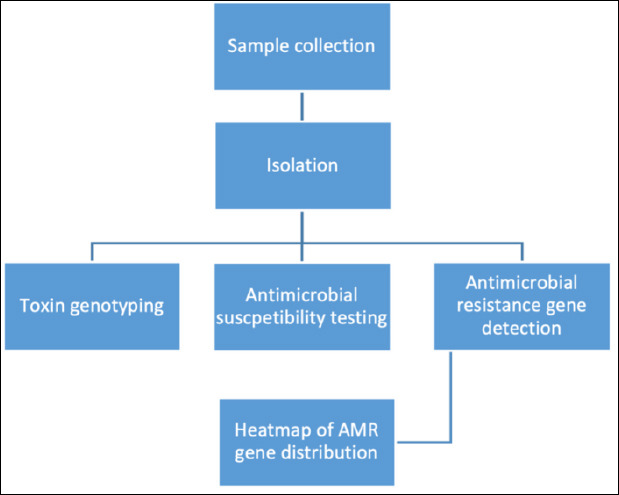 Figure 1
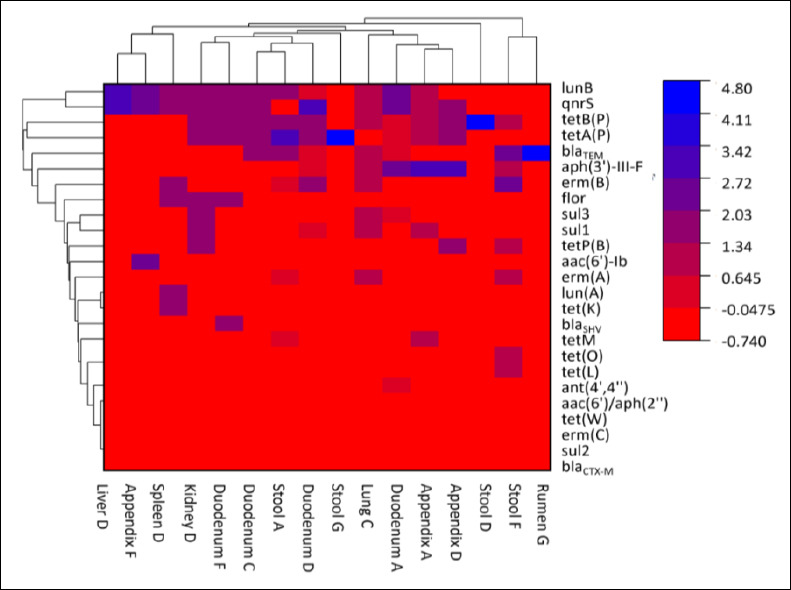 Figure 2
Peer Reviews
No public reviews on file for this paper yet. If you reviewed it on a platform where reviews are public (OpenReview, ICLR, NeurIPS, ICML), you can paste yours below so the community can read it here.
Videos
No videos yet. Explain this paper in a talk, walkthrough, or lecture? Add one.
Taxonomy
TopicsClostridium difficile and Clostridium perfringens research · Yersinia bacterium, plague, ectoparasites research · Antimicrobial Resistance in Staphylococcus