Black soldier fly protein–based microencapsulation of lemongrass oil improves rumen fermentation efficiency and mitigates methane production in vitro
Maharach Matra, Chaichana Suriyapha, Gamonmas Dagaew, Rittikeard Prachumchai, Srisan Phupaboon, Sukruthai Sommai, Theerachai Haitook, Sajee Kunhareang, Metha Wanapat

TL;DR
Using black soldier fly protein to microencapsulate lemongrass oil improves rumen digestion and reduces methane emissions in a lab setting.
Contribution
This is the first study to explore black soldier fly protein as a delivery system for essential oils in rumen fermentation.
Findings
Microencapsulated lemongrass oil improved nutrient degradability and gas production kinetics in rumen fermentation.
Methane production was reduced by up to 48.8% with microencapsulated lemongrass oil at 6% of dry matter.
The treatment increased beneficial bacteria populations while suppressing methane-producing archaea.
Abstract
Essential oils (EOs) are promising natural modifiers of rumen fermentation and methane production; however, their volatility and rapid degradation limit their effectiveness. Microencapsulation can shield bioactive compounds and allow controlled release. Insect-derived proteins, especially from black soldier fly (BSF; Hermetia illucens L.), offer a sustainable and functional wall material, yet their use for rumen-targeted delivery remains unexplored. This study aimed to assess the effects of microencapsulated-lemongrass oil (M-LEO) using BSF protein as a biopolymer wall on gas kinetics, nutrient degradability, rumen fermentation parameters, microbial populations, and methane output in vitro. A completely randomized design was used with five dietary treatments containing M-LEO at 0, 2, 4, 6, and 8% of total dry matter (DM) substrate. In vitro rumen fermentation was performed using rumen…
Genes, proteins, chemicals, diseases, species, mutations and cell lines named across the full text — each resolved to its canonical identifier and authoritative record.
Click any figure to enlarge with its caption.
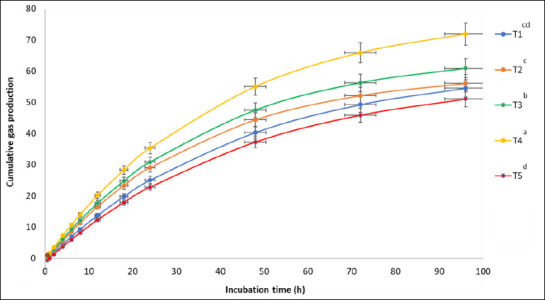 Figure 1
Peer Reviews
No public reviews on file for this paper yet. If you reviewed it on a platform where reviews are public (OpenReview, ICLR, NeurIPS, ICML), you can paste yours below so the community can read it here.
Videos
No videos yet. Explain this paper in a talk, walkthrough, or lecture? Add one.
Taxonomy
TopicsInsect Utilization and Effects · Ruminant Nutrition and Digestive Physiology · Microencapsulation and Drying Processes