Next‐generation sequencing‐based IG clonality analysis to discriminate reactive infiltrates from minimal lymphoma involvement in paired lymphoma and bone marrow biopsies; a EuroClonality‐NGS Working Group study
Michiel van den Brand, Meilinde Leenders, Jos Rijntjes, Jeroen A.C.W. Luijks, Anton W. Langerak, Konnie M. Hebeda, Patricia J.T.A. Groenen

TL;DR
NGS-based immunoglobulin clonality analysis helps distinguish lymphoma from normal cells in bone marrow biopsies when traditional methods are unclear.
Contribution
Paired NGS-based IG clonality analysis of lymphoma and bone marrow samples improves staging accuracy in B-cell lymphoma.
Findings
NGS detected lymphoma-derived IG rearrangements in bone marrow with 1-5% B-cell infiltration.
Paired analysis provided a binary outcome for ambiguous cases.
Results showed a clear distinction between positive and negative lymphoma cases.
Abstract
Bone marrow (BM) biopsy is an important procedure in B‐cell lymphoma staging. In most biopsies, the presence or absence of a lymphoma infiltrate can reliably be determined by standard histology. However, in a subset of cases with limited infiltration, this assessment remains inconclusive, requiring an alternative approach. Next‐generation sequencing (NGS)‐based detection of immunoglobulin (IG) gene rearrangements has the potential for resolving these difficult cases because of its high sensitivity. In this study, we tested the NGS‐based IG clonality protocol developed by the EuroClonality‐NGS Working Group on BM staging biopsies. Forty‐nine BM biopsies ranging from morphologically and immunohistochemically evidently involved to negative were analysed and compared to the original lymphoma. A clear distinction in the abundance of overlapping clonal IG rearrangements was observed between…
Genes, proteins, chemicals, diseases, species, mutations and cell lines named across the full text — each resolved to its canonical identifier and authoritative record.
Click any figure to enlarge with its caption.
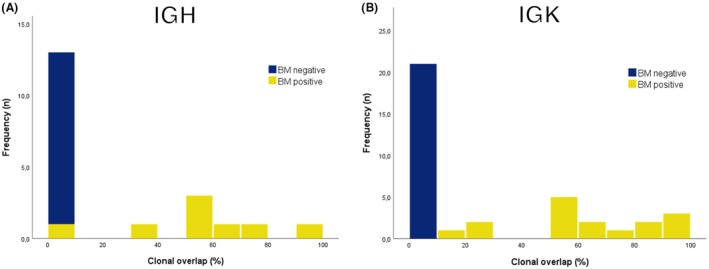 Figure 1
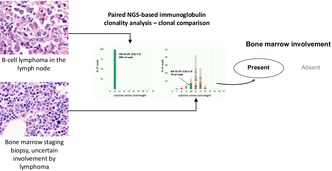 Figure 2
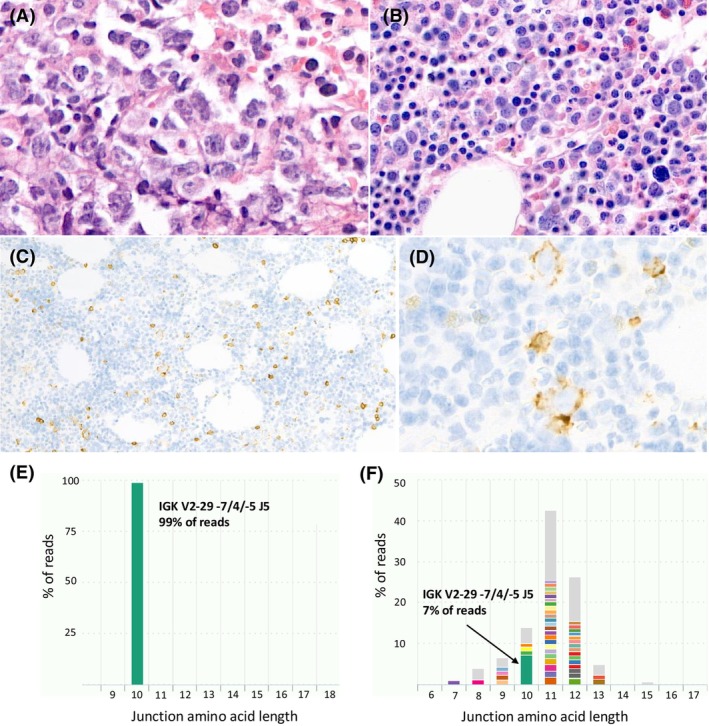 Figure 3
Peer Reviews
No public reviews on file for this paper yet. If you reviewed it on a platform where reviews are public (OpenReview, ICLR, NeurIPS, ICML), you can paste yours below so the community can read it here.
Videos
No videos yet. Explain this paper in a talk, walkthrough, or lecture? Add one.
Taxonomy
TopicsLymphoma Diagnosis and Treatment · Cancer Genomics and Diagnostics · Acute Lymphoblastic Leukemia research