GREB1 ‐rearranged uterine tumour shares a common DNA methylation signature with ESR1 ‐rearranged UTROSCT
Cheng‐Han Lee, Yow‐Shan Lee, Jennifer A Bennett, David L Kolin, Jen‐Chieh Lee, Hsuan‐Ying Huang, Martin Köbel, Mark Sementsov, Brendan C Dickson, Christian Koelsche, Friedrich Kommoss, Andreas von Deimling, Felix K F Kommoss

TL;DR
This study finds that GREB1-rearranged uterine tumors and UTROSCTs share similar DNA methylation patterns, suggesting they are closely related despite differences in appearance and genomic complexity.
Contribution
The study demonstrates a shared DNA methylation signature between GREB1-rearranged uterine tumors and ESR1-rearranged UTROSCTs, supporting their classification within the same tumor spectrum.
Findings
GREB1-rearranged uterine tumors and UTROSCTs form a distinct DNA methylation cluster separate from other uterine tumors.
GREB1-rearranged tumors show more genomic complexity and fewer sex cord-like features compared to UTROSCTs.
The epigenetic similarity supports the inclusion of GREB1-rearranged tumors in the UTROSCT spectrum despite morphological differences.
Abstract
GREB1‐rearranged uterine tumours encompass a group of uterine mesenchymal tumours with varied histologic appearances. The fusion partners to GREB1 include NCOA1‐3, SS18 and NR4A3. Given that some GREB1‐rearranged uterine tumours exhibit histologic features of uterine tumours resembling ovarian sex cord tumour (UTROSCT), there is a general belief that GREB1‐rearranged uterine mesenchymal tumours are part of the UTROSCT family. In this study, we applied global DNA methylation and copy number analyses to a series of 10 GREB1‐rearranged uterine tumours and 21 classic UTROSCTs (7 of which were molecularly confirmed to harbour ESR1::NCOA2/3 fusions). We found that GREB1‐rearranged uterine tumors show an overlap in their global methylation profiles with UTROSCT, including ESR1::NCOA2/3 positive cases. Together, these tumours form a DNA methylation cluster separate from uterine smooth muscle…
Genes, proteins, chemicals, diseases, species, mutations and cell lines named across the full text — each resolved to its canonical identifier and authoritative record.
Click any figure to enlarge with its caption.
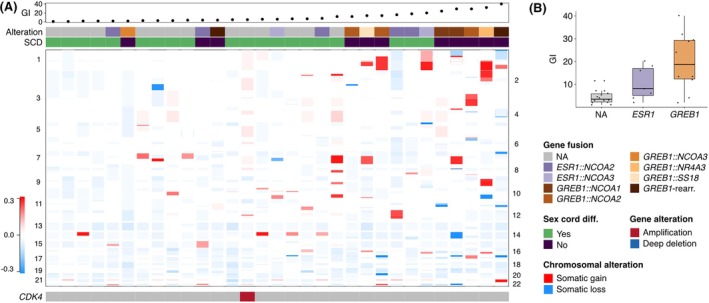 Figure 1
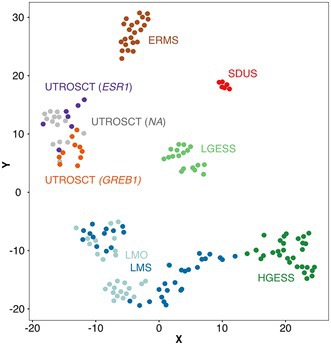 Figure 2
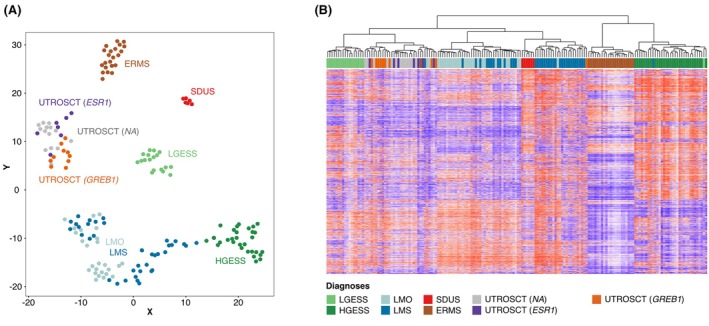 Figure 3
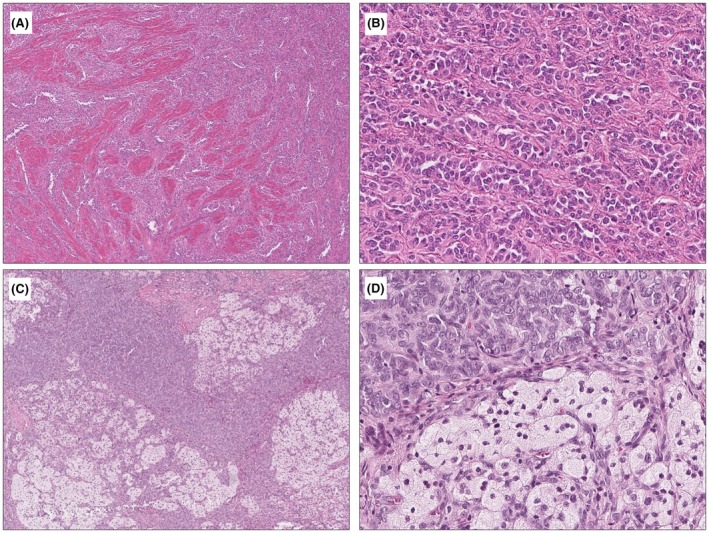 Figure 4
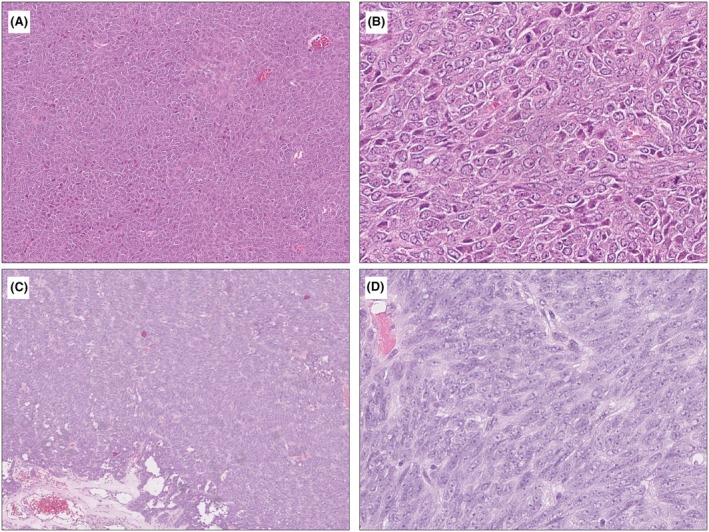 Figure 5
Peer Reviews
No public reviews on file for this paper yet. If you reviewed it on a platform where reviews are public (OpenReview, ICLR, NeurIPS, ICML), you can paste yours below so the community can read it here.
Videos
No videos yet. Explain this paper in a talk, walkthrough, or lecture? Add one.
Taxonomy
TopicsChromatin Remodeling and Cancer · Nuclear Receptors and Signaling · Mechanisms of cancer metastasis