Fecal carriage, transferable β-lactam resistance, and efflux pump contribution in third-generation cephalosporin-resistant Escherichia coli from small-scale farm animals and workers in northern Thailand
Uttapoln Tansawai, Pannika R. Niumsup

TL;DR
This study found third-generation cephalosporin-resistant Escherichia coli in farm animals in Thailand, showing transferable resistance genes and efflux pump contributions, highlighting risks for antimicrobial resistance spread.
Contribution
The study identifies transferable resistance genes and efflux pump roles in 3GC-R E. coli from small-scale farms in Thailand, emphasizing their public health significance.
Findings
3GC-R E. coli was most prevalent in swine (47.4%) and showed multidrug resistance in 57.1% of isolates.
Resistance genes blaCTX-M and blaCMY-2 were transferable via IncF and IncI1-I plasmids.
Efflux pumps contributed to ceftazidime resistance in 38.7% of isolates.
Abstract
Food-producing animals are recognized reservoirs of antimicrobial-resistant bacteria with zoonotic potential. Third-generation cephalosporin-resistant (3GC-R) Escherichia coli is of particular public health concern due to its association with extended-spectrum β-lactamase (ESBL) and plasmid-mediated AmpC enzymes. This study aimed to determine the prevalence, resistance mechanisms, transferability of resistance genes, efflux pump contribution, and genetic relatedness of 3GC-R E. coli isolated from farm animals and workers on a small-scale farm in lower northern Thailand. A total of 265 fecal samples were collected from laying hens (n = 210), cattle (n = 33), swine (n = 19), and farm workers (n = 3). Isolation of 3GC-R E. coli was performed using cefotaxime-supplemented selective media. Antimicrobial susceptibility was determined by disk diffusion and minimum inhibitory concentration…
Genes, proteins, chemicals, diseases, species, mutations and cell lines named across the full text — each resolved to its canonical identifier and authoritative record.
Click any figure to enlarge with its caption.
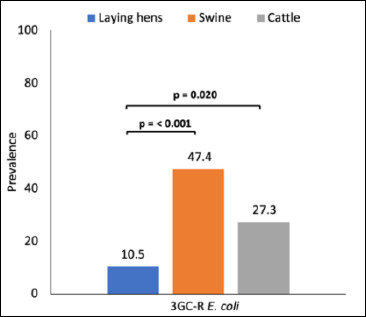 Figure 1
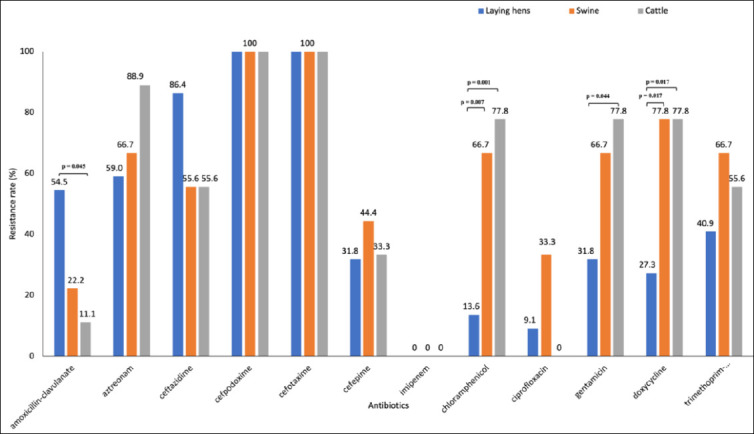 Figure 2
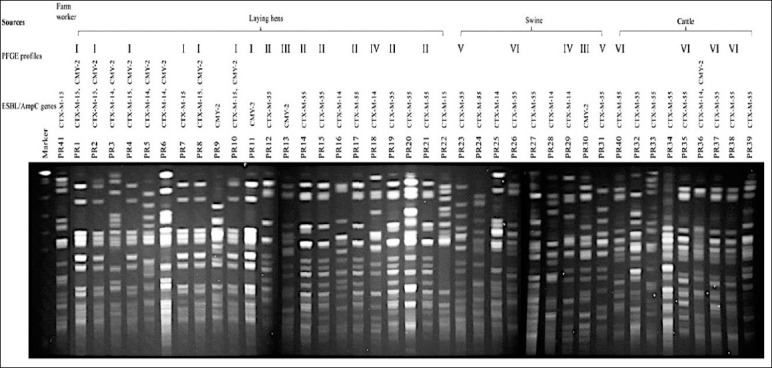 Figure 3
Peer Reviews
No public reviews on file for this paper yet. If you reviewed it on a platform where reviews are public (OpenReview, ICLR, NeurIPS, ICML), you can paste yours below so the community can read it here.
Videos
No videos yet. Explain this paper in a talk, walkthrough, or lecture? Add one.
Taxonomy
TopicsAntibiotic Resistance in Bacteria · Escherichia coli research studies · Antimicrobial agents and applications