Using a participation monitoring database to enhance recruitment in a rare cancer population
Michael A. O’Rorke, Brian M. Gryzlak, Tao Xu, Bradley D. McDowell, Rhonda R. DeCook, Nicholas J. Rudzianski, Kimberly C. Serrano, Abigayle M. Wehrheim, Udhayvir S. Grewal, Chandrikha Chandrasekharan, Joseph S. Dillon, Thorvardur R. Halfdanarson, Michael J. Schnell

TL;DR
A new system tracked recruitment contacts to improve enrollment and diversity in a rare cancer study.
Contribution
A participation monitoring system enhanced recruitment efficiency and representativeness in a rare cancer cohort.
Findings
28.8% of contacted patients consented, with 27.4% enrolled in the study.
Online enrollment was more common than mail, with mail respondents being older and having lower income and education.
Tracking recruitment contacts allowed adaptive strategies and improved outreach to harder-to-reach populations.
Abstract
Recruitment for rare disease studies is challenging due to small eligible populations. Traditional clinical research management systems often lack tools to track recruitment contacts prior to enrollment. The NET-PRO study, focused on neuroendocrine tumors (NETs), implemented a participation monitoring system to enhance recruitment efficiency and representativeness. NET-PRO is a multicenter cohort study of 2538 adults diagnosed with gastroenteropancreatic (GEP) or lung NETs between January 2018 and September 2024. Recruitment occurred from January 2022 to February 2025 across 14 U.S. medical centers. Sites used flexible recruitment methods (email, mail, phone, in-clinic) and tracked contacts using REDCap-based tools. Participant characteristics were analyzed by enrollment mode (online or mail) and recruitment difficulty (number of contacts required prior to enrollment) using…
Genes, proteins, chemicals, diseases, species, mutations and cell lines named across the full text — each resolved to its canonical identifier and authoritative record.
Click any figure to enlarge with its caption.
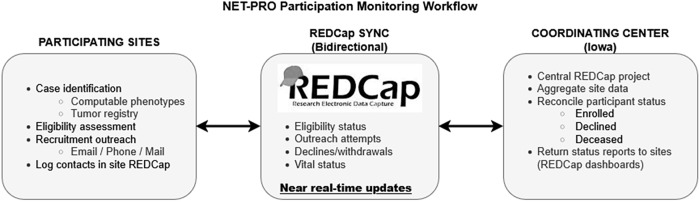 Figure 1
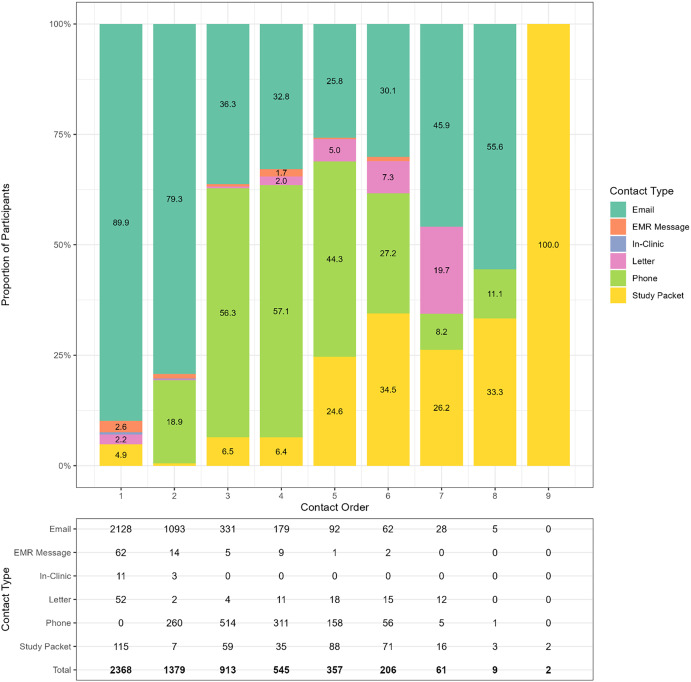 Figure 2
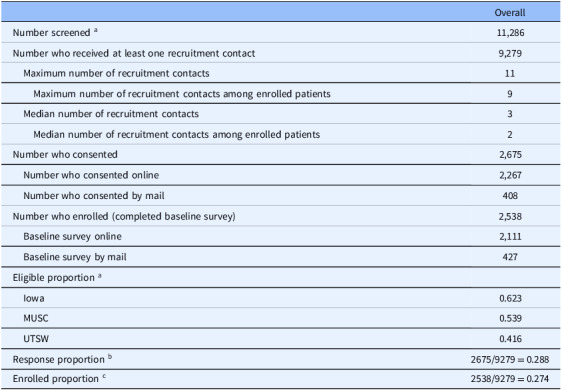 Figure 3
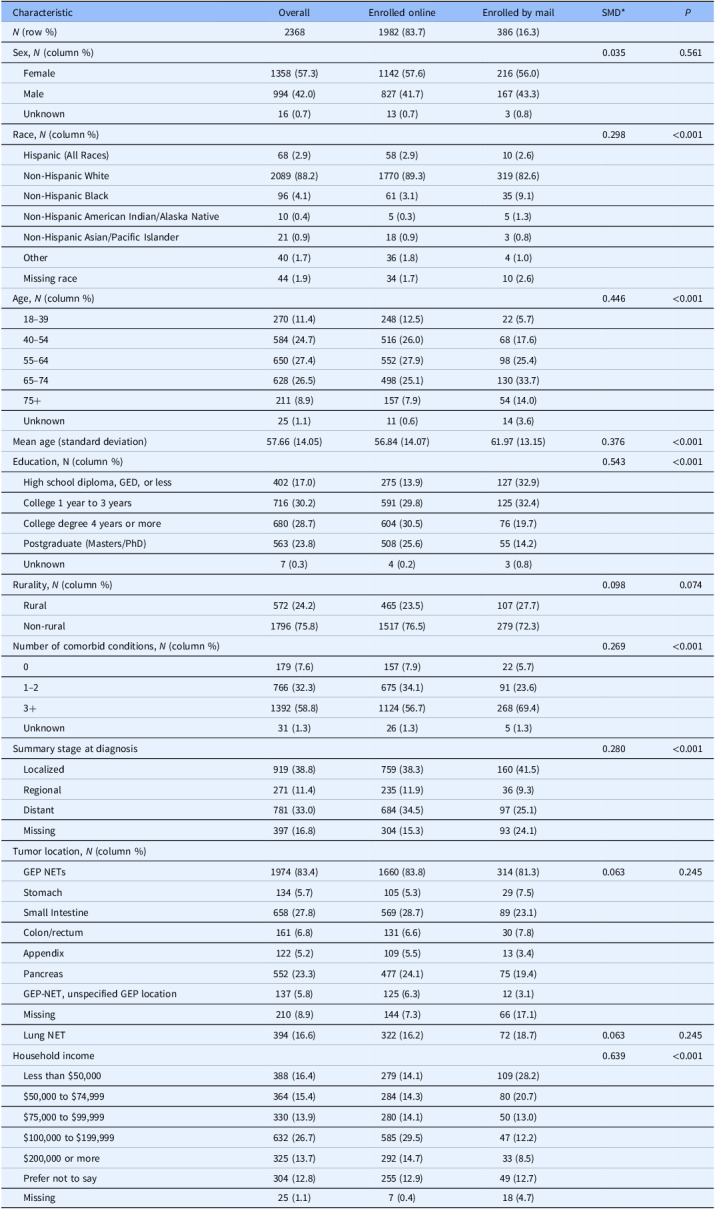 Figure 4
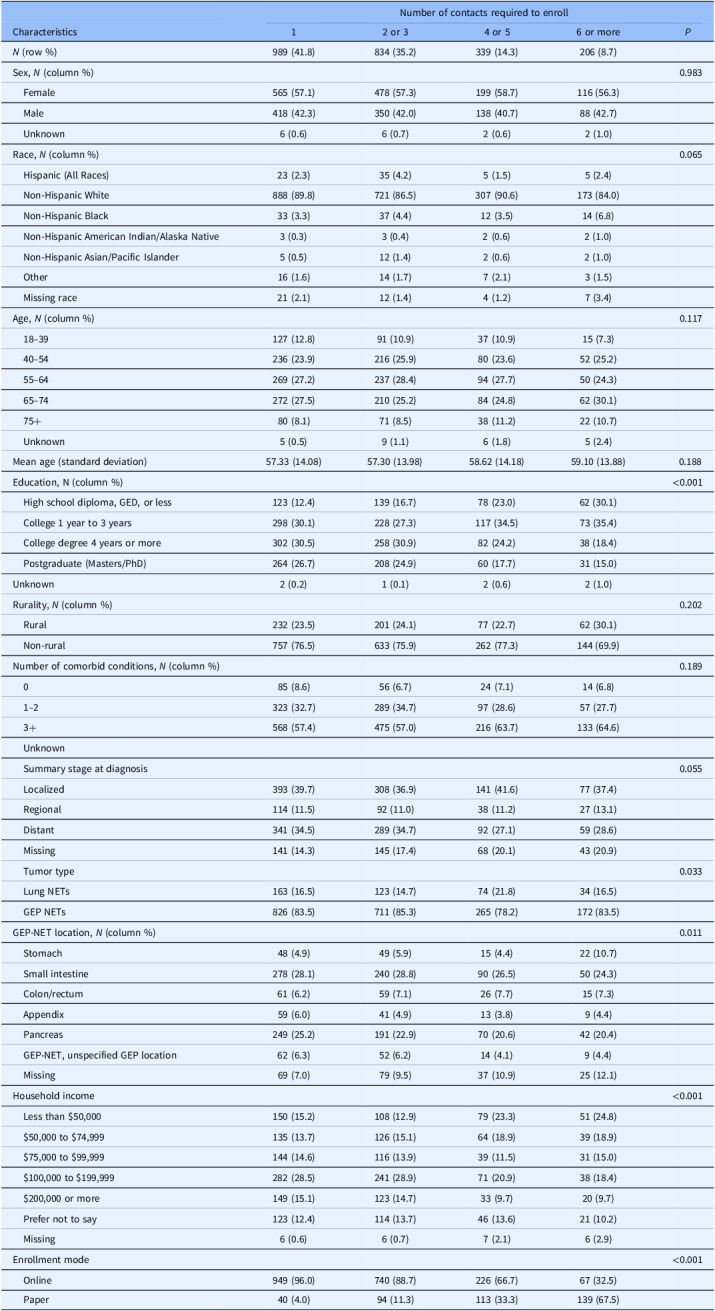 Figure 5
Peer Reviews
No public reviews on file for this paper yet. If you reviewed it on a platform where reviews are public (OpenReview, ICLR, NeurIPS, ICML), you can paste yours below so the community can read it here.
Videos
No videos yet. Explain this paper in a talk, walkthrough, or lecture? Add one.
Taxonomy
TopicsEmployer Branding and e-HRM · Genetics and Physical Performance · Cancer survivorship and care