Disulfidptosis and androgenic cancers: from molecular mechanisms to clinical applications and future translational research
Xueyang Wang, Juan Zhao, Qiming Li, Jiaqing Chang, Weiwei Zhao, Xiping Xing

TL;DR
This paper explores how disulfidptosis, a new type of cell death, could help treat androgenic cancers like prostate and bladder cancer by targeting protein disulfide bonds.
Contribution
The paper systematically reviews disulfidptosis mechanisms and its potential as a novel therapeutic target in male cancers.
Findings
Disulfidptosis regulates tumor cell survival through protein disulfide bonds.
It shows potential as a therapeutic target in prostate, testicular, and bladder cancers.
The paper highlights key regulatory genes and clinical application challenges.
Abstract
Disulfidptosis, a newly discovered form of programmed cell death, has garnered significant attention in tumor biology and reproductive system research in recent years, particularly demonstrating importance in urological cancer studies. Prostate cancer, testicular cancer, and bladder cancer are highly prevalent malignant tumors among men globally. Modern medical research reveals their complex pathogenesis and the limited efficacy of traditional treatments, necessitating the identification of novel therapeutic targets. Disulfidptosis influences tumor cell survival and death by regulating the formation and cleavage of intracellular protein disulfide bonds, highlighting its pivotal role in tumorigenesis and progression. This paper systematically reviews the molecular mechanisms of disulfidptosis, elucidates its regulatory role in male cancer cells—including key regulatory genes and…
Genes, proteins, chemicals, diseases, species, mutations and cell lines named across the full text — each resolved to its canonical identifier and authoritative record.
Click any figure to enlarge with its caption.
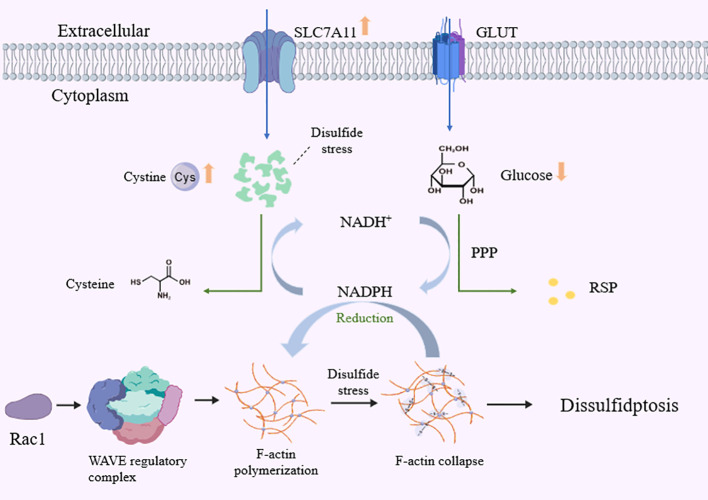 Figure 1
Peer Reviews
No public reviews on file for this paper yet. If you reviewed it on a platform where reviews are public (OpenReview, ICLR, NeurIPS, ICML), you can paste yours below so the community can read it here.
Videos
No videos yet. Explain this paper in a talk, walkthrough, or lecture? Add one.
Taxonomy
TopicsEndoplasmic Reticulum Stress and Disease · Ferroptosis and cancer prognosis · Redox biology and oxidative stress