A comparison of honeybee and scorpion venoms as anticancer agents against three different cancer cell lines: lung, colon, and breast cancer
Fatma H. Galal, Fahad M. Alshammari, Abdulrahman S. Aldaghmi, Elsayed E. Hafez, Ghada M. El-Sayed, Riyadh H. Aeban, Saad A. Alharbi

TL;DR
This study compares honeybee and scorpion venoms for their anticancer effects on lung, colon, and breast cancer cells, finding they work through different mechanisms.
Contribution
The study reveals distinct anticancer mechanisms of honeybee and scorpion venoms through gene modulation and molecular interactions.
Findings
Scorpion venom significantly downregulates the anti-apoptotic gene Bcl-2, showing pro-apoptotic effects.
Honeybee venom upregulates Bcl-2 and acts through immunomodulatory and anti-angiogenic pathways.
Both venoms show potential as multi-target anticancer agents, particularly effective against lung and breast cancer cells.
Abstract
Owing to the drawbacks and adverse effects associated with conventional cancer therapies, there is growing interest in identifying effective natural alternatives. In this study, the anticancer potential of honeybee and scorpion venoms was evaluated using three human cancer cell lines: lung adenocarcinoma (A549), colon carcinoma (HCT-116), and breast adenocarcinoma (MDA-MB-231). The chemical composition, biological activity, and molecular interactions of both venoms with key cancer-related targets were investigated through gas chromatography–mass spectrometry (GC-MS), cytotoxicity assays, gene expression analysis, and molecular docking. GC-MS analysis revealed that scorpion venom was predominantly composed of methyl isocyanide, 3-butyn-1-ol, and allene, whereas honeybee venom was characterized by caprylic anhydride, 1,3,5-triazine derivatives, and palmitin as major bioactive…
Genes, proteins, chemicals, diseases, species, mutations and cell lines named across the full text — each resolved to its canonical identifier and authoritative record.
Click any figure to enlarge with its caption.
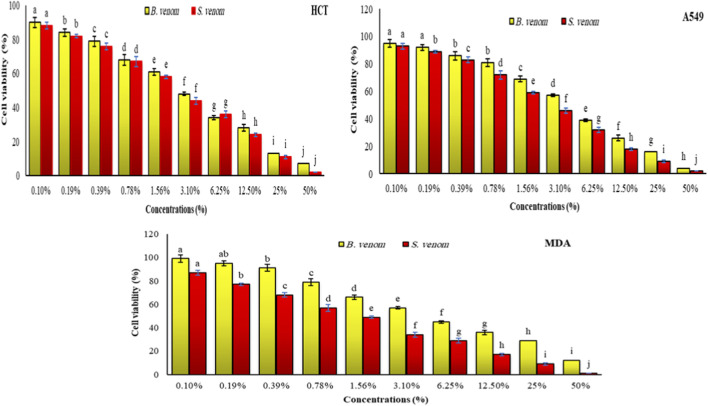 Figure 1
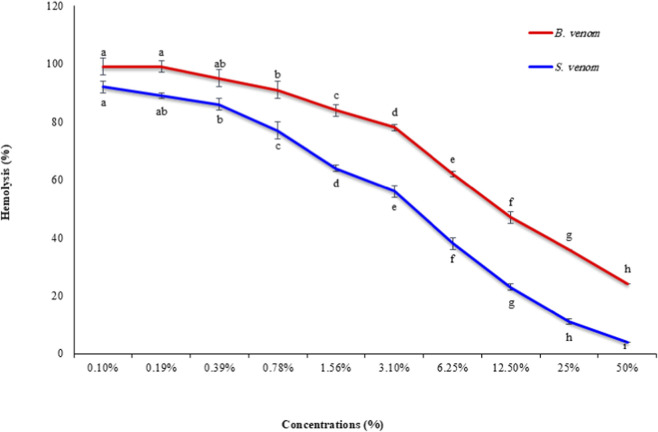 Figure 2
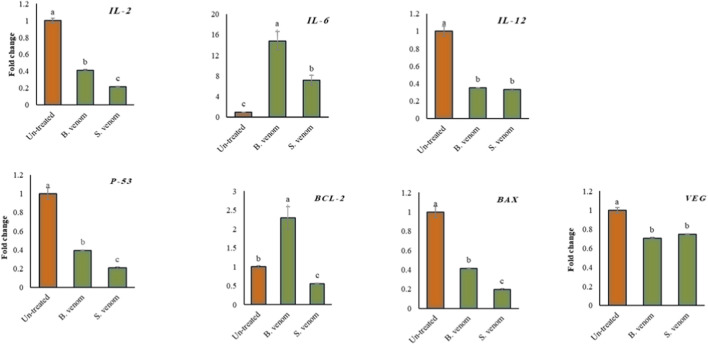 Figure 3
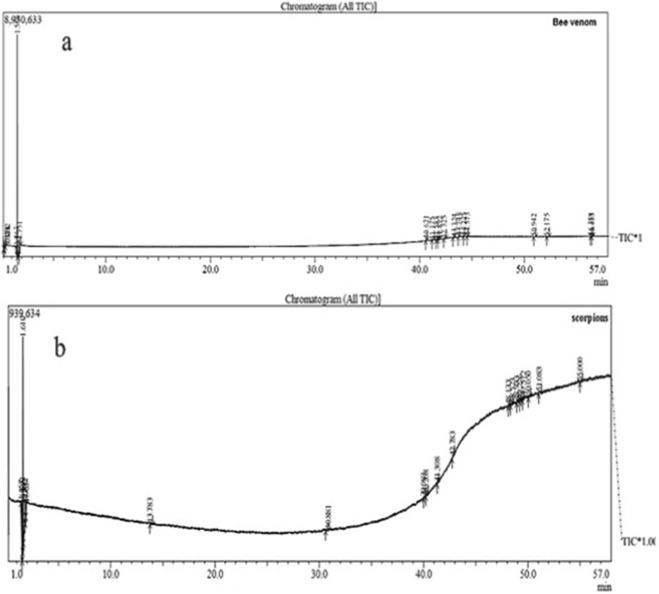 Figure 4
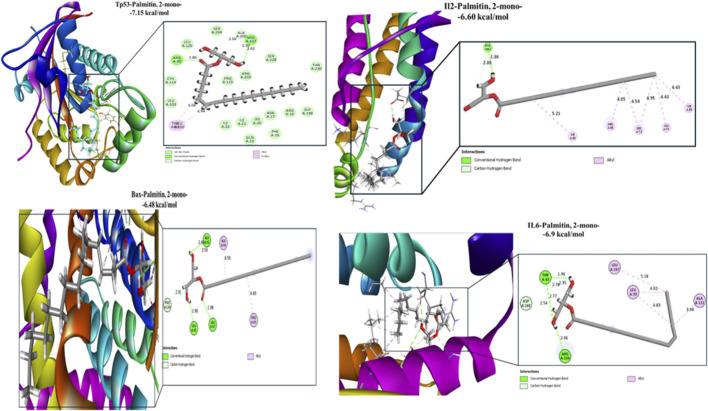 Figure 5
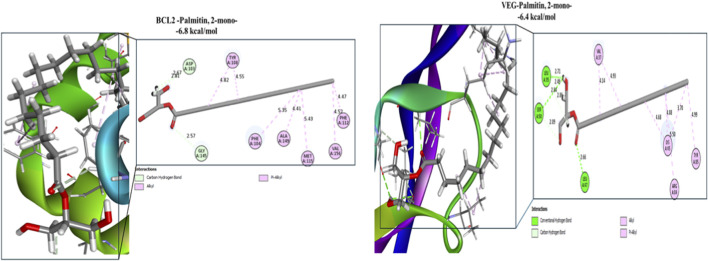 Figure 6
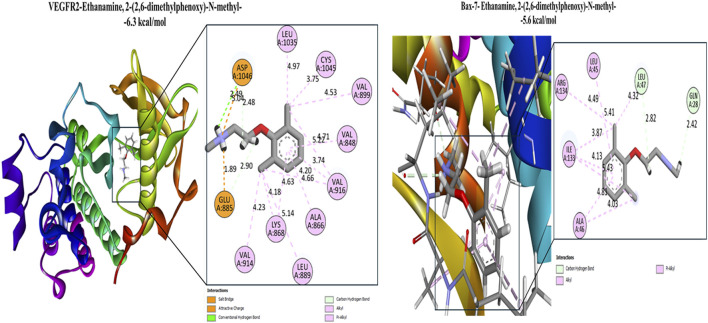 Figure 7
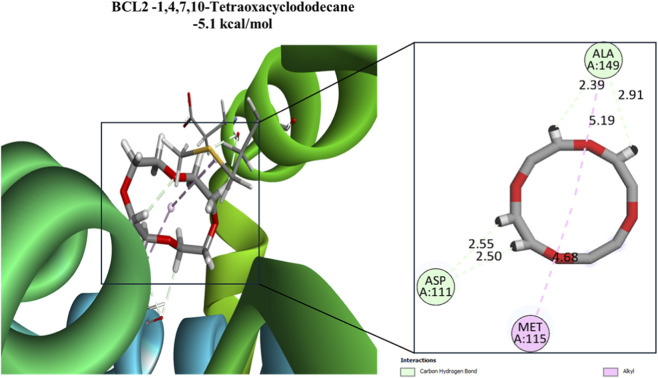 Figure 8
Peer Reviews
No public reviews on file for this paper yet. If you reviewed it on a platform where reviews are public (OpenReview, ICLR, NeurIPS, ICML), you can paste yours below so the community can read it here.
Videos
No videos yet. Explain this paper in a talk, walkthrough, or lecture? Add one.
Taxonomy
TopicsHealthcare and Venom Research · Venomous Animal Envenomation and Studies · Cell death mechanisms and regulation