Interleukin-6 regulates the neutrophil response to diverse bacteria
Justin M. Owens, Hannah K. Weppner, Aitana Ignes-Romeu, Jacob W. Burleson, Laurel E. Hind

TL;DR
This study shows that different levels of IL-6 affect how neutrophils respond to various bacteria, with high levels reducing their activity.
Contribution
The study reveals concentration- and pathogen-dependent effects of IL-6 on neutrophil behavior during bacterial infections.
Findings
High IL-6 (100 ng/mL) reduced neutrophil extravasation, migration speed, and displacement.
Low IL-6 (10 ng/mL) increased neutrophil extravasation in response to Pseudomonas aeruginosa.
Higher IL-6 levels decreased VE-cadherin and ICAM-1 expression on endothelial cells.
Abstract
Neutrophils are critical mediators of the innate immune response, and their antimicrobial functions are tightly regulated by a myriad of cytokines. Interleukin-6 (IL-6) is known to be essential for an effective immune response; however, how varying IL-6 concentrations affect the neutrophil response remains poorly understood. Because IL-6 concentrations can vary greatly across different disease states, we investigated the concentration dependent effects of IL-6 on the neutrophil response to diverse bacterial pathogens using an infection-on-a-chip microfluidic device. We found that a high exogenous IL-6 concentration (100 ng/mL) reduced neutrophil extravasation, migration speed, and displacement compared to conditions without exogenous IL-6. In contrast, a lower exogenous IL-6 concentration (10 ng/mL) produced pathogen-specific effects on neutrophil extravasation: exogenous IL-6 increased…
Genes, proteins, chemicals, diseases, species, mutations and cell lines named across the full text — each resolved to its canonical identifier and authoritative record.
Click any figure to enlarge with its caption.
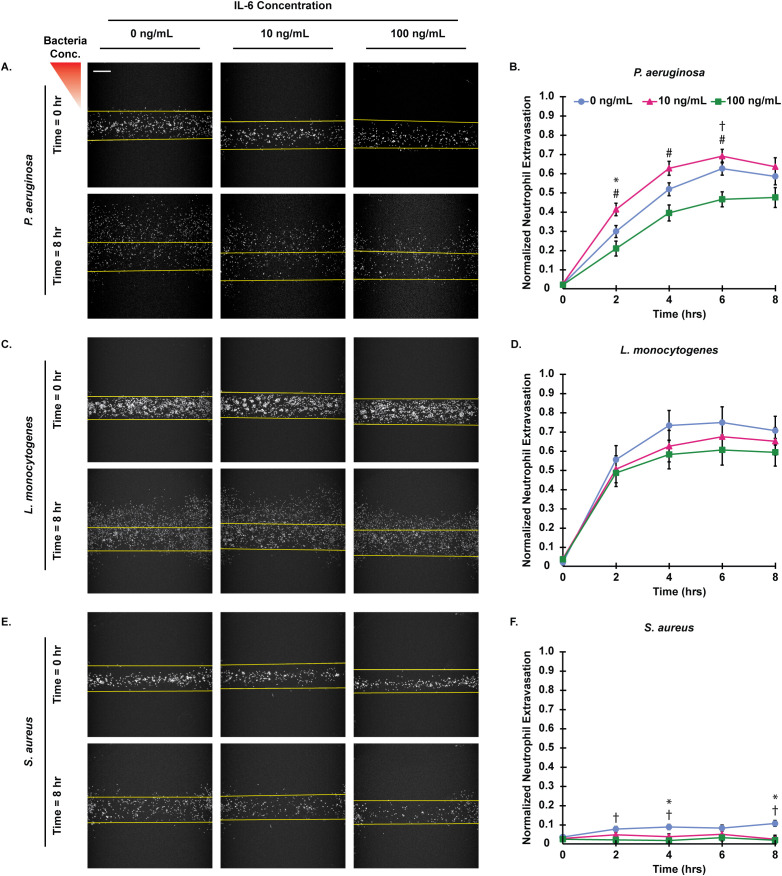 Figure 1
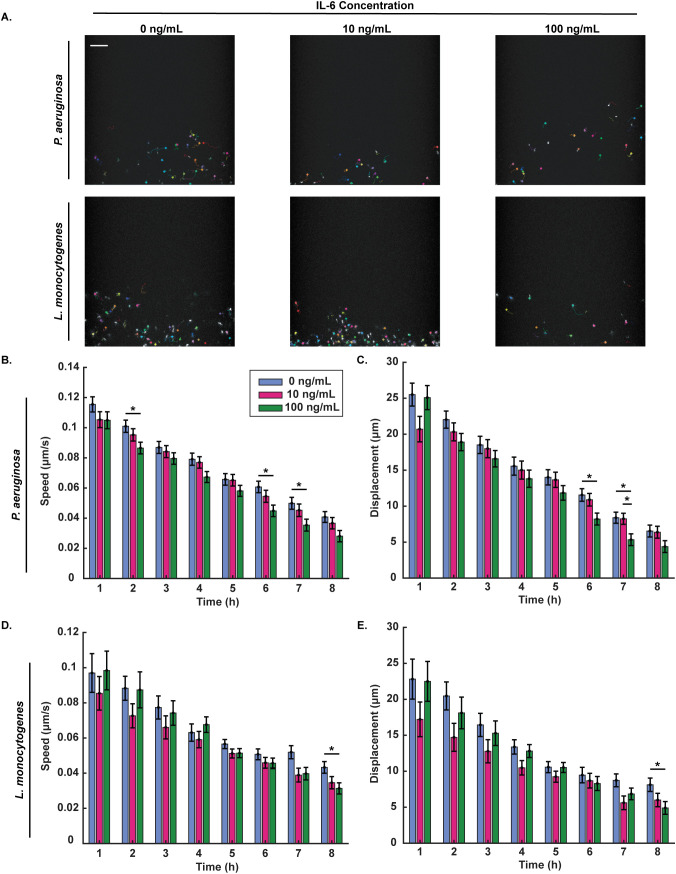 Figure 2
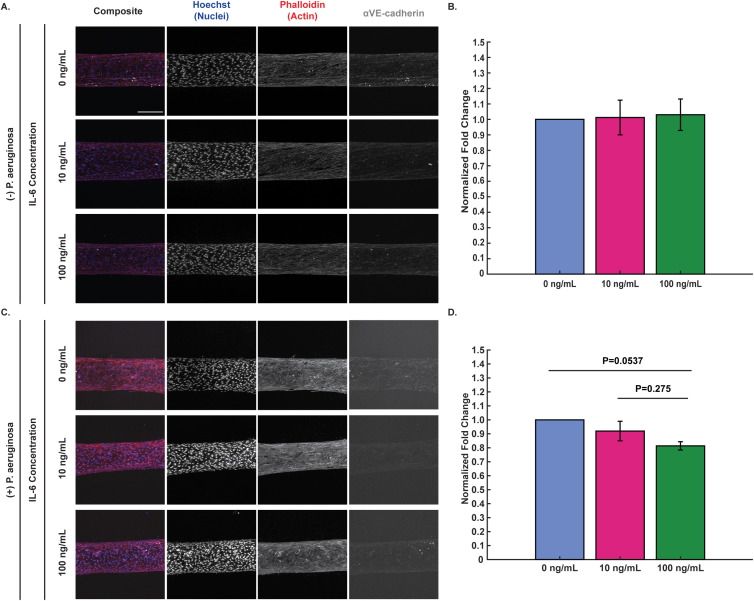 Figure 3
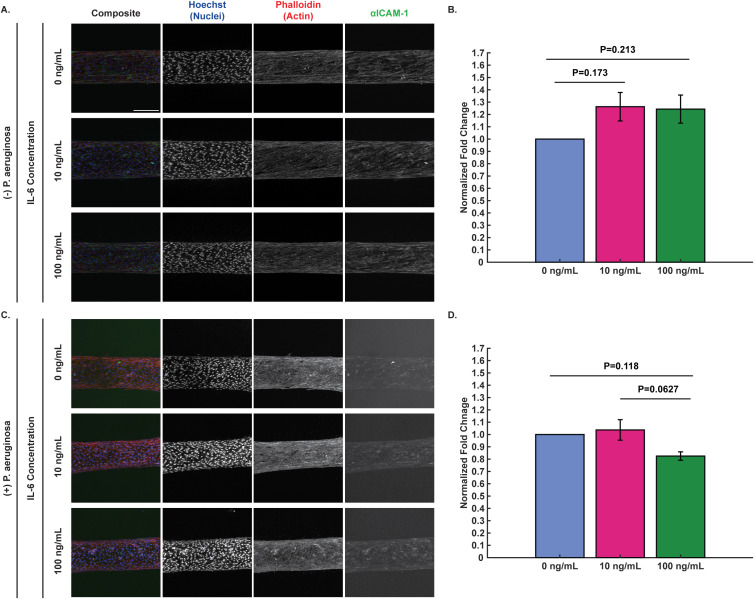 Figure 4
Peer Reviews
No public reviews on file for this paper yet. If you reviewed it on a platform where reviews are public (OpenReview, ICLR, NeurIPS, ICML), you can paste yours below so the community can read it here.
Videos
No videos yet. Explain this paper in a talk, walkthrough, or lecture? Add one.
Taxonomy
TopicsBacterial biofilms and quorum sensing · Immune Response and Inflammation · Neutrophil, Myeloperoxidase and Oxidative Mechanisms