Effects of brain-computer interface-based rehabilitation on lower limb function and activities of daily living after stroke: a systematic review and meta-analysis
Changshuo Liu, Jiaxu Han, Yuhui Wang, Xinyun Liang, Xianguo Meng

TL;DR
This study reviews and analyzes the effectiveness of brain-computer interface (BCI) rehabilitation for improving lower limb function and daily living activities after stroke.
Contribution
The paper provides the first systematic review and meta-analysis of BCI-based rehabilitation for post-stroke lower limb dysfunction.
Findings
BCI training significantly improved lower limb motor function, balance, and daily living activities in stroke patients.
A dose-dependent effect was observed, with greater improvements in daily living activities for training durations of ≥ 500 minutes.
Only limited evidence was found for functional mobility improvements, based on a single study.
Abstract
Lower limb motor dysfunction is a common sequela of stroke that significantly impacts patients' walking safety and independence in daily living. Although brain-computer interface (BCI) technology has demonstrated efficacy in upper limb rehabilitation, its effects on lower limb recovery have not yet been systematically evaluated. A systematic literature search was conducted across seven databases (PubMed, Web of Science, Embase, China National Knowledge Infrastructure, SinoMed, VIP Database, and Wanfang Data.) to identify studies investigating BCI for post-stroke lower limb dysfunction, encompassing records published up to September 2025. All statistical analyses were performed using Review Manager software (version 5.4.1). Thirteen studies involving 582 participants were included. BCI training significantly improved the scores of Fugl-Meyer Assessment for Lower Extremity (FMA-LE, MD =…
Genes, proteins, chemicals, diseases, species, mutations and cell lines named across the full text — each resolved to its canonical identifier and authoritative record.
Click any figure to enlarge with its caption.
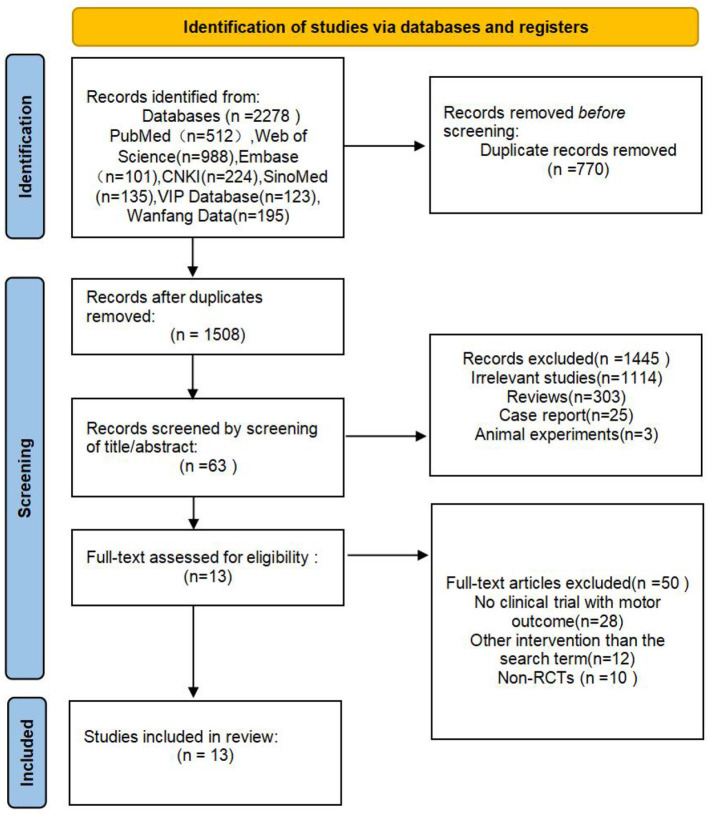 Figure 1
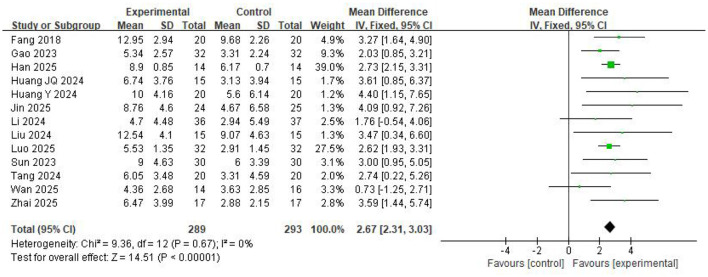 Figure 2
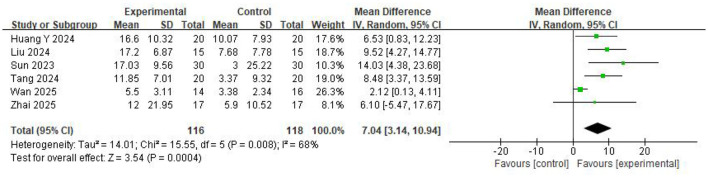 Figure 3
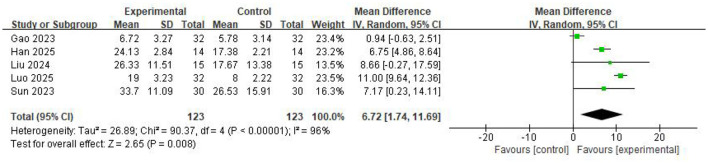 Figure 4
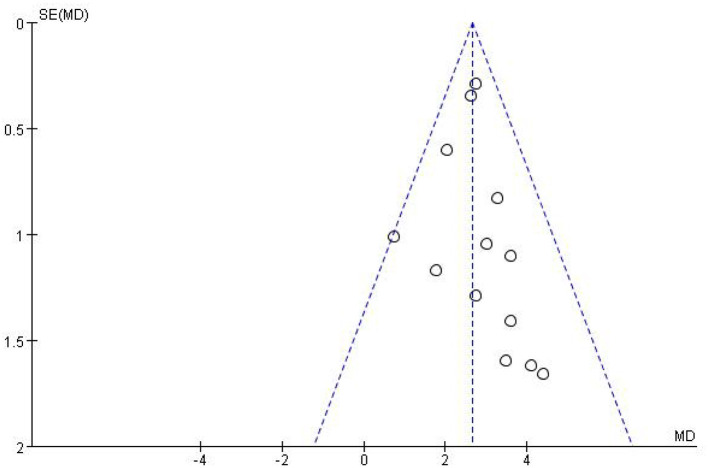 Figure 5
Peer Reviews
No public reviews on file for this paper yet. If you reviewed it on a platform where reviews are public (OpenReview, ICLR, NeurIPS, ICML), you can paste yours below so the community can read it here.
Videos
No videos yet. Explain this paper in a talk, walkthrough, or lecture? Add one.
Taxonomy
TopicsEEG and Brain-Computer Interfaces · Stroke Rehabilitation and Recovery · Muscle activation and electromyography studies