From apremilast to JAK inhibitors—salvage treatment strategies for refractory palmoplantar pustulosis: case series
Yufeng Pan, Di Jin, Fanzhang Meng, Hanlu Zhang, Jianong Tang, Cui Guo, Chen Li, Jingjing Ma

TL;DR
This study shows that switching to JAK inhibitors after failed apremilast treatment can effectively manage severe palmoplantar pustulosis with good tolerability.
Contribution
Demonstrates JAK inhibitors as a novel salvage therapy for refractory palmoplantar pustulosis after apremilast failure.
Findings
All nine patients showed significant improvement in PPPASI scores after 12 weeks of tofacitinib treatment.
Eight patients achieved at least a 50% reduction in PPPASI scores, with no serious adverse events reported.
Switching to JAK inhibitors after apremilast failure offers a viable and well-tolerated treatment option for refractory PPP.
Abstract
Palmoplantar pustulosis (PPP) is a chronic inflammatory skin condition characterized primarily by recurrent episodes of blisters and sterile pustules on the palms and soles. It is frequently accompanied by disruption of the skin barrier and intense itching or pain. Currently, there is a lack of standardized treatment protocols for PPP therapy. Traditional first-line therapies primarily include topical corticosteroids, immunosuppressants, and localized phototherapy, which offer limited efficacy and are prone to recurrence. Although apremilast (APR) has been reported for use in refractory PPP, its efficacy varies among individuals. This study aims to explore the value of a rescue therapy strategy switching to JAK inhibitors after APR treatment failure. This study is a single-center retrospective case series analysis, enrolling a total of 9 patients with refractory PPP who remained…
Genes, proteins, chemicals, diseases, species, mutations and cell lines named across the full text — each resolved to its canonical identifier and authoritative record.
Click any figure to enlarge with its caption.
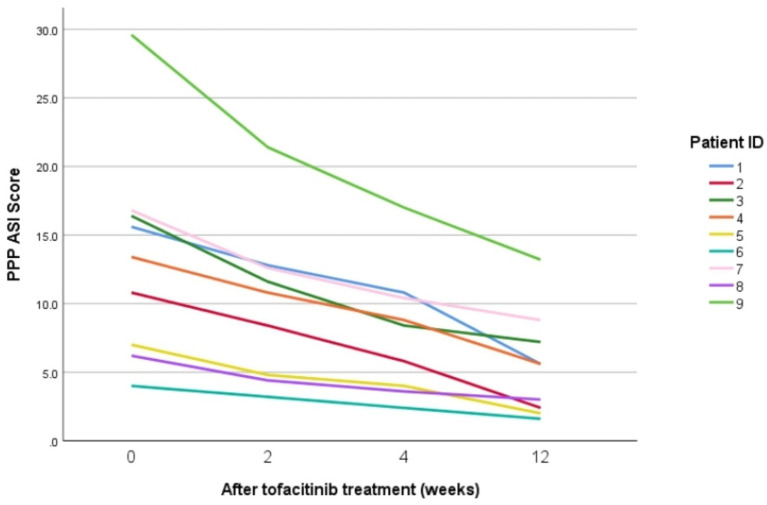 Figure 1
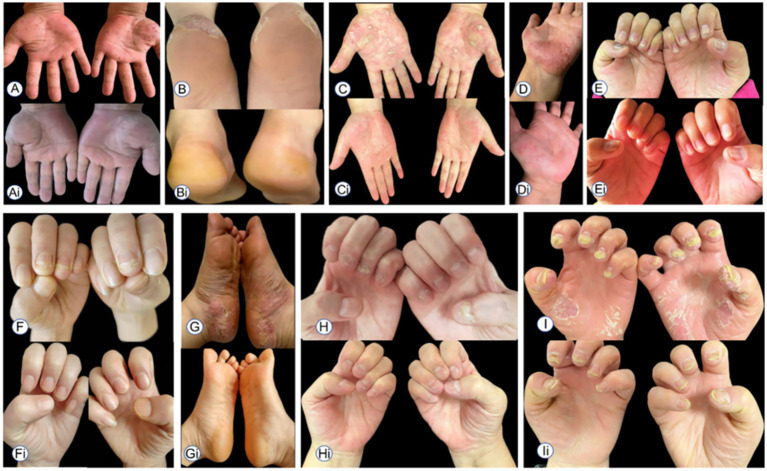 Figure 2
Peer Reviews
No public reviews on file for this paper yet. If you reviewed it on a platform where reviews are public (OpenReview, ICLR, NeurIPS, ICML), you can paste yours below so the community can read it here.
Videos
No videos yet. Explain this paper in a talk, walkthrough, or lecture? Add one.
Taxonomy
TopicsPsoriasis: Treatment and Pathogenesis · Dermatology and Skin Diseases · Autoimmune Bullous Skin Diseases