Cushing syndrome of different etiologies - cardiometabolic complications, venous thromboembolic events and mortality: data from ERCUSYN Krakow database
Mari Minasyan, Aleksandra Gamrat-Żmuda, Agata Bryk-Wiązania, Wiktoria Suchy, Anna Bogusławska, Ewelina Rzepka, Beata Piwońska-Solska, Katarzyna Majka, Alicja Hubalewska-Dydejczyk, Elena Valassi, Aleksandra Gilis-Januszewska

TL;DR
This study examines the health complications and mortality in patients with Cushing syndrome of different causes, using data from a Polish endocrinology center.
Contribution
The study provides insights into the cardiometabolic and mortality differences among Cushing syndrome subtypes in a Polish cohort.
Findings
ECT-CS patients had the highest mortality rate (62%) and more heart-related conditions.
Males had higher mortality (30%) compared to females (15%).
Tumor progression was the leading cause of death in Cushing syndrome patients.
Abstract
Cushing syndrome (CS) as a state of prolonged cortisol excess is associated with multiple complications that contribute to increased mortality in affected patients. This retrospective study presents data on etiology, demographic features, baseline cardiometabolic comorbidities, venous thromboembolic events and mortality of 214 consecutive CS patients from a single tertiary endocrinology center in Poland, a part of the European Register on Cushing’s Syndrome (ERCUSYN). The group was predominated by pituitary CS (53%, PIT-CS), followed by adrenal CS (25%, ADR-CS) and ectopic CS (22%, ECT-CS). Statistica 13.0 was used to perform data analysis. Statistical significance was settled for a p-value ≤0.05. The PIT-CS group was significantly younger than others. The PIT-CS and ADR-CS groups were predominated by women, contrary to the ECT-CS group, predominated by men. At the baseline,…
Genes, proteins, chemicals, diseases, species, mutations and cell lines named across the full text — each resolved to its canonical identifier and authoritative record.
Click any figure to enlarge with its caption.
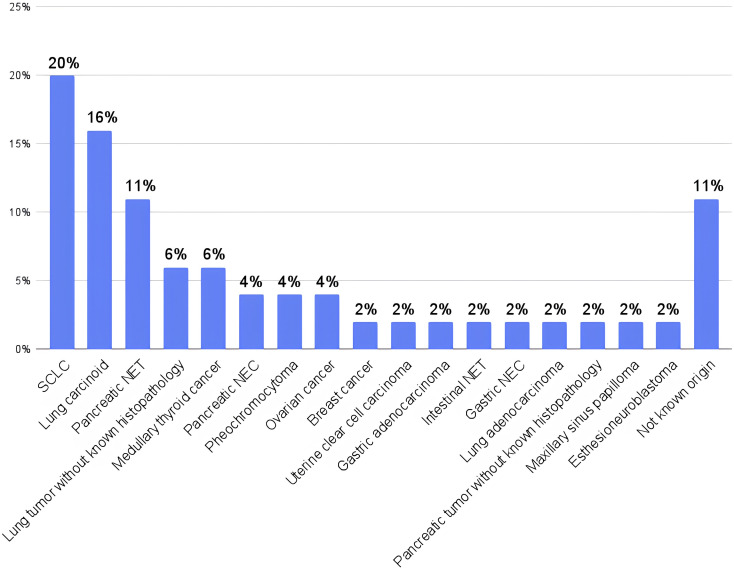 Figure 1
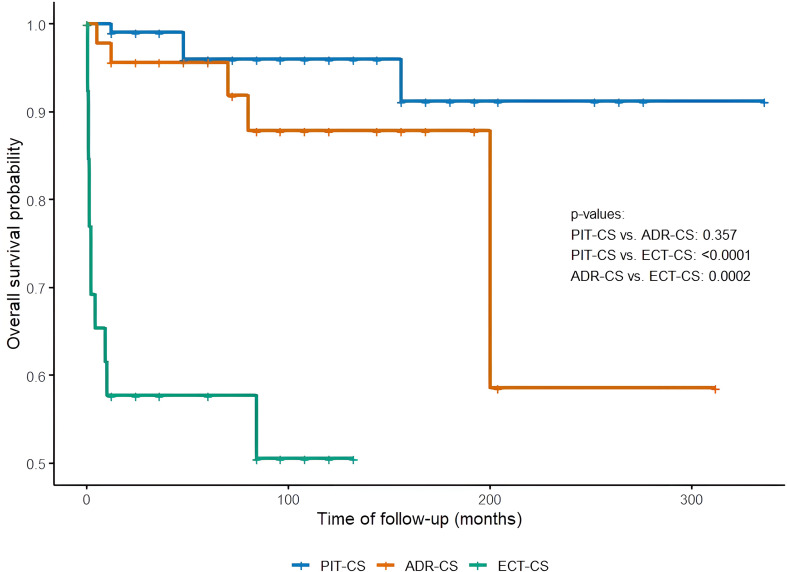 Figure 2
Peer Reviews
No public reviews on file for this paper yet. If you reviewed it on a platform where reviews are public (OpenReview, ICLR, NeurIPS, ICML), you can paste yours below so the community can read it here.
Videos
No videos yet. Explain this paper in a talk, walkthrough, or lecture? Add one.
Taxonomy
TopicsPituitary Gland Disorders and Treatments · Adrenal Hormones and Disorders · Adrenal and Paraganglionic Tumors