Genomic profiling and HER2-targeted therapy: a case series of Chinese salivary duct carcinoma patients and its clinical implications
Xiang Huang, Wei Yu, Xiaomo Li, Boning Cai, Baolin Qu, Jing Chen, Pei Zhang, Xinrui Chen, Yanli Liu, Shengqiang Feng, Lin Gui, Fang Liu

TL;DR
This study explores genomic alterations in Chinese salivary duct carcinoma patients and shows that HER2-targeted therapies may be effective for some.
Contribution
The study reports novel HER2 mutations in salivary duct carcinoma and demonstrates clinical responses to HER2-targeted therapies.
Findings
TP53, HER2, PIK3CA, HRAS, and NF1 are the most prevalent driver mutations in salivary duct carcinoma.
Three novel HER2 mutations (D769H, H878Y, and an exon 16 skipping mutation) were identified in this cancer type for the first time.
Two metastatic patients with HER2 amplification responded to HER2-targeted therapies including pyrotinib and trastuzumab-pertuzumab combination.
Abstract
Salivary duct carcinoma (SDC) is a rare and aggressive subtype of salivary gland cancers (SGCs). Currently, there is no approved targeted therapy for this devastating disease. This study aimed to identify actionable genomic alterations in Chinese patients with SDC and explore the clinical efficacy of human epidermal growth factor receptor 2 (HER2)-targeted therapies in this population. Somatic and genomic DNA were isolated from SDC samples and the corresponding peripheral blood controls, respectively. To explore the potential of targeted therapy, next-generation sequencing (NGS) was used to identify genomic alterations, especially mutations with clinical significance. The most prevalent driver mutations in this SDC cohort are TP53, HER2, PIK3CA, HRAS, and NF1. Except for TP53, the other four driver mutations are targetable. We identified three novel HER2 mutations (D769H, H878Y, and…
Genes, proteins, chemicals, diseases, species, mutations and cell lines named across the full text — each resolved to its canonical identifier and authoritative record.
Click any figure to enlarge with its caption.
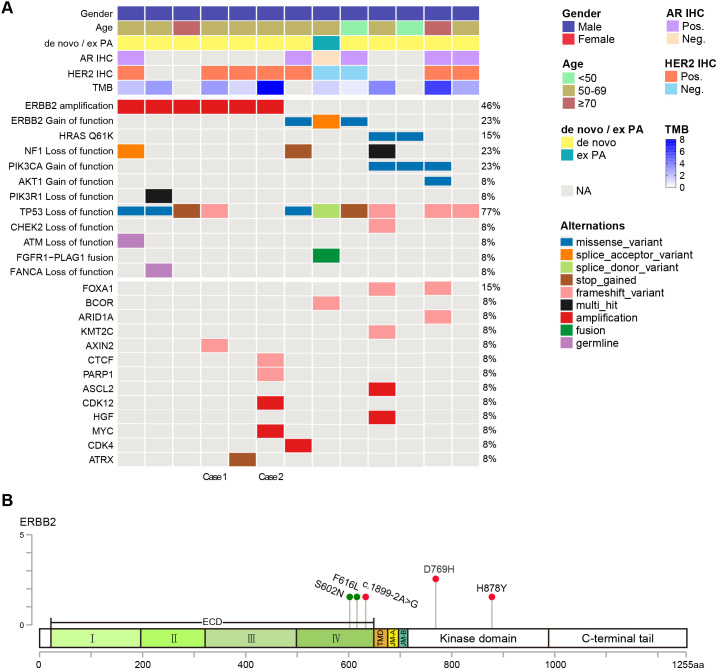 Figure 1
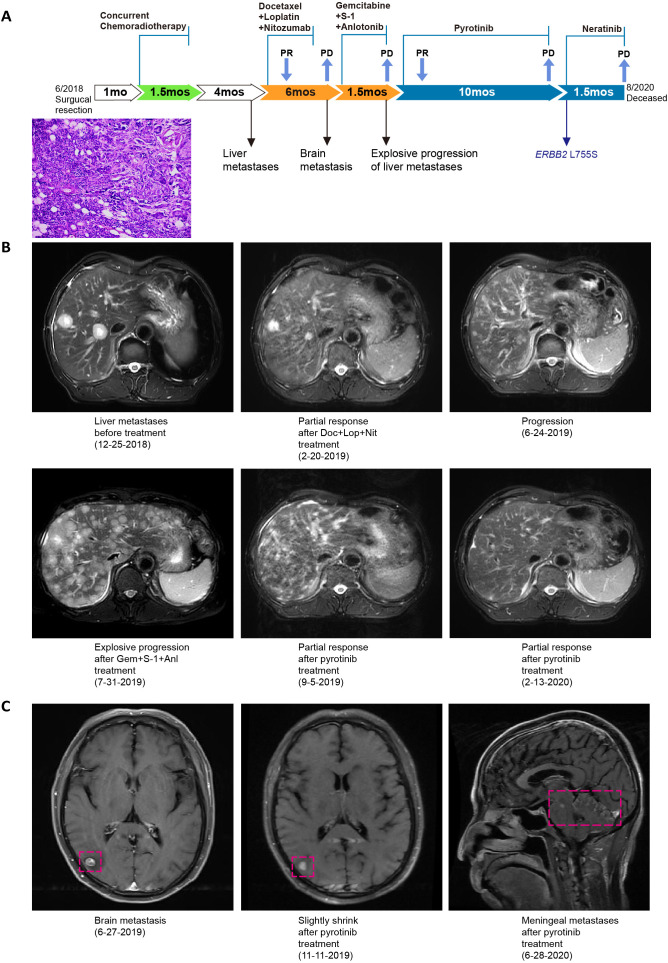 Figure 2
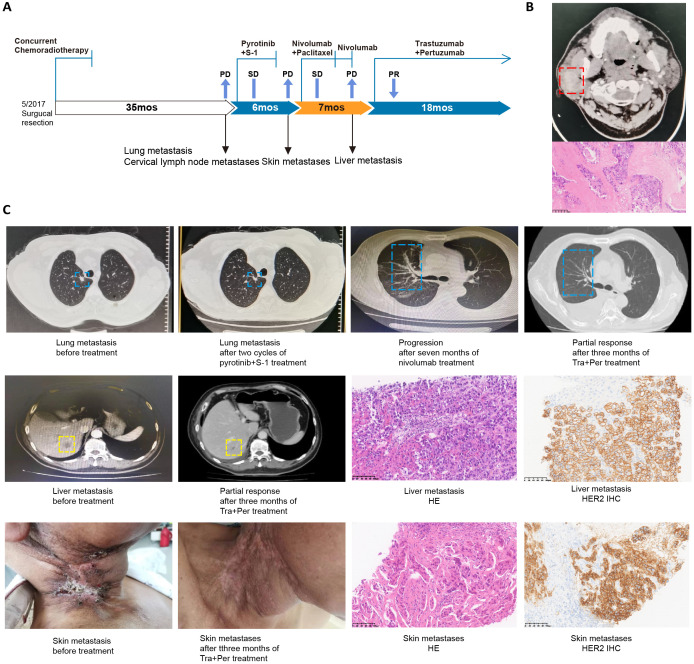 Figure 3
Peer Reviews
No public reviews on file for this paper yet. If you reviewed it on a platform where reviews are public (OpenReview, ICLR, NeurIPS, ICML), you can paste yours below so the community can read it here.
Videos
No videos yet. Explain this paper in a talk, walkthrough, or lecture? Add one.
Taxonomy
TopicsSalivary Gland Tumors Diagnosis and Treatment · Head and Neck Cancer Studies · Salivary Gland Disorders and Functions