Beyond deficiency prevention: meteorological determinants and nonlinear associations of maternal vitamins D, A, and E with perinatal outcomes in 10,824 Chinese pregnancies
Changzhen Li, Shiyong Deng, Ping Zhou, Jingjing Rao, Yun Xiang, Lei Xi, Xiaomei Wang

TL;DR
This study explores how weather and vitamin levels in pregnant women in China affect birth outcomes, finding that both vitamin deficiencies and excesses are linked to complications.
Contribution
The study identifies nonlinear and meteorological associations of maternal vitamin D, A, and E with perinatal outcomes, extending beyond deficiency prevention.
Findings
Higher ambient temperature was linked to lower odds of vitamin D and A deficiencies.
Vitamin A deficiency was associated with increased risk of PROM and macrosomia.
U-shaped associations were found between vitamin levels and outcomes like low birth weight and macrosomia.
Abstract
To examine meteorological factors associated with maternal vitamins D, A, and E and their associations with delivery and neonatal outcomes in central China. In this retrospective cross-sectional analysis of 10,824 third-trimester women who delivered at 37 weeks or later in Wuhan (2020–2023), serum vitamin levels were measured by high-performance liquid chromatography. Daily temperature, humidity, precipitation, and wind speed were matched to individual blood collection dates. Multivariable logistic regression and restricted cubic spline models were used to evaluate associations with fetal distress, meconium-stained amniotic fluid, premature rupture of membranes (PROM), low birth weight, and macrosomia. Vitamin D deficiency (30.2%), vitamin A deficiency (5.5%), and vitamin E excess (41.8%) were common. Each 1 °C increase in ambient temperature was associated with lower odds of vitamin…
Genes, proteins, chemicals, diseases, species, mutations and cell lines named across the full text — each resolved to its canonical identifier and authoritative record.
Click any figure to enlarge with its caption.
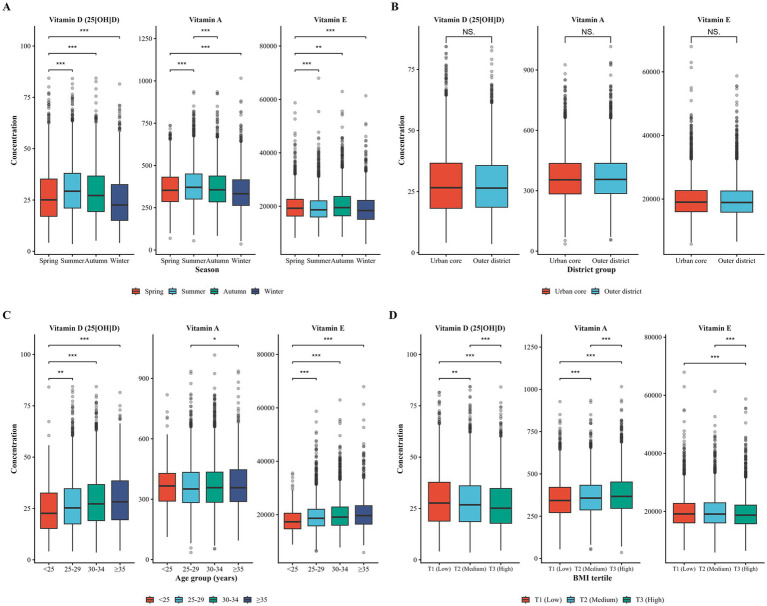 Figure 1
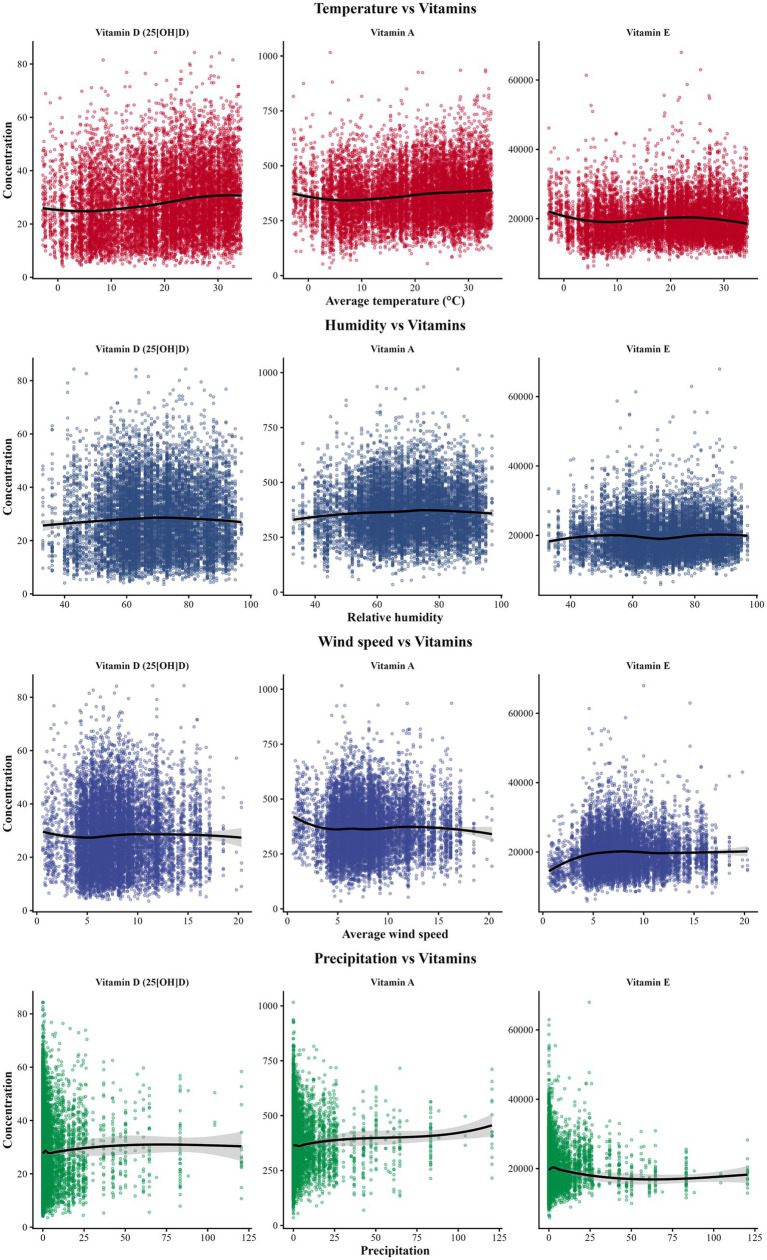 Figure 2
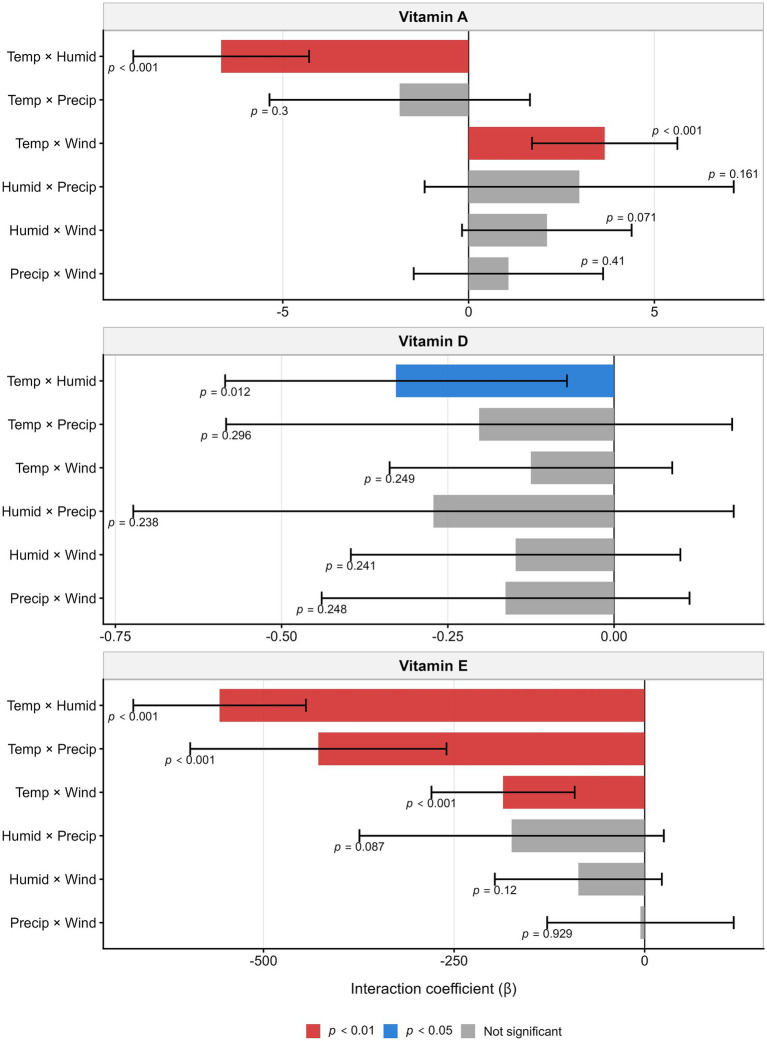 Figure 3
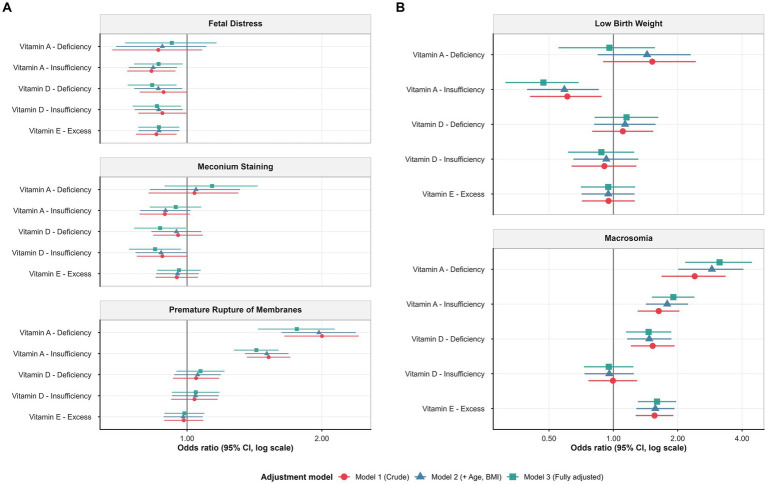 Figure 4
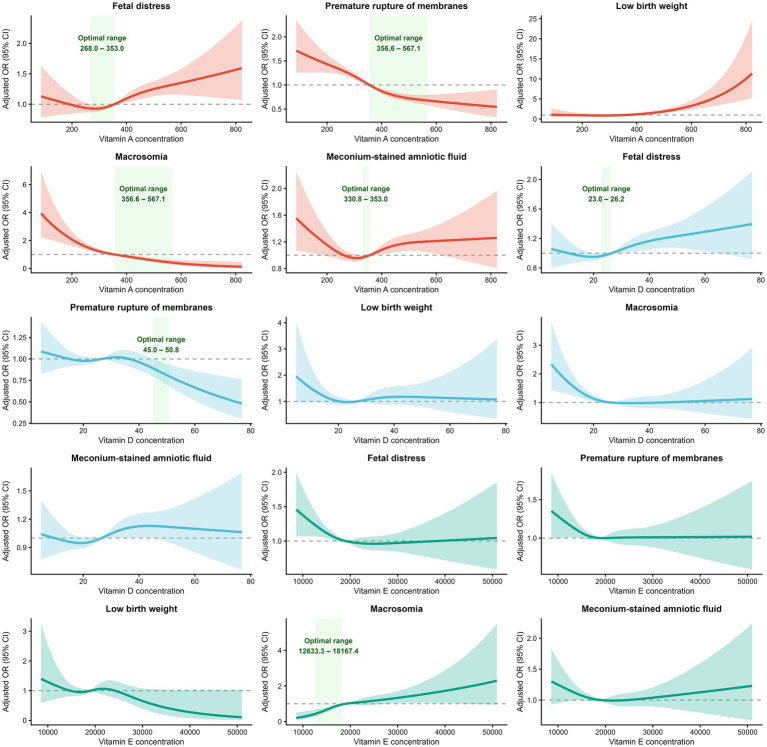 Figure 5
Peer Reviews
No public reviews on file for this paper yet. If you reviewed it on a platform where reviews are public (OpenReview, ICLR, NeurIPS, ICML), you can paste yours below so the community can read it here.
Videos
No videos yet. Explain this paper in a talk, walkthrough, or lecture? Add one.
Taxonomy
TopicsVitamin D Research Studies · Antioxidant Activity and Oxidative Stress · Vitamin C and Antioxidants Research