Dynamic muscle damage monitoring in pig crush injury: T2-weighted Dixon and 2D ultrasound applications
Guangda Wang, Jiayi Wang, Dou Li, Qi Wang, Zikuo Zhao, Rongbang Chen, Qi Lv, Haojun Fan

TL;DR
This study uses MRI and ultrasound to monitor muscle damage in pigs after crush injuries, showing that these imaging techniques provide a more complete assessment than blood tests alone.
Contribution
The study introduces a synergistic use of T2-Dixon MRI and ultrasound for dynamic evaluation of muscle damage in a pig crush injury model.
Findings
T2-weighted signal values increased continuously in pigs with longer extrusion times, showing more severe muscle damage.
Ultrasound revealed structural disorganization and severe damage in pigs with 8 and 16-hour extrusion times.
Biochemical markers like CK and LDH correlated with T2 signal values, but K+ did not.
Abstract
Crush injury (CI) involves compressive trauma causing muscle swelling, compartment syndrome, and neurological damage. We examined T2-Dixon and ultrasound for CI evaluation in pigs, integrating imaging with lab and tissue findings. Twelve 15–16-month-old Bama miniature pigs were randomly divided into three extrusion groups: Group A (4 h), Group B (8 h), and Group C (16 h), using custom equipment. Blood samples were collected at baseline (T0), decompression (T1), and 12 h (T2), 24 h (T3), and 72 h (T4) post-decompression. MRI and ultrasound were performed at each time point. At T4, pigs were euthanized, and compressed muscles underwent HE staining for pathological assessment. Following decompression, Creatine Kinase (CK), Lactate dehydrogenase (LDH), and K+ levels initially rose, then declined across all groups. CK peaked at T2 or T3 (p < 0.05), with Group B > Group A at T3/T4, and…
Genes, proteins, chemicals, diseases, species, mutations and cell lines named across the full text — each resolved to its canonical identifier and authoritative record.
Click any figure to enlarge with its caption.
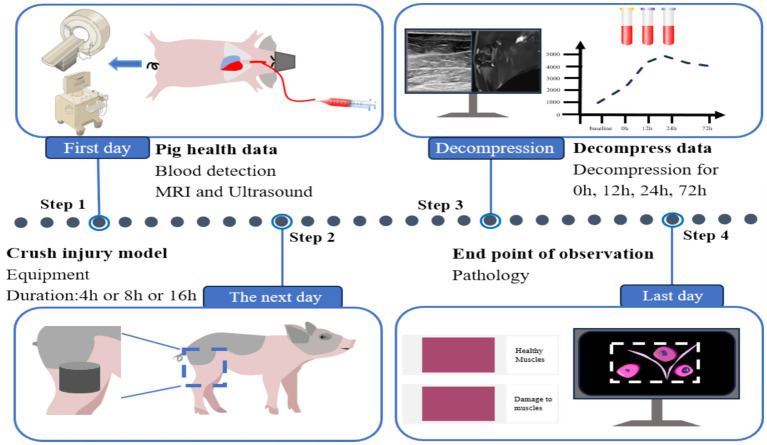 Figure 1
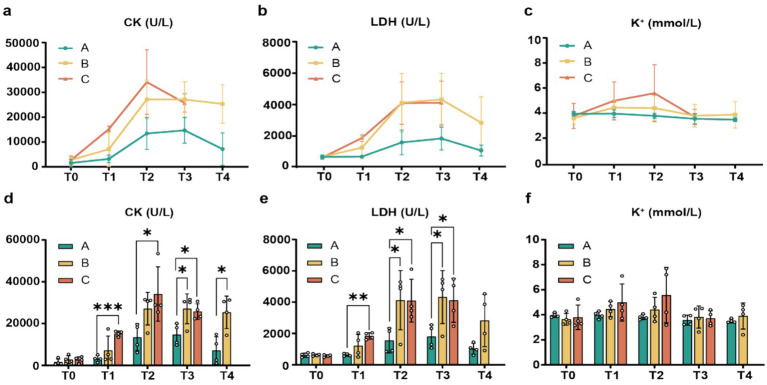 Figure 2
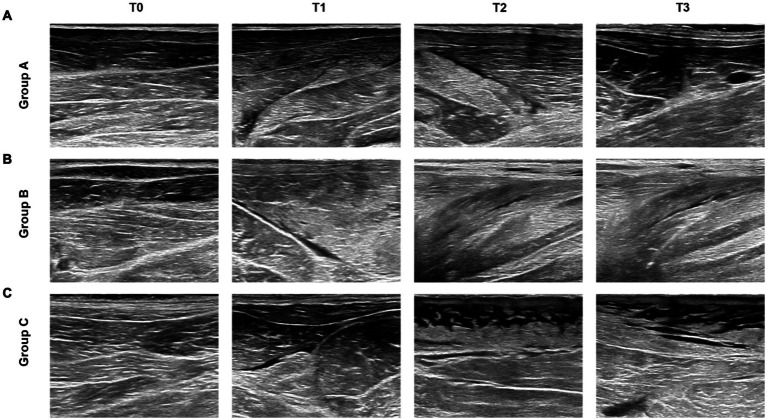 Figure 3
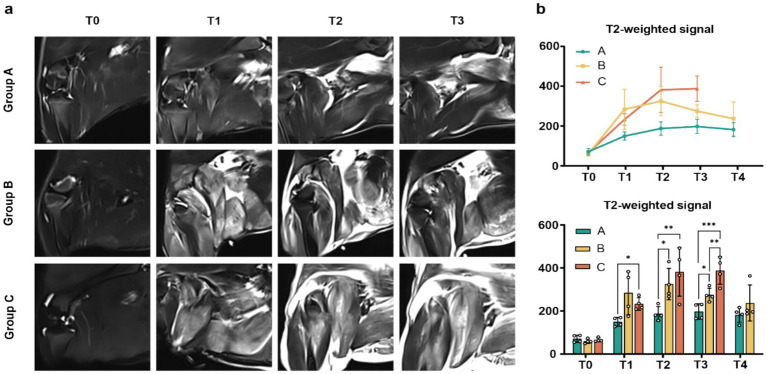 Figure 4
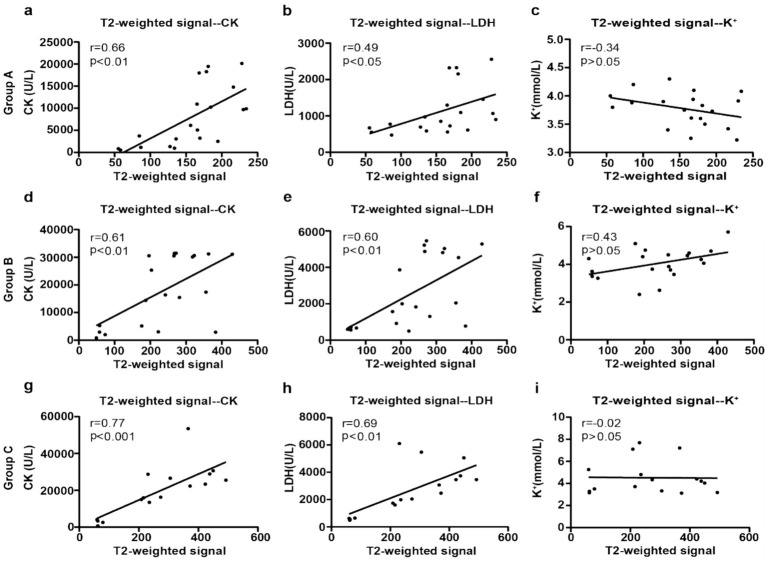 Figure 5
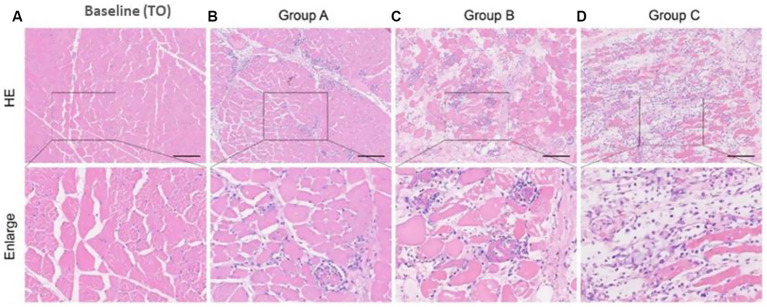 Figure 6
Peer Reviews
No public reviews on file for this paper yet. If you reviewed it on a platform where reviews are public (OpenReview, ICLR, NeurIPS, ICML), you can paste yours below so the community can read it here.
Videos
No videos yet. Explain this paper in a talk, walkthrough, or lecture? Add one.
Taxonomy
TopicsMuscle and Compartmental Disorders · Trauma, Hemostasis, Coagulopathy, Resuscitation · Burn Injury Management and Outcomes