Mechanical ventilation in a case of anticoagulant rodenticide toxicity: a case report
Diana Carter, Carl J. Southern

TL;DR
A dog needed mechanical ventilation after rodenticide poisoning caused severe bleeding in its airways.
Contribution
This case report highlights a rare presentation of rodenticide toxicity requiring mechanical ventilation.
Findings
The dog showed delayed clotting times and airway hemorrhage due to rodenticide exposure.
Mechanical ventilation was necessary for over 24 hours before the dog recovered spontaneous breathing.
The case demonstrates an atypical clinical presentation of anticoagulant rodenticide toxicity.
Abstract
A 2.5-year-old male neutered Golden Retriever was taken to an academic teaching hospital in respiratory distress. The patient was intubated, and diagnostics were performed, which found delayed clotting times and evidence of hemorrhage in both his trachea and lungs. The owner mentioned the possibility of anticoagulant rodenticide exposure. Due to upper and lower airway impairment, the patient was mechanically ventilated for more than 24 h while standard treatment was initiated. The patient was able to breathe on his own after 24 h and was discharged home 4 days later. This report documents a dog that required mechanical ventilation due to suspected intramural tracheal membranous hemorrhage and atypical presentation of upper and lower airway hemorrhage caused by vitamin K antagonist rodenticide.
Genes, proteins, chemicals, diseases, species, mutations and cell lines named across the full text — each resolved to its canonical identifier and authoritative record.
Click any figure to enlarge with its caption.
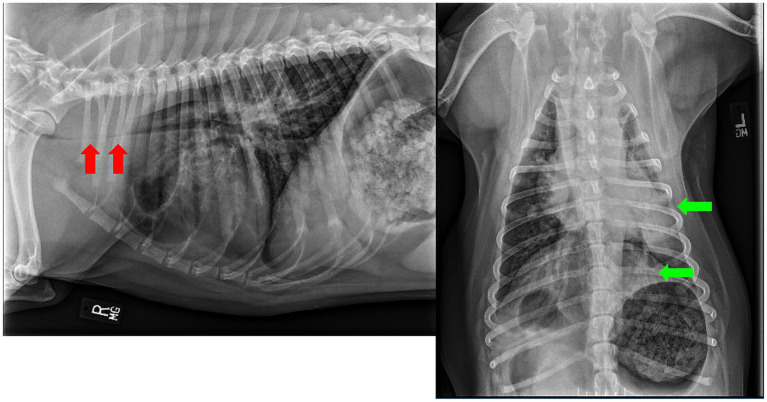 Figure 1
Peer Reviews
No public reviews on file for this paper yet. If you reviewed it on a platform where reviews are public (OpenReview, ICLR, NeurIPS, ICML), you can paste yours below so the community can read it here.
Videos
No videos yet. Explain this paper in a talk, walkthrough, or lecture? Add one.
Taxonomy
TopicsAnimal Ecology and Behavior Studies · Vitamin K Research Studies · Poisoning and overdose treatments