High-intensity intermittent training promotes adipose tissue browning via the IL-27/p38 MAPK–PGC-1α signaling pathway in diet-induced obese rats
Chunlong Wang, Yulong Hu, Junfei Chen, Yihan Wu

TL;DR
High-intensity intermittent training (HIIT) activates a specific signaling pathway in obese rats, promoting fat tissue transformation and improving metabolic health better than moderate exercise.
Contribution
This study reveals that HIIT activates the IL-27/p38 MAPK–PGC-1α pathway to induce adipose tissue browning more effectively than moderate-intensity training.
Findings
HIIT significantly reduced plasma triglyceride levels and adipose mass compared to moderate-intensity training.
HIIT increased browning-related genes and UCP1 in adipose tissue more than moderate-intensity training.
HIIT elevated IL-27 signaling and p38 MAPK–PGC-1α pathway activation in both plasma and adipose tissue.
Abstract
This study investigated the effects of high-intensity intermittent training (HIIT) versus moderate-intensity aerobic training (MAIT) on IL-27 signalling and adipose tissue browning in obese rats. Forty male Sprague–Dawley rats were randomly divided into two groups: standard diet (C, n = 10) and high-fat diet (HFD, n = 30). After 8 weeks of HFD feeding, 24 obese rats were further randomised into three subgroups: HFD (H, n = 8), HFD + moderate-intensity training (HMT, n = 8), and HFD + HIIT (HHT, n = 8). The HMT and HHT groups underwent 8 week training interventions (six sessions/week). The HMT protocol included a 10 min warm-up (treadmill speed: 10 m/min), a 40 min moderate-intensity aerobic phase (60%–70% of maximum speed), and a 10 min recovery (10 m/min). The HHT protocol featured 10 min warm-up and recovery phases (10 m/min), with 40 min of alternating treadmill training: 3 min at…
Genes, proteins, chemicals, diseases, species, mutations and cell lines named across the full text — each resolved to its canonical identifier and authoritative record.
Click any figure to enlarge with its caption.
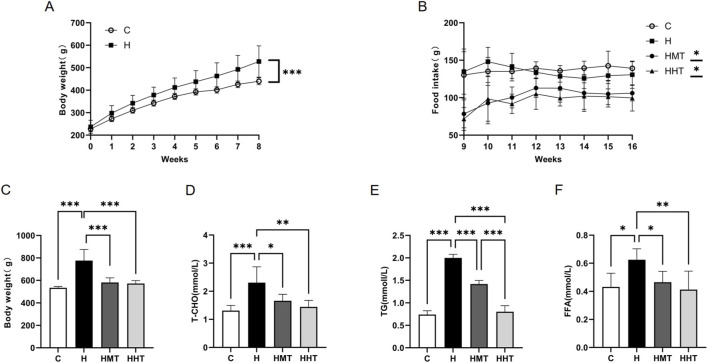 Figure 1
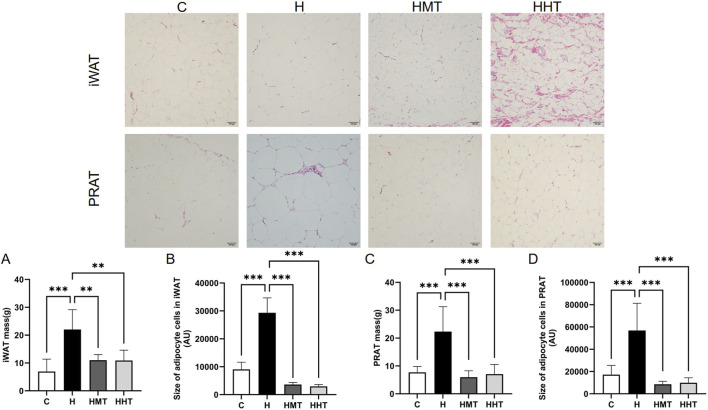 Figure 2
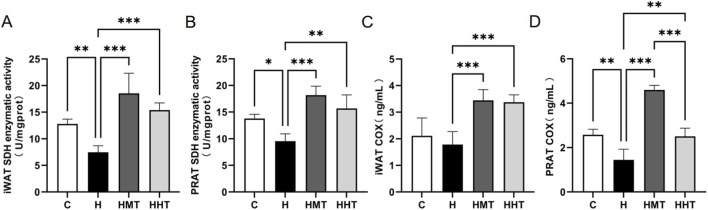 Figure 3
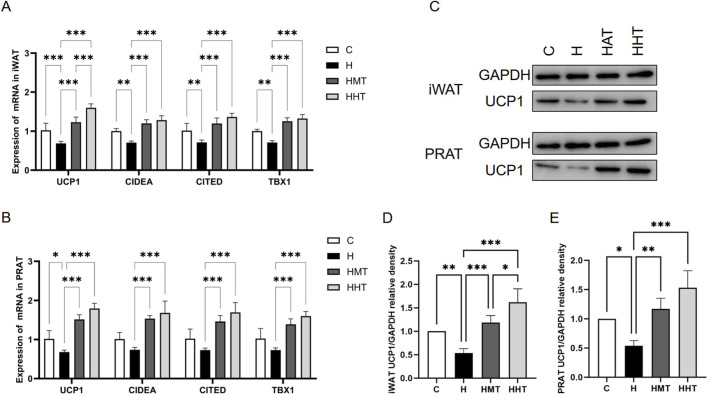 Figure 4
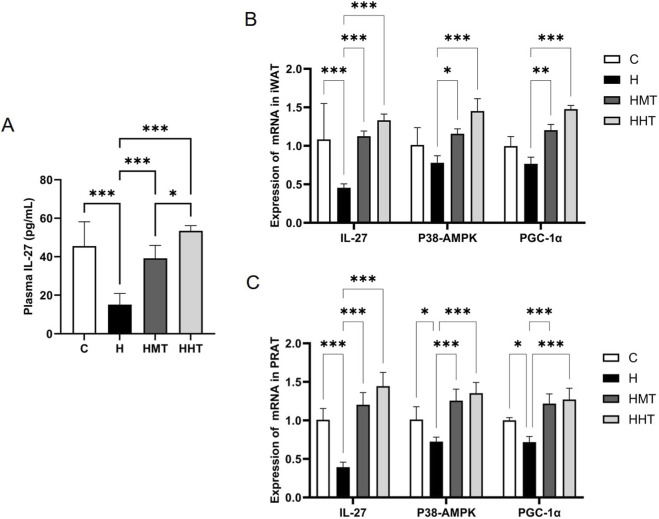 Figure 5
Peer Reviews
No public reviews on file for this paper yet. If you reviewed it on a platform where reviews are public (OpenReview, ICLR, NeurIPS, ICML), you can paste yours below so the community can read it here.
Videos
No videos yet. Explain this paper in a talk, walkthrough, or lecture? Add one.
Taxonomy
TopicsAdipose Tissue and Metabolism · Adipokines, Inflammation, and Metabolic Diseases · Regulation of Appetite and Obesity