Associations between abdominal obesity and the prevalence of fractures among Chinese adults: insights from a nationwide cross-sectional study
Wenting Qi, Wei Yu, Qianqian Pang, Lin Chen, Shunyu Tang, Hua Lin, Lu Cui, Xiaolan Jin, Zhongjian Xie, Zhixin Li, Mei Li, Yan Jiang, Linhong Wang, Xiangjun Yin, Lijia Cui, Weibo Xia

TL;DR
This study finds that abdominal obesity is linked to a higher risk of fractures in Chinese adults, even among those with a normal weight.
Contribution
The study reveals that abdominal obesity independently increases fracture risk, regardless of BMI, and identifies WHtR as a better predictor than BMI.
Findings
Abdominal obesity is associated with impaired balance and higher prevalence of vertebral and clinical fractures.
Normal-weight individuals with abdominal obesity had a 1.75-fold higher prevalence of vertebral fractures.
WHtR outperformed BMI in predicting vertebral fractures, especially when combined with other factors.
Abstract
To investigate the links between abdominal obesity and skeletal outcomes in a population-based cohort in China. 8,251 participants from the COPS cohort were enrolled in this study and categorized by quartiles of abdominal obesity indices. Abdominal obesity was determined using sex-specific waist circumference (WC) cutoffs (≥ 90 cm for males, ≥ 85 cm for females), or a waist-to-height ratio (WHtR) ≥0.5. Physical performance and balance were assessed using the Five-Repetition Sit-to-Stand Test (5R-STS) and the Sharpened Romberg test. Vertebral fractures were identified by spine X-ray examination, while information on clinical fractures in recent 5y were collected by a self-report questionnaire. Multivariate regression models were employed with covariate adjustments. Predictive capacity of adiposity metrics for fractures was assessed through ROC analysis. Abdominal obesity was linked to…
Genes, proteins, chemicals, diseases, species, mutations and cell lines named across the full text — each resolved to its canonical identifier and authoritative record.
Click any figure to enlarge with its caption.
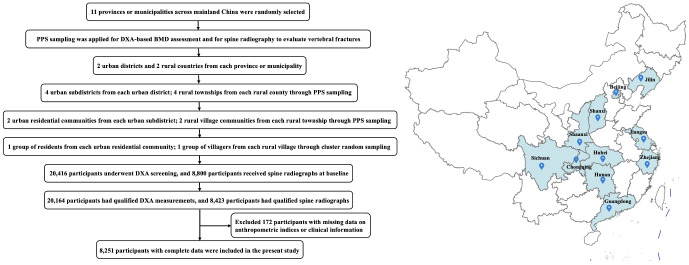 Figure 1
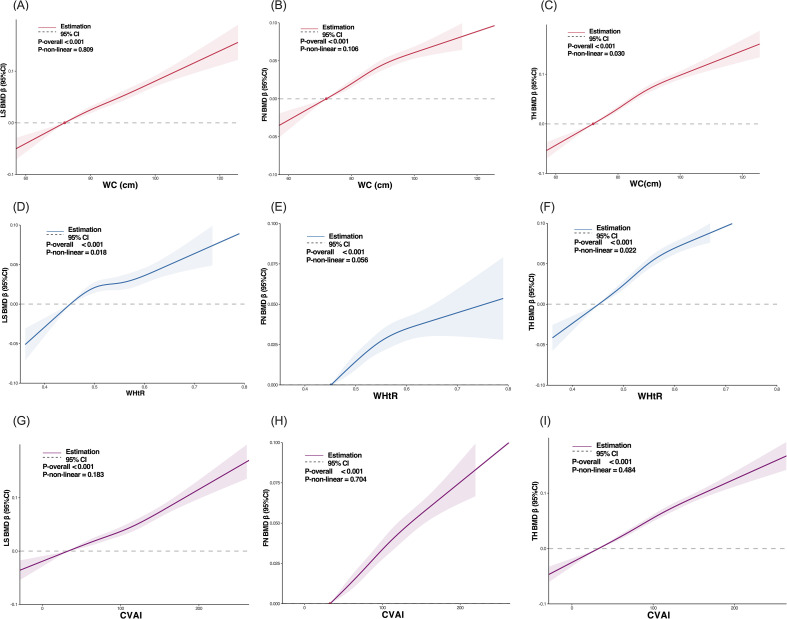 Figure 2
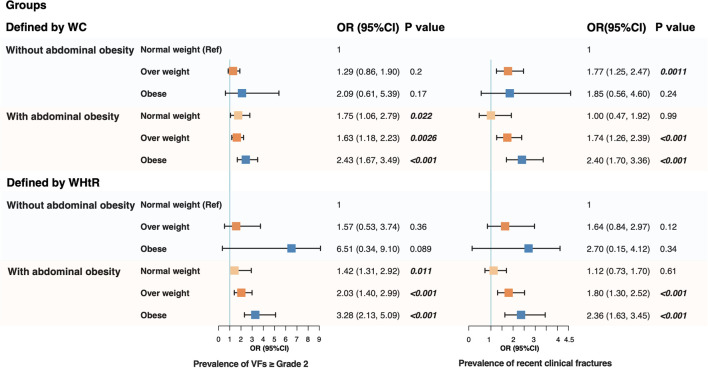 Figure 3
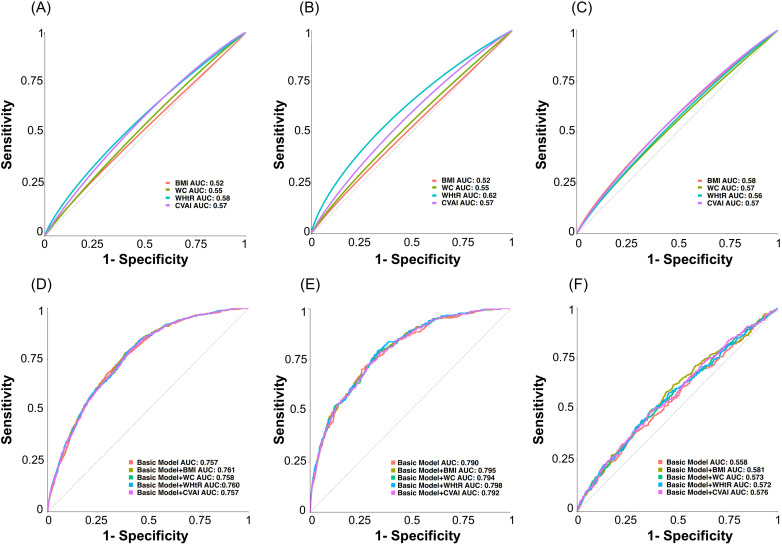 Figure 4
Peer Reviews
No public reviews on file for this paper yet. If you reviewed it on a platform where reviews are public (OpenReview, ICLR, NeurIPS, ICML), you can paste yours below so the community can read it here.
Videos
No videos yet. Explain this paper in a talk, walkthrough, or lecture? Add one.
Taxonomy
TopicsBone health and osteoporosis research · Nutrition and Health in Aging · Bariatric Surgery and Outcomes