Muscle size and muscle fat infiltration in patients with newly diagnosed prostate cancer: a case–control study
Chao Wang, Hui Wang, Yufei Yu, Xinming Yang, Yu Wang, Kui Zhang, Shuangquan Sun, Lingfeng Wu, Daocheng Fang, Hui Li, Yi Yang, Xiao Chen, Shumei Bi, Hui Wen

TL;DR
Newly diagnosed prostate cancer patients show signs of muscle fat infiltration and reduced muscle size compared to controls, even before treatment.
Contribution
This study is the first to show that muscle composition changes are present at prostate cancer diagnosis, independent of treatment.
Findings
Prostate cancer patients had significantly lower muscle CT attenuation and reduced muscle area compared to controls.
Muscle fat infiltration was associated with prostate cancer even after adjusting for age and diabetes.
Abstract
Cancer is a recognized risk factor for sarcopenia. While some studies suggest that androgen deprivation therapy (ADT) may contribute to muscle loss in patients with prostate cancer (PCa), it remains unclear whether alterations in muscle composition are already present at the initial diagnosis, before any treatment begins. This study aimed to evaluate computed tomography (CT)–based muscle size and muscle fat infiltration in patients with newly diagnosed prostate cancer. A total of 143 patients with newly diagnosed PCa (January 2023–June 2024) were enrolled and matched 1:2 with 286 controls. CT attenuation and cross-sectional area of the erector spinae (ES) and full-layer muscle at the T12 level were measured. The muscle-to-spleen attenuation ratio (M/S) was calculated. Muscle fat infiltration was assessed based on muscle CT attenuation. Multivariable logistic regression analyses were…
Genes, proteins, chemicals, diseases, species, mutations and cell lines named across the full text — each resolved to its canonical identifier and authoritative record.
Click any figure to enlarge with its caption.
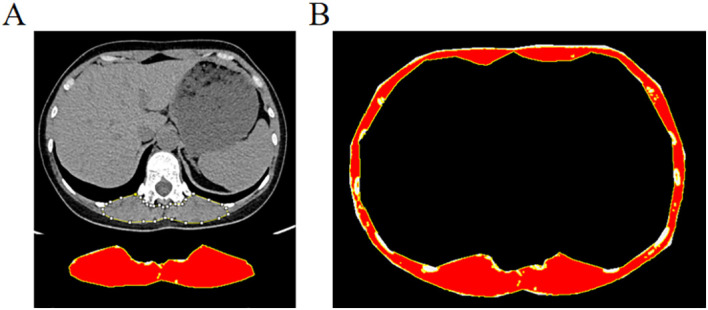 Figure 1
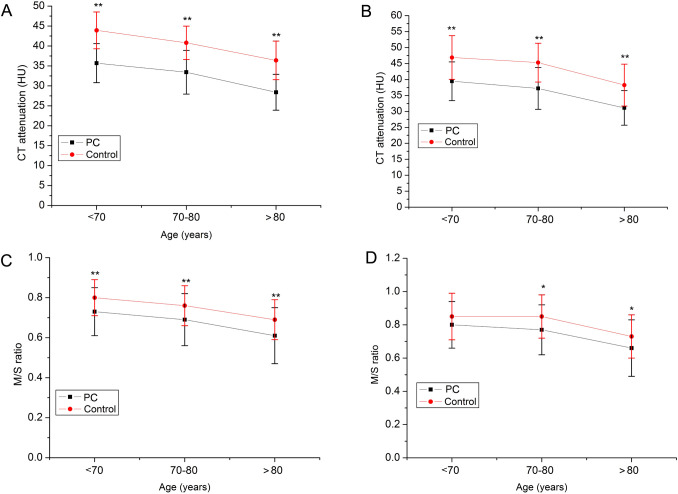 Figure 2
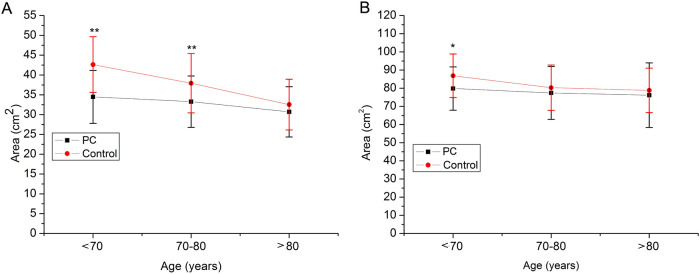 Figure 3
Peer Reviews
No public reviews on file for this paper yet. If you reviewed it on a platform where reviews are public (OpenReview, ICLR, NeurIPS, ICML), you can paste yours below so the community can read it here.
Videos
No videos yet. Explain this paper in a talk, walkthrough, or lecture? Add one.
Taxonomy
TopicsNutrition and Health in Aging · Frailty in Older Adults · Muscle Physiology and Disorders